

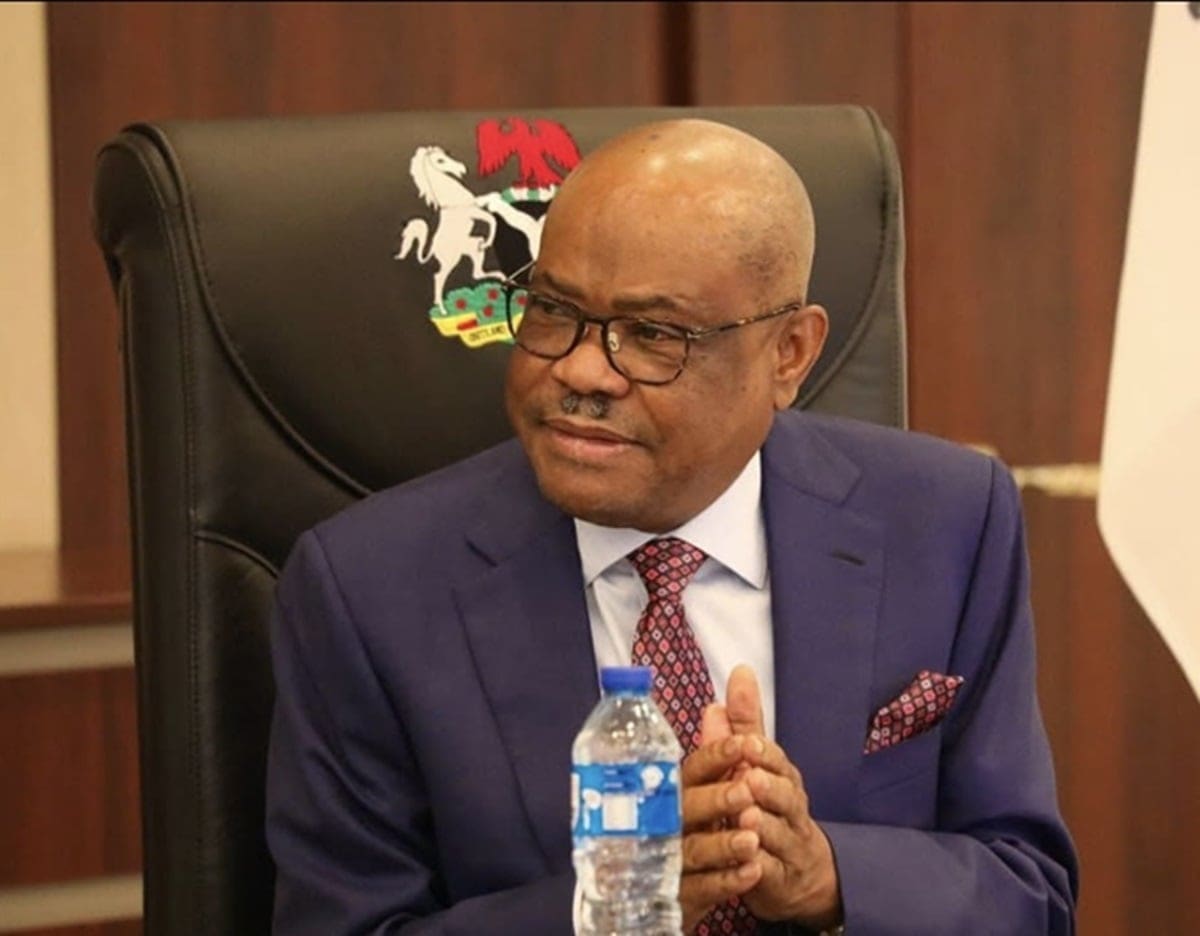
A remark by the Minister of the Federal Capital Territory, Nyesom Wike, that he would have “shot” a television anchor has triggered a wave of outrage, drawing condemnation from media organisations, civil society groups and opposition figures, while reopening concerns over press freedom and political intolerance in Nigeria.
The controversy followed a media chat in Abuja last week, where Wike reacted angrily to comments made by Channels Television presenter Seun Okinbaloye on the programme Politics Today.
Okinbaloye had raised concerns about Nigeria drifting towards a one-party state amid the leadership crisis rocking the African Democratic Congress (ADC) and its implications for opposition politics ahead of the 2027 elections.
Visibly irritated, Wike said, “If there’s any way to break the screen, I would have shot him,” a statement that immediately sparked backlash across the country.
Wike Backtracks, Says Comment was “Figurative”
Amid mounting criticism, the minister has sought to clarify his remarks, insisting they were never intended as a literal threat.
“You can imagine what happened in our media chat; people just capitalise on things, even when I explained there that, look, I didn’t say I would kill him,” Wike said.
“All I was trying to explain, figuratively… I was wondering, how can you descend so low? You’re an interviewer… you’re no longer interviewing your guests.”
He maintained that his comment was taken out of context and accused political opponents of amplifying the controversy for partisan gain.
RELATED NEWS:
- Again, Court Voids Ibadan PDP Convention, Grants Wike Faction Secretariat Control
- Abuja Hotel Collapse: Wike Orders Arrest of Owner, Contractor
- PDP Convention: Wike Faction Inaugurates New NWC in Abuja
His media aide, Lere Olayinka, also defended the minister, describing the statement as “hyperbolic” and insisting there was no intent to harm the journalist. He added that both men had spoken after the incident and resolved any misunderstanding.
Atiku Camp Fires Back
The explanation, however, did little to calm tensions.
The Atiku Media Office issued a strongly worded statement condemning the remark, describing it as “disgraceful and dangerous.”
“For a serving minister of the Federal Republic to publicly declare that he wished to shoot a journalist over a professional opinion is not just reckless, it is a chilling signal of how far this government has descended into intolerance,” the statement read.
The office of Atiku Abubakar warned that such rhetoric reflects a broader pattern of hostility towards dissent under the administration of President Bola Tinubu.
“This is how democracies decline, through the normalisation of threats and the silencing of independent voices,” it added, demanding a public apology and assurances for the safety of journalists.
Media, Civil Society Raise Alarm
Media and civil society organisations also condemned the remark, warning of its implications for press freedom.
Amnesty International Nigeria described Wike’s statement as “reckless and violent,” cautioning that such language could incite attacks on journalists and normalise hostility against the media.
Similarly, the Nigeria Union of Journalists (NUJ) called for restraint, stressing that journalists must be allowed to operate without fear of intimidation.
The International Press Centre (IPC) warned that comments of that nature could create a chilling effect on the media landscape, particularly when made by senior government officials.
In a separate reaction, the Independent Broadcast Association of Nigeria (IBAN) demanded a retraction and public apology, warning that failure to act could lead to a boycott of the minister’s media engagements.
IBAN said expressions suggesting violence—even when framed hypothetically—could be interpreted as intimidation and embolden attacks on journalists.
Okinbaloye Responds
On his part, Okinbaloye dismissed any suggestion of intimidation, insisting he would not be silenced.
The Channels Television anchor maintained that raising critical questions about Nigeria’s democratic trajectory falls within the responsibility of journalists and should not attract threats or hostility.
Public Outrage and Political Undertones
Across social media, Nigerians expressed outrage over the comment, with many calling for accountability and urging public officials to exercise caution in their language.
Analysts say the incident underscores growing tension between the political class and the media, particularly as the 2027 elections approach and debates intensify over the future of opposition politics.
While Wike insists that his comment was misunderstood, critics argue that the episode highlights a deeper concern: the increasing use of combative and, at times, inflammatory rhetoric in Nigeria’s political space.
For many observers, the controversy is not just about a single remark, but about the broader message it sends, especially in a democracy where a free press remains a critical pillar.

Rafiyat Sadiq is a political, justice, and human rights reporter with Pinnacle Daily, known for fearless reporting and impactful storytelling. At Pinnacle Daily, she brings clarity and depth to issues shaping governance, democracy, and the protection of citizens’ rights.