

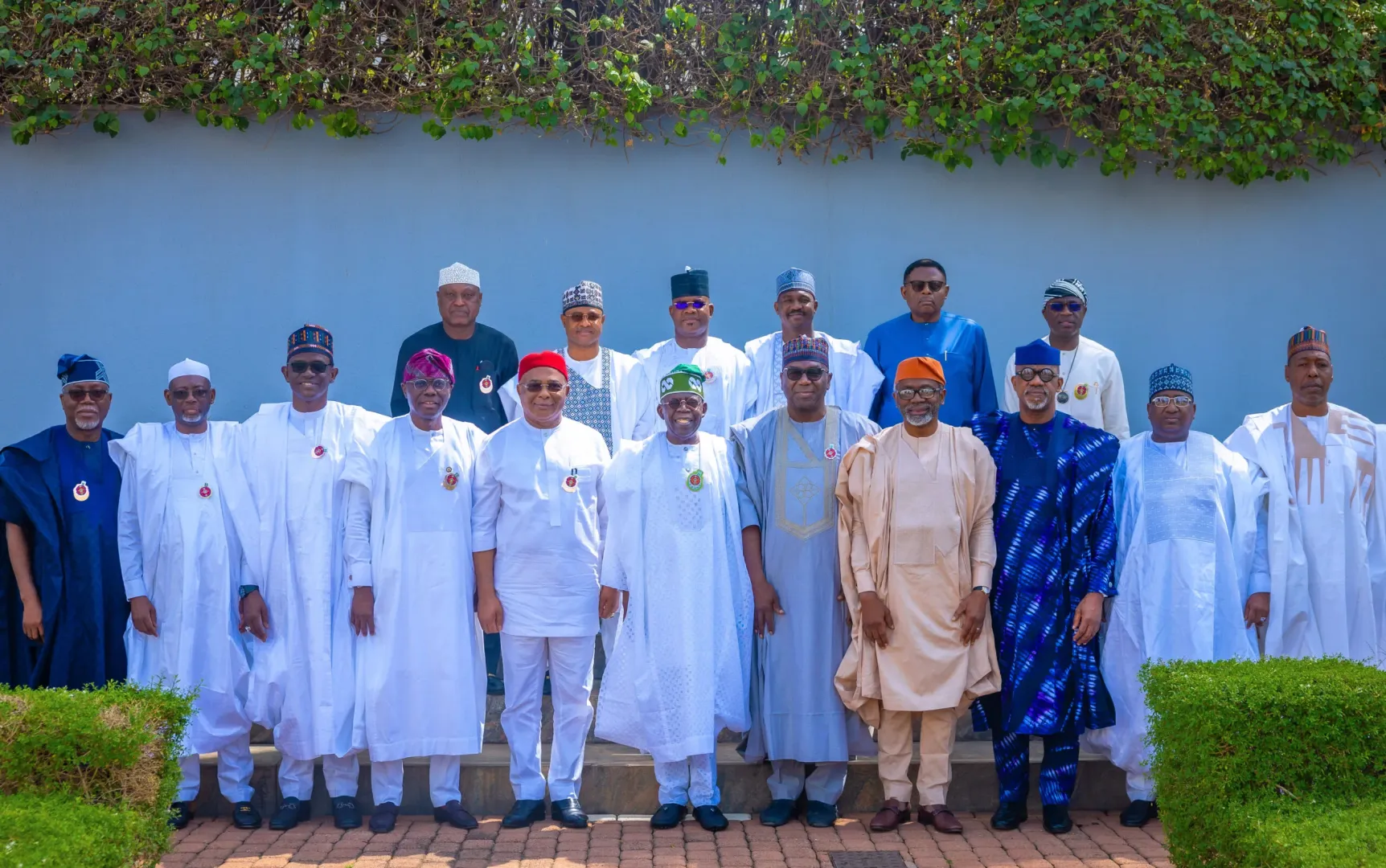
The All Progressives Congress (APC) concluded most of its governorship primaries ahead of the 2027 general election, producing 23 candidates across the country amid consensus arrangements, withdrawals, protests and logistical challenges.
The exercise, conducted in 28 states, largely favoured incumbent governors, all of whom secured return tickets except Rivers State Governor Siminalayi Fubara, who withdrew before voting began.
The primaries were not held in Anambra, Bayelsa, Edo, Ekiti, Imo, Kogi, Ondo and Osun states because their governorship elections are conducted on separate electoral seasons following court rulings that altered their election calendars.
The party also faced setbacks in several states. Governorship primaries in Kwara and Bauchi were postponed after leaders failed to agree on consensus candidates. In Nasarawa, the late arrival of election materials delayed the exercise, while contests in Adamawa, Plateau and Yobe remained inconclusive at the time reports were filed.
Resistance to Consensus
The developments underscored a broader struggle within the ruling party between consensus politics and competitive primaries.
While consensus arrangements succeeded in several states, they triggered resistance in others. Political observers noted that governors increasingly sought to shape succession outcomes, often sparking opposition from aspirants who argued that party members should be allowed to determine candidates through open competition.
Consensus Gains Ground
The consensus strategy proved effective in many states. Governors Sheriff Oborevwori of Delta, Abba Yusuf of Kano, Peter Mbah of Enugu, Umar Namadi of Jigawa, Dikko Radda of Katsina, Nasir Idris of Kebbi, Ahmed Aliyu of Sokoto, Dauda Lawal of Zamfara, Umaru Bago of Niger, Umo Eno of Akwa Ibom and Francis Nwifuru of Ebonyi secured overwhelming backing from party structures.
Party leaders in those states defended the arrangements as necessary to preserve unity and prevent internal crises. In Sokoto, stakeholders unanimously backed Governor Ahmed Aliyu for a second term, while in Kebbi, party leaders agreed to present Governor Nasir Idris as the sole candidate. Jigawa APC Chairman MK Garba similarly maintained that Governor Umar Namadi remained the party’s only aspirant and that the primary would merely ratify an already established consensus.
Kwara Succession Battle
However, nowhere was resistance to consensus more visible than in Kwara State.
Governor AbdulRahman AbdulRazaq publicly endorsed businessman and political mobiliser Ambassador Abdulfatai Yahaya Seriki as his preferred successor after consultations with party leaders and stakeholders. Describing Seriki as youthful, broad-minded and widely accepted, the governor urged party members to rally behind him for the sake of cohesion and continuity.
The endorsement triggered a wave of support. Speaker of the Kwara State House of Assembly, Salihu Yakubu-Danladi, withdrew from the race and pledged support for Seriki. National Institute for Legislative and Democratic Studies Director-General, Prof. Abubakar Suleiman, also stepped down. Local government chairmen, political blocs, transport unions and sociocultural groups publicly endorsed the governor’s choice.
Thousands of supporters gathered at the Tunde Idiagbon International Stadium in Ilorin shortly after the endorsement announcement, creating the impression that Seriki’s emergence was virtually guaranteed.
Yet the consensus effort soon encountered resistance. Several aspirants refused to withdraw, insisting that the governorship ticket should be decided through democratic competition rather than predetermined arrangements.
Kwara recorded the highest number of governorship aspirants in the APC nationwide, with contenders including former Senate Leader Ibrahim Oloriegbe, Muhammed Belgore (SAN), Salihu Mustapha, Olufemi Sanni, Mohammed Bio, Dr Alabi Tajudeen, Tajudeen Abdulkadir, Azeez Muideen, Bashir Bolanrinwa, Ahmad Mahmoud, Yetunde Bello, Mahalia Pategi and Prof Olawale Sulaiman.
The disagreement ultimately forced the postponement of the primary election after consensus negotiations collapsed.
Crowded Fields Across Key States
Political activity was similarly intense in Oyo and Adamawa. Oyo recorded 11 governorship aspirants, including former Minister of Power Adebayo Adelabu, Senator Sharafadeen Alli, Akeem Agbaje and Dr Muyiwa Gbadegesin.
Adamawa featured a crowded field led by Abdulrazak Namdas, Mustapha Salihu, Senator Aminu Abbas, Abdurrahaman Haske, Felix Tangwami, Joel Madaki and Bello Ibrahim, among others.
Bauchi also attracted strong interest, with former Foreign Affairs Minister Yusuf Tuggar, Senator Shehu Buba Umar and former governor Mohammed Abdullahi Abubakar among eight aspirants seeking the party ticket.
In Abia, four aspirants contested the governorship ticket, including Mascot Uzor-Kalu, Henry Ikoh, Martins Azubuike and Opah Chinemeucheya. Benue recorded four challengers against Governor Hyacinth Alia, while Gombe witnessed a contest between Senator Sa’idu Alkali and Governor Inuwa Yahaya’s preferred candidate, Jamilu Gwamna.
Party insiders said the large number of aspirants reflected unresolved zoning interests, succession calculations and dissatisfaction among stakeholders over attempts to impose preferred candidates.
Plateau Defiance
In Plateau State, one of the two governorship aspirants, retired military officer Yilcini Bida, dismissed reports that he had stepped down for Governor Caleb Mutfwang.
Speaking ahead of the primary, Bida insisted he remained fully in the race and was prepared to challenge the incumbent governor. He said his administration, if elected, would focus heavily on infrastructure renewal, economic development and security reforms.
He proposed spending N1 trillion on a lighting project within one year and constructing 40 kilometres of roads in each local government area. On insecurity, Bida promised to strengthen Operation Rainbow by recruiting personnel from rural communities to improve operational efficiency.
Lagos Succession Permutations
Political negotiations also intensified in Lagos State as aspirants continued to align behind Deputy Governor Obafemi Hamzat.
One of the governorship aspirants, Samuel Ajose, formally withdrew from the race and announced his support for Hamzat, describing the decision as difficult but necessary for party unity.
His withdrawal came weeks after former PDP governorship candidate Abdul-Azeez Adediran, popularly known as Jandor, also stepped down and endorsed Hamzat following consultations with APC leaders.
Jandor said his withdrawal followed the endorsement of Hamzat by President Bola Tinubu and APC leaders in Lagos State, describing the move as a sacrifice made for party cohesion and unity.
However, businessman and politician Lanre Jim-Kamal declined to withdraw and maintained his candidacy, unveiling a five-point agenda and a proposed $50 billion investment partnership plan for Lagos.
When voting was eventually held, Hamzat emerged victorious with 657,917 votes against Jim-Kamal’s one vote from 657,974 accredited voters, becoming the first deputy governor in Lagos State history to secure his party’s governorship ticket.
Fubara Withdraws, Pantami Protests
In Rivers State, Governor Siminalayi Fubara withdrew from the primary amid his political feud with former governor and FCT Minister Nyesom Wike.
Explaining his decision, Fubara said it was borne out of wisdom rather than weakness and was taken in the interest of peace, stability and unity in the state.
His withdrawal paved the way for Kingsley Chinda, who emerged as the APC governorship candidate unopposed with 268,497 votes.
RELATED NEWS:
-
Tinubu Secures APC Presidential Ticket with Over 10 million Votes
-
APC Strengthens Grip Ahead of 2027 as Governors, Allies Dominate Governorship Primaries
In Gombe State, Jamilu Gwamna secured the party’s ticket after polling 247,161 votes against Sa’idu Alkali’s 11,602 votes.
Former Minister of Communications and Digital Economy Ali Pantami, who scored 12,120 votes, walked out of the exercise in protest, saying he had no confidence in the integrity of the process.
Results Across the Regions
In Ogun State, Senator Solomon Adeola won the APC governorship ticket after polling 304,055 votes against Abayomi Hunye’s zero votes from 305,287 accredited voters. Governor Dapo Abiodun had endorsed Adeola on the grounds that Ogun West had not produced a governor in nearly 50 years.
In Oyo State, Senator Sharafadeen Alli emerged as candidate, although controversy followed the exercise as the APC declined to officially release vote figures and dismissed earlier reports circulating in the media.
Mustapha Gubio was affirmed as APC governorship candidate in Borno, while Governor Agbu Kefas defeated former Works Minister Sambo Jaji in Taraba after David Kente withdrew from the contest.
Across the North-West, incumbent governors retained their tickets. Kaduna Governor Uba Sani secured 459,393 affirmation votes, while Governors Dikko Radda, Nasir Idris, Dauda Lawal, Ahmed Aliyu, Abba Yusuf and Umar Namadi all emerged through affirmation or consensus arrangements.
In North-Central states, Governor Umaru Bago was adopted as APC candidate in Niger State, while Benue Governor Hyacinth Alia defeated Terwase Orbunde and Jeffrey Kuraun with 367,786 votes against 3,247 and 2,923 respectively.
In the South-South, Delta Governor Sheriff Oborevwori secured 345,375 votes unopposed, while Governors Umo Eno of Akwa Ibom and Bassey Otu of Cross River were affirmed as consensus candidates.
In the South-East, Governors Peter Mbah of Enugu and Francis Nwifuru of Ebonyi secured APC tickets, while Eric Opah emerged as the party’s governorship candidate in Abia State.
Democracy Versus Endorsements
As the primaries unfolded, analysts raised concerns over the growing reliance on endorsements and consensus arrangements.
In an interview with Pinnacle Daily, Professor Abubakar Umar Kari of the University of Abuja described the trend as one of the greatest threats to democratic development in Nigeria, arguing that democracy is founded on freedom of choice and competition.
According to him, many aspirants invested years of political work, resources and mobilisation only to face situations where preferred candidates were imposed through endorsements and consensus deals.
He warned that the practice could fuel resentment, deepen internal divisions and eventually trigger crises within political parties.
Kari argued that the solution lies in strengthening internal party democracy by allowing members to freely choose candidates without interference from governors, presidents or other powerful political actors.
The APC primaries may have produced most of the party’s governorship candidates for the 2027 elections, but they also exposed the continuing struggle between consensus politics and democratic competition within the ruling party.

Rafiyat Sadiq is a political, justice, and human rights reporter with Pinnacle Daily, known for fearless reporting and impactful storytelling. At Pinnacle Daily, she brings clarity and depth to issues shaping governance, democracy, and the protection of citizens’ rights.