

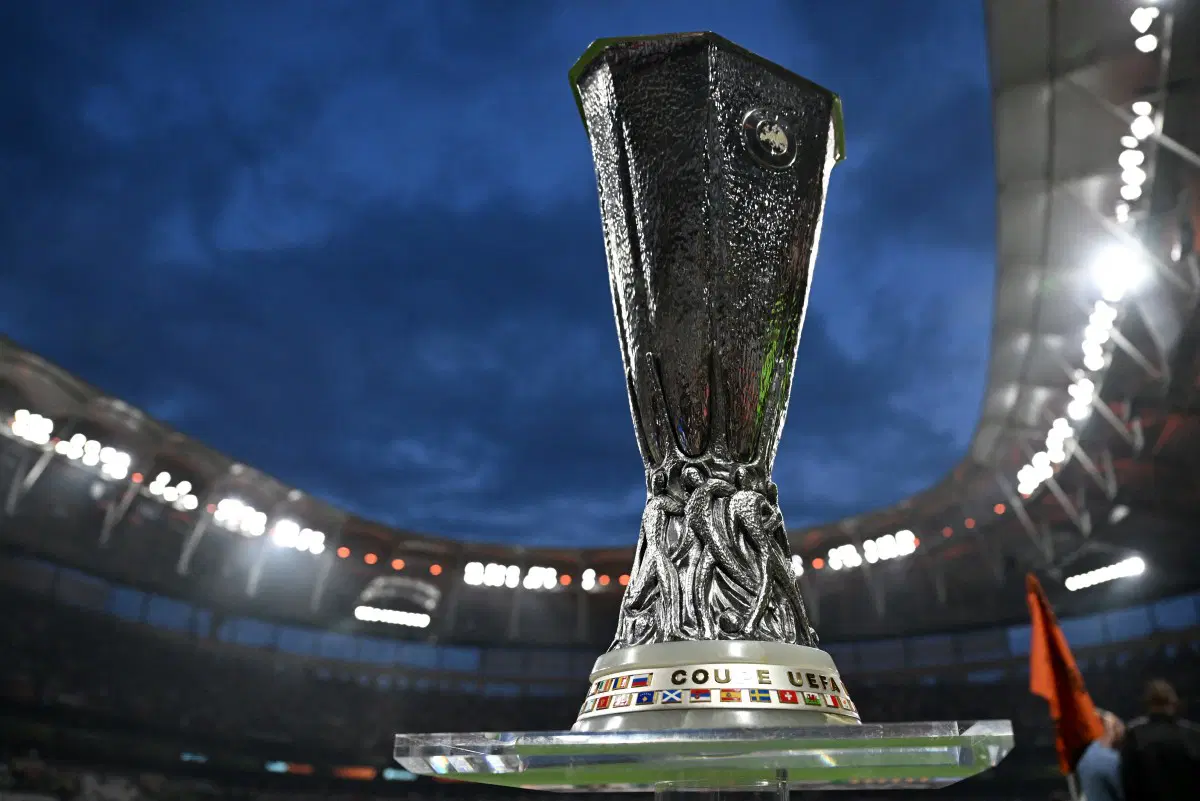
Aston Villa’s 3-0 win against SC Freiburg in Turkey has added a new chapter to Europa League history. The 2025/26 final did more than deliver silverware; it repositioned Villa among Europe’s continental champions and widened the competitive map of a tournament long defined by Spanish dominance and cyclical English resurgence.
Under Unai Emery, a manager with a deep Europa League pedigree, Villa produced a controlled and clinical performance. Goals from Youri Tielemans, Emiliano Buendia, and Morgan Rogers ensured a historic first title in the competition and reinforced the club’s rapid European rebirth.
But beyond the celebrations lies a broader story: the Europa League is a tournament shaped by dynasties, repeat winners, and strategic continental specialization.
Sevilla FC: The Benchmark of Europa League Excellence
At the summit remains Sevilla FC, whose record seven titles define an era of near-total dominance.
Unlike most clubs that treat the competition as secondary, Sevilla have built a distinct European identity around it. Their success is not accidental—it reflects a recruitment model tailored for knockout football, tactical consistency across managerial changes, and a psychological edge in high-pressure ties.
Sevilla’s repeated triumphs have effectively created a “Europa League culture,” where the club is often considered favourites regardless of season form.
The Tier Below: Clubs With Three Titles and Sustained European Weight
Just behind Sevilla is a highly competitive cluster of clubs with three titles each. This group includes Inter Milan, Liverpool FC, Juventus FC, Atlético Madrid, and Tottenham Hotspur.
What defines this tier is not just success, but timing. These clubs did not dominate in a single era; they won across different decades, reflecting adaptability to evolving European football styles.
Liverpool FC and Juventus FC, for example, used the competition as a platform during transitional phases in their continental dominance cycles. Atlético Madrid, meanwhile, used the tournament as a springboard before cementing Champions League-level consistency under Diego Simeone.
Tottenham Hotspur’s inclusion in this tier highlights the Premier League’s intermittent but impactful presence in the competition.
Two-Time Winners: Tactical Consistency Across Generations
Clubs with two Europa League titles represent a different pattern: repeated but less prolonged dominance.
Real Madrid CF, Chelsea FC, FC Porto, and Eintracht Frankfurt fall into this category.
These teams share a common trait: European tactical discipline paired with strong squad rotation systems. For clubs like Porto, the competition is part of a broader continental strategy, often serving as a proving ground for emerging talent before major transfers.
Chelsea FC and Real Madrid CF, by contrast, reflect the depth advantage of elite squads dropping into the competition from Champions League pathways.
The One-Time Champions Club: High Competition, Narrow Margins
The largest group consists of clubs that have won the Europa League once. This category now includes Aston Villa, alongside Manchester United, Ajax, Bayern Munich, Valencia CF, Villarreal CF, Atalanta BC, and others.
This tier reflects the competitive volatility of the tournament. Winning once often requires a perfect convergence of squad depth, tactical stability, and favourable knockout pathways.
Aston Villa’s entry into this group is particularly significant because it comes during a modern era of heightened competition intensity, where financial disparities and fixture congestion have increased unpredictability.
For clubs like Manchester United and Ajax, their solitary triumphs underline how even historically dominant European institutions do not consistently control this competition.
Europa League Winners by Titles — Structural Breakdown of European Dominance
7 Titles — The Singular Dynasty
Sevilla FC remain unmatched, with their record serving as the structural benchmark of the competition.
3 Titles — The Elite Contenders
Inter Milan
Liverpool FC
Juventus FC
Atlético Madrid
Tottenham Hotspur
This group reflects clubs that oscillate between Champions League and Europa League dominance, depending on squad cycles and domestic performance.
2 Titles — Consistent European Operators
Borussia Mönchengladbach
Feyenoord
IFK Göteborg
Real Madrid CF
Parma Calcio 1913
FC Porto
Chelsea FC
Eintracht Frankfurt
These clubs demonstrate repeat success without long-term dominance, often leveraging tactical peaks or golden generations.
1 Title — The Broad Competitive Field
Aston Villa
RSC Anderlecht
Ajax
Manchester United
PSV Eindhoven
Ipswich Town
Bayer Leverkusen
SSC Napoli
Bayern Munich
FC Schalke 04
Galatasaray
Valencia CF
CSKA Moscow
Zenit Saint Petersburg
Shakhtar Donetsk
Villarreal CF
Atalanta BC
READ ALSO:
- Five High-Profile Managers Kicked Out In Early 2026
- EPL’s Top 10 Biggest Spenders — What They Got for £23.7bn
- Sports Writers Boycott NFF Activities
- MILO Launches 30-Day Ramadan Gifting Campaign in Northern Nigeria
Aston Villa’s triumph does not yet signal a shift in the Europa League power structure, but it reinforces a growing trend: the competition is becoming increasingly open.
Where Sevilla once represented near-monopoly dominance, modern editions now show wider distribution of winners across England, Spain, Italy, and Germany.
The Europa League is no longer a fallback tournament for elite clubs it has evolved into a parallel arena where tactical depth, squad rotation, and managerial experience define success as much as raw star power.
Villa’s victory is therefore not just a trophy moment. It is a reminder that in contemporary European football, hierarchy is no longer fixed; it is negotiated season by season.

Esther Ososanya is an investigative journalist with Pinnacle Daily, reporting across health, business, environment, metro, Fct and crime. Known for her bold, empathetic storytelling, she uncovers hidden truths, challenges broken systems, and gives voice to overlooked Nigerians. Her work drives national conversations and demands accountability one powerful story at a time.