

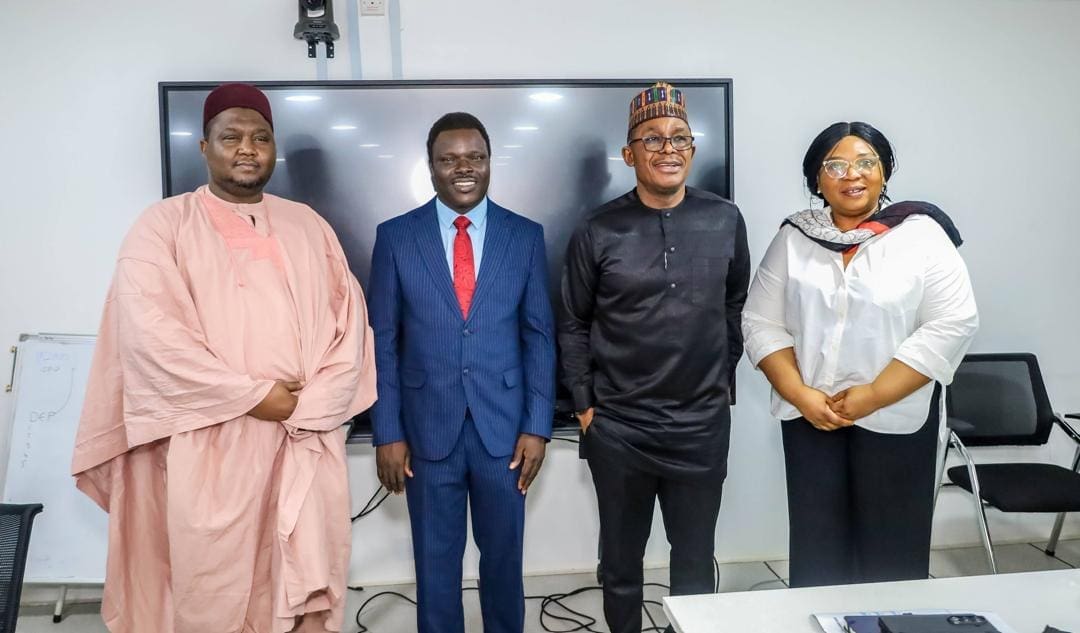
The Nigeria Deposit Insurance Corporation (NDIC) has restated its commitment to talent development and stronger collaboration between academia and industry through a structured leadership exposure programme aimed at preparing future business leaders for real-world corporate challenges.
The initiative, known as the Executive Industry Immersion Challenge (EIIC), was organised in partnership with the Nile Business School, Nile University of Nigeria, Abuja, and held at the NDIC Head Office in Abuja.
The four-day programme is designed to expose postgraduate business students to practical governance, policy formulation, and institutional management within Nigeria’s financial safety-net framework.
Speaking at the opening ceremony, the Managing Director/Chief Executive of NDIC, Mr Thompson Oludare Sunday, described the initiative as a strategic intervention aimed at closing the widening gap between academic training and workplace realities.
He explained that the modern global economy requires professionals who are not only academically sound but also practically grounded in institutional operations and corporate decision-making.
According to him, the immersion programme provides a rare opportunity for participants to gain direct exposure to policy formulation, governance systems, and public sector management processes within a real institutional environment.
Building future leaders through practical exposure
The NDIC boss emphasised the corporation’s role as a critical financial safety net institution responsible for promoting financial system stability and strengthening depositor confidence.
He urged participants drawn from the university’s executive MBA programme to embrace the values being taught during the immersion exercise, noting that leadership development goes beyond classroom learning.
In his words, sustainable institutions and leaders are built on integrity, transparency, ethical conduct, and strong governance principles, which must guide future decision-making in both public and private sectors.
The Project Coordinator of the programme at NDIC and Director of Research, Policy & International Relations, Mr Ibrahim Aliyu, explained that the EIIC was deliberately structured as an experiential learning platform.
He said the programme was designed to bridge the gap between theoretical knowledge acquired in universities and the practical demands of industry, particularly within the financial and regulatory environment.
According to him, the initiative reflects NDIC’s long-term commitment to knowledge transfer and institutional capacity development for young professionals.
Nile business school commends ndic’s corporate practice model
In her remarks, the Dean of the Nile Business School, Prof. Hauwa Lamido, represented by Dr Festus Ekechi, commended NDIC for being selected as the host institution for the programme.
She said the choice was based on the corporation’s strong reputation for corporate governance, professionalism, and institutional integrity within Nigeria’s financial sector.
Prof. Lamido noted that the school would ensure that lessons learned from the immersion programme are integrated into its academic curriculum, adding that the goal is to strengthen the practical application of knowledge among students in their future workplaces.
READ ALSO:
- NDIC Moves to Wind Down 89 Defunct Microfinance and Mortgage Banks Nationwide
- NDIC, CBN to Strengthen Financial System Stability
- Consumers Groan as Cooking Gas Hits ₦1,600/kg; 12.5 kg is now ₦20,000 Amid Supply Squeeze
- FGN May Bond Auction Draws ₦796bn as Investors Favour Longer-Term Debt
The Executive Industry Immersion Challenge represents a growing shift toward experiential education in Nigeria’s business and governance ecosystem, where institutions are increasingly partnering with academia to develop job-ready graduates.
By exposing students to real institutional processes, the programme aims to produce a new generation of leaders equipped not only with theoretical frameworks but also with the practical competence required to navigate complex organisational environments.
As Nigeria continues to confront evolving economic and governance challenges, initiatives such as the NDIC–Nile University partnership highlight the importance of aligning academic learning with industry realities.
The programme reinforces a broader national objective: building a workforce of ethically grounded, practically skilled, and globally competitive leaders capable of driving sustainable development.

Esther Ososanya is an investigative journalist with Pinnacle Daily, reporting across health, business, environment, metro, Fct and crime. Known for her bold, empathetic storytelling, she uncovers hidden truths, challenges broken systems, and gives voice to overlooked Nigerians. Her work drives national conversations and demands accountability one powerful story at a time.