

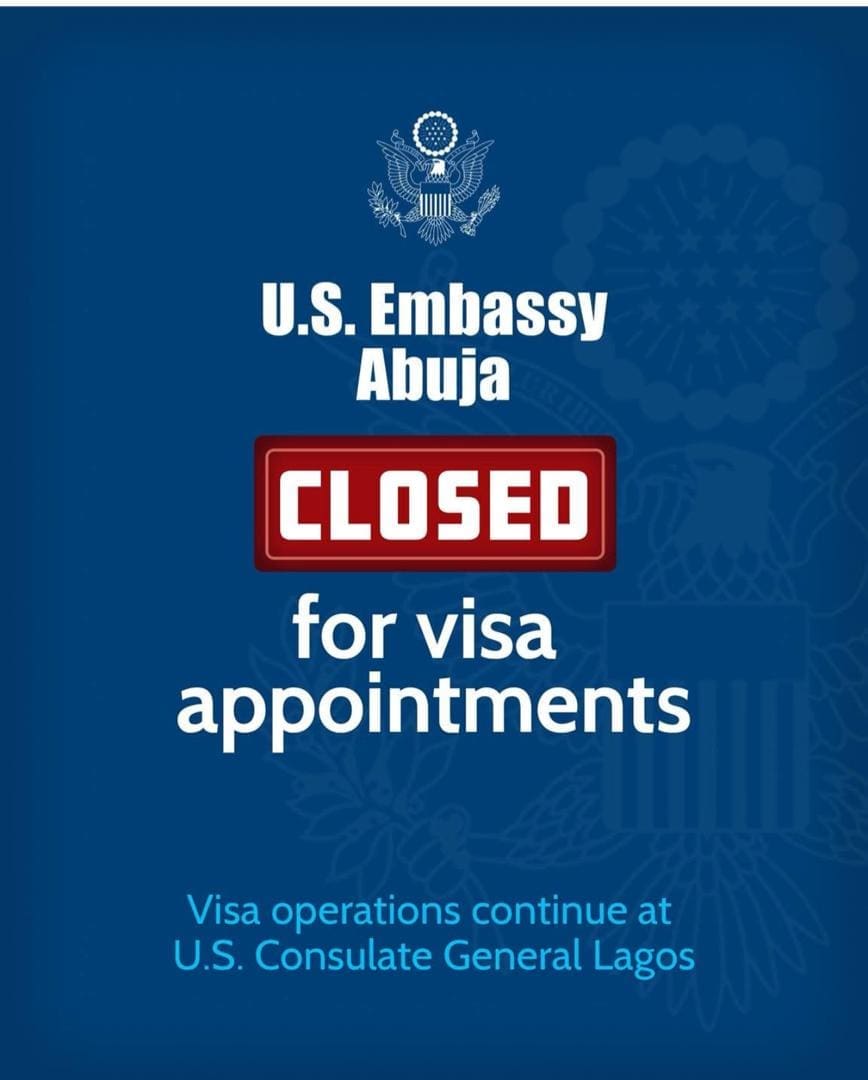
Applicants to use 20 regional visa hubs, including Lagos
The United States will stop routine visa processing permanently at 25 diplomatic missions across Africa from August 1 as part of a major restructuring of its consular services aimed at strengthening security screening and improving efficiency.
The move, announced by the U.S. Department of State, will require visa applicants in more than two dozen African countries to attend interviews and complete routine processing at one of 20 designated regional visa hubs instead of their local U.S. embassies or consulates.
READ ALSO:
- US Visa Expiry Date Does Not Determine How Long Visitors Can Stay — CBP
- US Tightens Visa Waiver Rules, Bars Travellers linked to high-risk Countries
- U.S. Mission Cautions Nigerians on Visa Abuse, Warns of Wider Travel Consequences
- U.S. Embassy Abuja Suspends Visa Appointments
- US Embassy Cancels March 4 Visa Appointments in Abuja over Protest Fears
- US Lists 124 Nigerians for Deportation as Trump Immigration Crackdown Continues
Officials said the changes affect both immigrant and non-immigrant visa applications, although no embassy or consulate will be closed.
Nigeria’s Abuja Affected, Lagos Becomes Regional Hub
Routine visa services will end at U.S. missions in Antananarivo (Madagascar), Abuja (Nigeria), Asmara (Eritrea), Bamako (Mali), Banjul (The Gambia), Brazzaville (Republic of the Congo), Bujumbura (Burundi), Conakry (Guinea), Cotonou (Benin), Durban (South Africa), Freetown (Sierra Leone), Gaborone (Botswana), Harare (Zimbabwe), Juba (South Sudan), Libreville (Gabon), Lilongwe (Malawi), Lusaka (Zambia), Maputo (Mozambique), Maseru (Lesotho), Mbabane (Eswatini), N’Djamena (Chad), Niamey (Niger), Nouakchott (Mauritania), Ouagadougou (Burkina Faso) and Windhoek (Namibia).
Applicants from these locations will instead be directed to regional processing centres in Abidjan, Accra, Addis Ababa, Cape Town, Dakar, Dar es Salaam, Djibouti, Johannesburg, Kampala, Kigali, Kinshasa, Lagos, Lomé, Luanda, Malabo, Monrovia, Nairobi, Port Louis, Praia and Yaoundé.
For Nigeria, routine visa processing will cease in Abuja, while Lagos will continue to operate as one of the regional visa hubs.
State Department Cities Security, Efficiency
The U.S. State Department said the restructuring is part of a long-term effort to standardise visa processing while strengthening national security.
In a statement, the department said the changes would promote more consistent screening, vetting and decision-making, while improving the efficiency of visa operations across the continent.
New System Takes Effect August 1
The changes confirm earlier reports that Washington planned to reduce the number of African diplomatic posts handling visa applications from 50 to 20.
Beginning August 1, applicants seeking tourist, business, employment, family-based and immigrant visas will need to schedule appointments at their assigned regional hubs.
The policy also retains existing immigration measures introduced under the Trump administration, including visa suspensions under Presidential Proclamation 10998, visa bond requirements and pauses affecting certain immigrant visa categories.
The new arrangement is expected to increase travel costs and logistical challenges for many applicants, particularly those who will now need to travel to neighbouring countries for visa interviews.
According to the U.S. government, the regional hub system is intended to improve the consistency of visa processing while reinforcing border security.
Source: Business Insider Africa.

Rafiyat Sadiq is a political, justice, and human rights reporter with Pinnacle Daily, known for fearless reporting and impactful storytelling. At Pinnacle Daily, she brings clarity and depth to issues shaping governance, democracy, and the protection of citizens’ rights.