

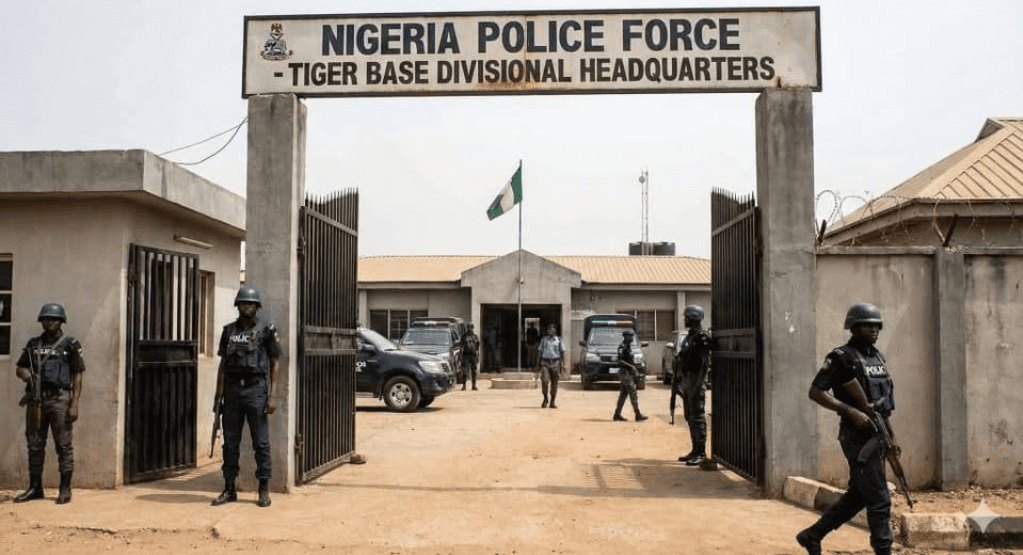
It was set up in 2011 as a unit of the Imo State Police Command to fight kidnapping, armed robbery, and cultism. Today, Tiger Base — as residents call it — stands accused of abuses that eclipse even the disbanded Special Anti-Robbery Squad (SARS). This ICIR investigation tracks how the unit uses surveillance tools to track, extort and torture citizens at its detention facility.
‘They seized my phone and accessed my messages and bank records.’
A team of security operatives, reminiscent of Nazi Germany’s secret police, stormed his residence on a Saturday night. Jolted from sleep amid fear, he thought they were from the Department of State Services (DSS).
Chidiebere (name changed for protection) later realised they were from Tiger Base. They had tapped his calls and monitored his movements. He wasn’t told of his alleged offence but said he paid heavily for his eventual release.
“I was a victim of illegal surveillance by Tiger Base. It was my first encounter with them. They earlier called me with hidden numbers, trying to lure me out for arrest, but I avoided the trap. They tracked me, got my address, and arrived at night in about five Sienna vehicles, shouting my name. They seized and went through my phone to confirm their target, accessing my messages, calls, and bank records.”
Chidiebere said he was taken to Tiger Base’s Owerri facility and detained for two months. “I was subjected to all forms of maltreatment and spent a lot of money on bail before being released. My experience shows how Nigerian security agencies track citizens and ‘kidnap’ them under the guise of arrest,” he lamented.
Chidiebere was lucky to have come out alive from Tiger Base’s dungeon. This reporter gathered that it was not the same for many other victims who allegedly died after being tracked, extorted and arrested by operatives of the anti-kidnapping unit.
A 2025 report by the Coalition Against Police Tiger Base Impunity (CAPTI) named Magnus Ejiogu as one of the victims. On a September evening in 2025, Ejiogu was tracked and arrested at a police checkpoint in Owerri. His family would never see him alive again. For over a month, they were denied any contact with him. His lawyers were turned away.
Even when Nigeria’s National Human Rights Commission wrote to the country’s top police hierarchy, warning that Ejiogu was being tortured and demanding his release, nothing happened. On October 27, more than a month thereafter, his family learned he had died in custody. Police claimed he fell ill, but his family suspects he was tortured to death.
Sometime in December last year, a “confessional interview” allegedly made by one Johnbosco Onuocha while in custody triggered controversy and concerns.
A businessman (printer), Onuocha, had allegedly been put under surveillance and eventually arrested on May 31, 2025, at his shop in Ekeziama, Ahiazu Mbaise LGA, Imo State. Posing as customers, the operatives handcuffed and took him away into detention at the Tiger Base facility in Owerri.
His business neighbours later contacted his family, and a desperate search began, moving from the Ahiazu Mbaise Police Division to Tiger Base and finally to the Imo State Police Headquarters. At every point, the police denied having him in custody.
The family only learnt of his whereabouts after the State Police Public Relations Officer (PPRO), Henry Okoye, issued a statement claiming that Onuocha had been arrested following a gun battle with police operatives, during which he allegedly sustained gunshot injuries.
His sister, Collete, who visited Tiger Base to seek clarification, reportedly questioned the PPRO on how someone arrested openly in a market square could suddenly be described as having engaged in a gun battle with the police.
She said the PPRO claimed that the same detainee, said to have sustained gunshot injuries during a gun battle, was shot while attempting to escape by scaling the Tiger Base fence.
Chinonso Uba, popularly known as Nonsonkwa, an Owerri-based journalist and human rights activist, has also tasted the bitter pill of what many describe as the terror and surveillance exploitation of Tiger Base.
Uba, the President of Nchekwa Ndi Ogbenye Foundation (Protect the Weak International Foundation), spoke with The ICIR in Owerri. He said the anti-kidnapping unit was notorious for chronic human rights violations, including alleged extrajudicial killings of Imo youths profiled as IPOB members, “organ harvesting, enforced disappearance and extortion running into millions of naira”.
Alleging that digital and communication surveillance had been used against him following his activism, he said: “My Facebook profile and page with over 500,000 followers were disabled mysteriously,” adding: “My two phone numbers had been bugged, and my private calls infiltrated.”
Chinonso, who was detained twice in the facility, alleged that in Tiger Base, junior officers from the rank of sergeant and inspectors were amassing questionable wealth, building mansions and acquiring landed property.
“It is only in Tiger Base that you will see junior officers living flamboyantly even more than their senior counterparts, like DSPs elsewhere,” he said.
Back from Finland, detained at Tiger Base
Simon Chukwudi, an Imo State indigene, returned to Nigeria from Finland last December with a list of plans. Detention at Tiger Base wasn’t on it. Within a week, a family dispute with his younger brother got him tracked, arrested and locked up at the notorious unit.
After returning to Finland, Chukwudi posted a video detailing his ordeal. It sounded like fiction from the 1980s British horror series – Hammer House of Horror. Tiger Base, the police unit he named, deals in real horrors: “spying, brutality, and rights abuses”.
Chukwudi said, “Tiger Base is not a place for responsible citizens. I had a family issue with my younger brother that could be settled amicably. But he was ill-advised to report to Tiger Base. They tracked my movements, arrested me, and detained me at their facility.
“I’m not a criminal. But they came in Sienna buses to arrest me like I’d planned a coup against President Tinubu. I was tortured. One of the officers was from my maternal community. I paid N500,000 to be released. I thank God I’m alive — most people don’t leave Tiger Base alive.”
CAPTI: Wiretapping used to seize detainees later found dead
Earlier this year, the Coalition Against Police Tiger Base Impunity (CAPTI) published a damning report documenting harrowing accounts from inside Tiger Base.
Titled ‘Tiger Base Files’, the report — obtained by The ICIR — named 42 victims and documents allegations of at least 200 deaths in custody, enforced disappearances of adults and children, and systematic torture at the facility between 2021 and 26 December 2025.
Speaking with The ICIR, CAPTI’s coordinator, Juwon Sanyaolu, alleged the wrong use of surveillance equipment to track victims, lamenting that no officer had been held accountable.
He cited the case of Japhet Njoku, 32, a security guard tracked and arrested in March 2025 after he was accused of stealing ₦15 million at Alaba Market. He said the victim was held at Tiger Base for nearly two months, tortured, and told to pay ₦300,000 for release.
“He died in custody on May 5, 2025. His family learned of his death from a freed detainee, not police,” Sanyaolu said.
A concerned citizens group under the banner of OGANIHU had petitioned the state governor, Hope Uzodimma, demanding immediate suspension, thorough investigation of Tiger Base officers implicated, and their diligent prosecution.
The petition, dated February 23, 2026, and signed by Chijioke Uwasomba, a professor, and Chido Onumah, coordinator of the African Centre for Media and Information Literacy (AFRICMIL), called on the relevant authorities to ensure that all detainees held at Tiger Base beyond constitutional limits are properly charged or released.
“Your Excellency, Tiger Base has become emblematic of a deeper crisis in policing accountability. Continued inaction risks escalating public anger and undermining confidence in government institutions. The experience of #EndSARS demonstrates the grave consequences of allowing abusive police units to operate without oversight. Imo State must not repeat that trajectory,” the petitioners said.
However, when contacted, the Imo State government denied knowledge of the petition. Declan Emelumba, the Commissioner for Information, said the state government could not comment on the activities of Tiger Base. “It is a police issue. So, you should be talking to the Police Public Relations Officer (PPRO), not the government,” Emelumba said.
‘How my clients were tracked and arrested’
Chinedu Agu, an Owerri-based lawyer and human rights activist, told The ICIR that he represents some suspects arrested and detained by Tiger Base, adding that some had been held since October 2023 and others since late 2023.
“They were accused of crimes we can’t prove they committed. Some were tracked and picked up just for links to a husband, boyfriend, or relative and slammed with the charges – terrorism and arson.”

Agu said surveillance gear was used to track and arrest his clients: “Four of the women were picked up at their homes in Okigwe. ” You don’t do that without surveillance.” He added that illegal tracking and spyware aren’t unique to Tiger Base, citing several other allegations of security agencies violating citizens’ privacy rights.
Describing Tiger Base as a death unit, Agu said, “It’s a place where people do not have regard for human life and for people’s liberty. What happens there is not policing. Those of them in Tiger Base are richer than some politicians.”
A retired security officer, who asked not to be named because of the sensitive nature of the issue, attested to the abuse of spyware facilities by security operatives on suspects.
The source said specific abuses include using trackers to arrest people without warrants or evidence and using spyware to intimidate critics, journalists, and activists. Other methods include forced confessions with torture and leveraging surveillance footage and tapping phones to arrest and extort individuals or their families.
READ ALSO:
- CSOs Oppose Lagos CP Promotion, Seek Probe Over Soweto
- Nigeria to De-Risk Mining Investments with Global Asset Protection Framework – Alake
- Sowore Criticises Police Over Arrest of Bloggers in Elumelu Divorce Allegation
- Amnesty Raises the Alarms as Mob Violence Claims 23 Lives Across Nigeria
Findings reveal that surveillance equipment used by security agencies, including the police, to intercept calls includes Pegasus, a sophisticated military-grade spyware developed by the Israeli cyber firm NSO Group. Sold to governments for law enforcement intelligence, it can intercept calls and messages and track locations. When surreptitiously installed on victims’ phones, it allows an attacker complete access to the device’s messages, emails, media, microphone, camera, calls and contacts.
Another one is FinSpy, which can also intercept calls, messages, and emails and track device location. Also called Fin Fisher, it is a commercial spyware suite sold by the German-UK firm Gamma Group to law enforcement and intelligence agencies. Like Pegasus, Fin Spy infects phones and computers, capturing calls, texts, and locations.
Aside from allegations of rights violations, surveillance gadgets meant to enhance law enforcement capabilities were said to have been used by Tiger Base to monitor, track and arrest innocent citizens. Such gadgets include CCTV cameras, drones, GPS tracking systems, mobile interception and social media monitoring tools. They were allegedly used to locate individuals, extract information or coerce confessions. Surveillance was also believed to be used to monitor and pressure individuals or families, as alleged in cases of extortion and enforced disappearances.
A report by Citizen Lab in 2020 showed that the Nigerian government purchased surveillance equipment to spy on the mobile calls and short message service (SMS) of Nigerians.
In the report, titled “Running in Circles: Uncovering the Clients of Cyberespionage Firm Circles”, the Nigerian Defence Intelligence Agency (DIA) and other unspecified entities in Nigeria had acquired the equipment from Circles, a cybersecurity company founded by an Israeli with affiliation with the NSO groups, to exploit flaws in telecommunications systems and to access calls, SMS and location services.
“Our scanning identified two Circle systems in Nigeria. One system may be operated by the same entity as one of the Nigerian customers of the FinFisher spyware that we detected in December 2014, the report stated.
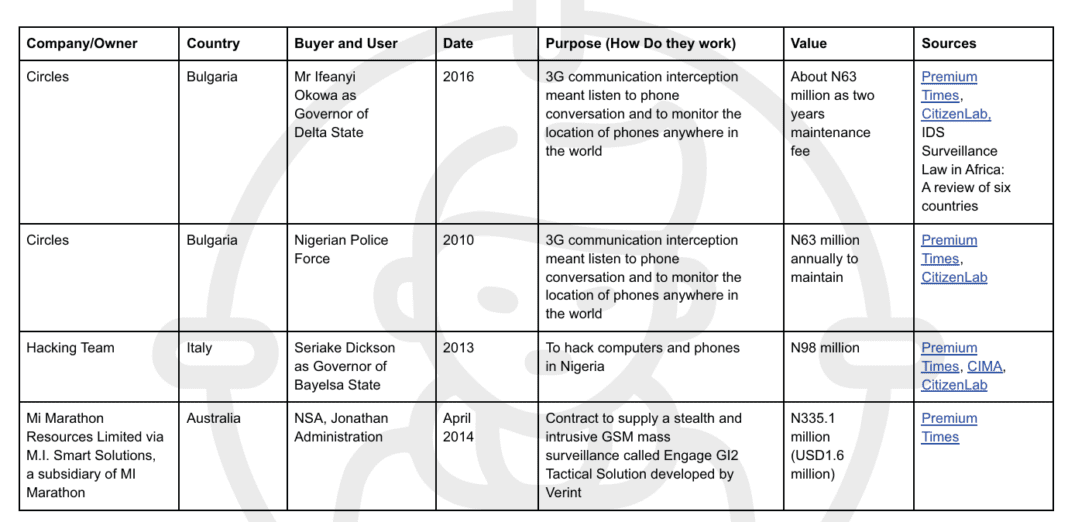
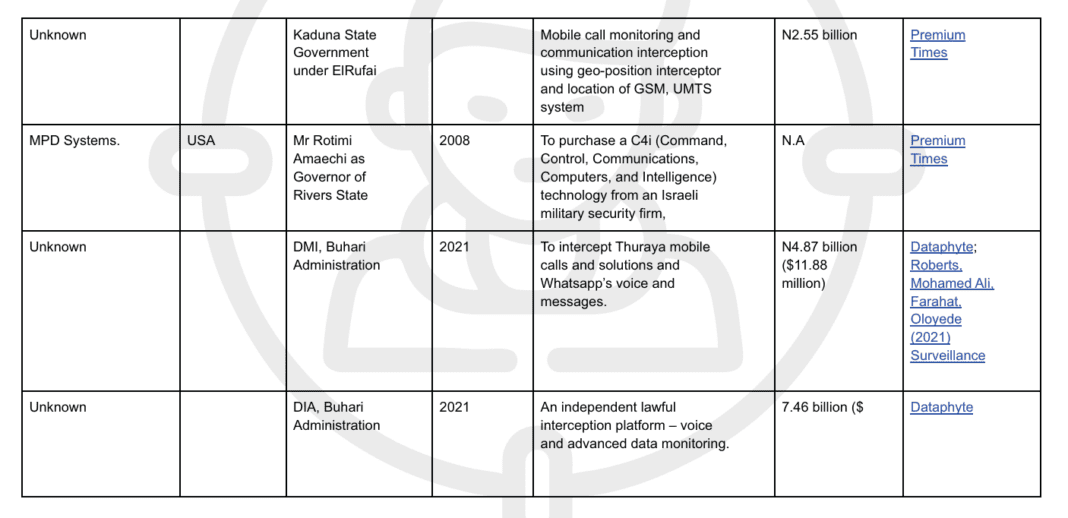
TABLE-1
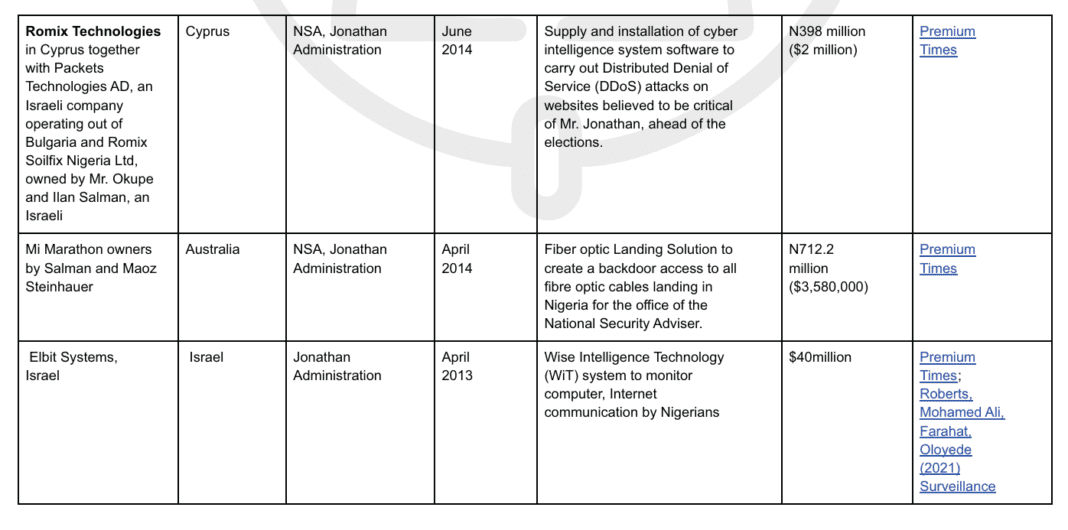
TABLE-2
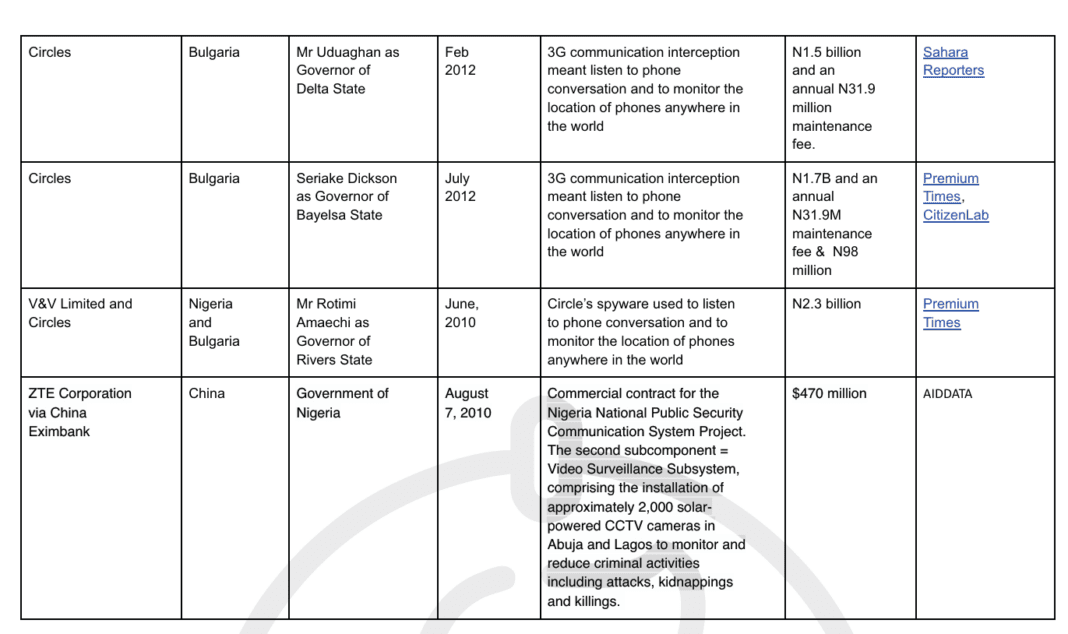
TABLE 3
What to know about Tiger Base
Initially known as the anti-kidnapping unit of the Imo State Police command, Tiger Base, as it is notoriously called, was established in 2011 to combat kidnapping, armed robbery, cultism, and other violent crimes in the state. The then Commissioner of Police in Imo State, Danjuma Aboki, who announced the unit’s creation, cited the need to tackle security challenges in the state. Aboki stated that it would make significant strides in tackling security challenges by reducing kidnapping, armed robbery, and other violent crimes.
Experts speak on legal requirements for use of surveillance equipment
The Nigerian Constitution and Freedom of Information Act 2011 provide for the protection of civic freedoms (rights to free expression, assembly, association and personal privacy) and legalise free access to public information for citizens.
Section 37 of the 1999 Nigerian Constitution specifically protects the privacy of the telephone conversation and telegraphic communication of citizens without interference.
Chinedu Agu, a legal practitioner and rights activist, said surveillance by security agents is proper only when it is lawful, necessary, proportionate and clearly backed by a statutory or court order.
“Once it becomes secret fishing, political intimidation, warrantless interception or monitoring without accountability, it stops being security work and starts looking like abuse of power,” Agu said, adding that in Nigeria, that line matters because “the constitution protects privacy, and even cybercrime enforcement powers must be exercised with due regard to that right.”
He noted further: “No surveillance should be intrusive; it must conform to the fundamental human rights of individuals.”
Lawrence Alobi, a retired police commissioner in the Federal Capital Territory (FCT), said surveillance equipment is not expected to be used by security agents to hound innocent citizens or perceived enemies.
“Twenty-first-century security and policing are technologically driven because crime is becoming very sophisticated. For instance, the mounting of CCTV cameras at police commands is meant to capture images and information on crimes committed so that, at the end of the day, it will be reviewed and possibly presented in court.
“The cameras are not meant to hound citizens or perceived enemies,” Alobi said, adding that the Tiger Base unit was not expected to be a threat but to work professionally in accordance with its mandate. “They should operate within professional standards because they are funded with taxpayers’ money. Allegations of misuse of spyware equipment by them should be looked into.”
An Abuja-based security expert, Kabiru Adamu, acknowledged the need to use surveillance equipment by security agencies in Nigeria, noting that the lack of oversight on the part of the legislature was responsible for abuse.
Adamu said: “Every government tries to have capabilities for technical surveillance. That means it’s a requirement for mostly the intelligence communities in every government. I would say Nigeria is not doing anything exceptional in attempting to obtain surveillance capabilities, especially given the current security challenges.

“As far back as under the Buhari administration, we scrutinised certain components of the budget, especially the intelligence community, and what was apparent was that there were aspects for obtaining surveillance capabilities within those budgets, and this continued into this administration.”
According to him, with the doctrine of separation of powers, the legislature should have the capacity for oversight and ask critical questions regarding the procurement and usage of those items.
“Unfortunately, what we haven’t seen in Nigeria is the doctrine of separation of powers supporting democratic usage of that equipment. In fact, it is not on record that the legislature, the relevant committees, statutory committees, and standing committees within the two chambers have ever, at least to the knowledge of the public, asked questions regarding those procurements and the usage of the items,” he said.
Digital authoritarianism in Nigeria
In December 2021, a report titled ‘Security Playbook of Digital Authoritarianism in Nigeria’ revealed how the massive financial resources, equipment, and technologies originally procured in the name of counter-terrorism and curbing insecurity in Nigeria were diverted to monitor the movement of citizens, track the activities of civic actors online, intercept private communication, restrict online civic space, and limit the ability of civic actors.
According to the report, the popular tactics included legal restrictions, misuse of surveillance technologies, distributed denial of service (DDoS) attacks, Internet Protocol (IP) blocking, internet shutdown, biometric data collection, and social media bans.
Others comprised spying on citizens, including activists and opposition politicians, and coordinated cyberattacks, especially hacking of the servers and websites of media and civil society watchdogs.
Lawful use of surveillance equipment in Nigeria
Actually, Nigerian laws contain specific provisions that permit the state and security agencies to access, track or monitor citizens’ communications. However, this is only allowed under certain conditions and legal frameworks. These powers are meant to operate within limits set by law and the Constitution.
Section 37 of the Nigerian Constitution guarantees a fundamental right to privacy of citizens’ homes, correspondence, telephone conversations and communications.
However, Section 45 allows the government to restrict rights, including privacy, when it is reasonably justifiable in a democratic society for purposes like defence, public safety, public order, or protecting the rights of others.
This implies that communications are legally private but can be lawfully limited if another written law authorises interference under specific conditions.
Also, Sections 146 to 148 of the Nigerian Communications Act (2003) require telecom companies to develop interception capabilities and allow interception when ordered by the NCC or an authorised officer.
The Act empowers the Nigerian Communications Commission (NCC), in the interest of public safety or national security, to order telecom operators to intercept private communications and disclose data to authorised officers.
Authorised agencies, such as the State Security Service, the Office of the National Security Adviser, and the Nigeria Police Force, can intercept communications with a court-issued warrant. This can be done for national security, preventing or investigating a crime, public safety or emergencies, or the economic well-being of citizens.
Nigeria as Africa’s leading customer of surveillance contracts – Research
Research published September 27, 2023, by the Institute of Development Studies and the African Digital Rights Network described Nigeria as Africa’s largest customer of surveillance technology contracts, spending hundreds of millions of dollars annually and at least US$2.7 billion on known contracts between 2013 and 2022. This is the equivalent of $12 per Nigerian citizen.
The report titled ‘Mapping the Supply of Surveillance Technologies to Africa‘ reveals that surveillance technology was used to spy on peaceful activists, opposition politicians and journalists, singling them out for harassment, arrest and torture, in violation of international human rights law and supplier companies’ own self-policing measures.
The researchers reveal that Nigeria is a leading customer of every major surveillance technology they studied, including internet and mobile interception, social media monitoring, biometric ID data and the so-called ‘safe city’ monitoring of citizens in public spaces. They also found that the Nigerian state permits far more government agencies to conduct surveillance than the other countries studied. The nation also has contracts with each of the leading surveillance technology suppliers based in the US, China, the EU, the UK and Israel.
Budgetary allocations on surveillance
Over the years, federal and state governments have doubled budgetary allocations, public spending, and procurements of invasive technologies and communications systems. This has been justified as a bid to root out unabating terrorism, banditry, cybercrimes and other forms of organised crime in the country.
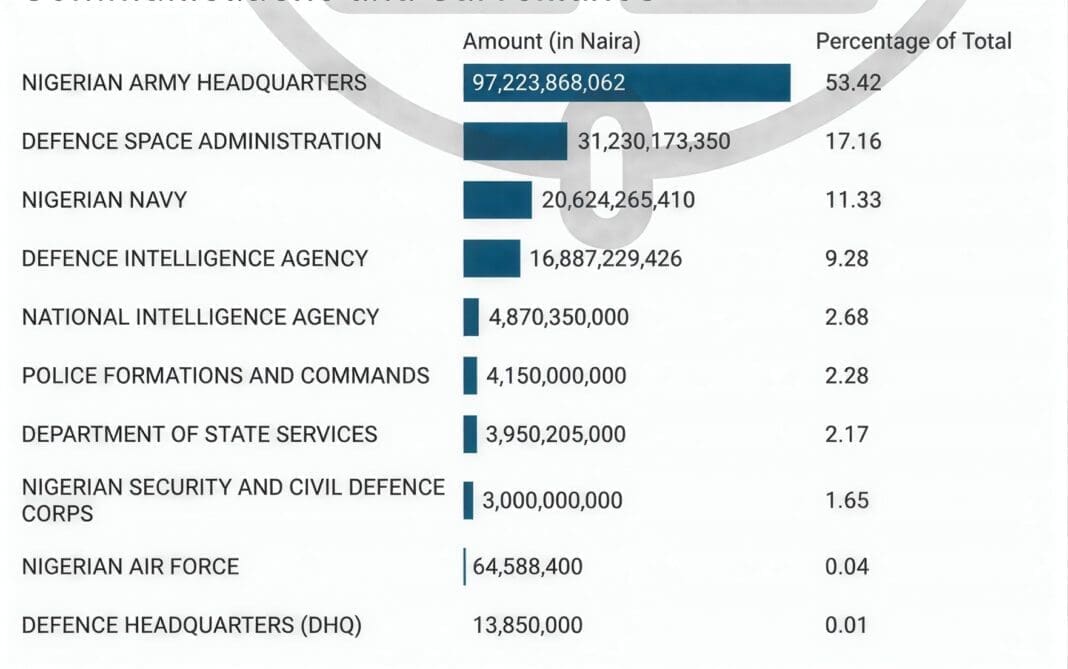
Although these massive acquisitions are made in the name of security, huge disparities continue to exist between the stated official motivations and their actual use for advancing purely political agendas, corrupt enrichment, and fostering a climate of digital repression.
Findings show that as state governments were amassing spying and hacking devices to achieve political ends, the federal government also intensified its digitalised undercover activities through humongous budgetary provisions and acquisition of sophisticated surveillance hardware and software developed for counter-terrorism purposes.
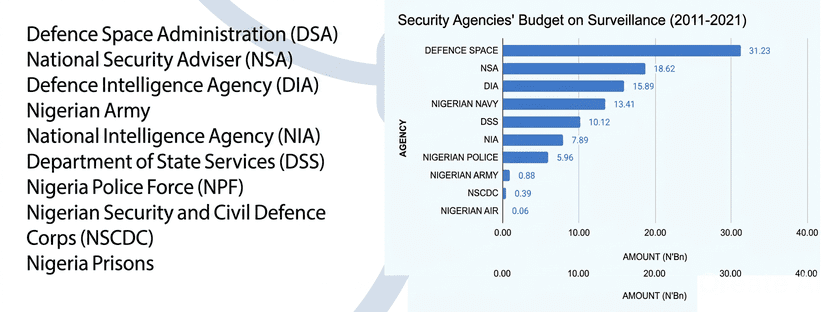
Countering terrorism, especially the Boko Haram-led terrorist activities in north-eastern Nigeria, provides states with the safest legal justification for these acquisitions. Whereas federal agencies are making heavy policy and resource commitments for a similar purpose. For instance, the 2013 budget included provisions for the purchase of a Wise Intelligence Network Harvest Analyser System, an open-source Internet monitoring system and a personal Internet surveillance system at a cost of N9.496 billion ($61.26 million). Between 2011 and 2021, government security agencies budgeted at least N104.46 billion for tracing and monitoring communication systems.
In 2021, the National Assembly approved the procurement of N4.87 billion worth of surveillance technologies “to intercept Thuraya mobile calls and solutions” and WhatsApp’s voice and text messages. In the 2021 supplementary budget, the federal legislature also approved the request of N7.46 billion from Nigeria’s Defence Intelligence Agency (DIA) to launch a purported “independent lawful interception platform – voice and advanced data monitoring”. These supplementary budgetary provisions are additions to the N30.82 billion originally budgeted for in the 2021 budget.
Last year, the federal government allocated a substantial N4.91 trillion to security and defence for the year, focusing on retaking control of “ungoverned spaces” in the northern parts of the country.
Part of the budget was reportedly earmarked for the modernisation of the Nigerian Police Force and acquiring advanced equipment, boosting intelligence operations, and implementing community-driven policing strategies.
A scrutiny of the 2026 federal budget revealed that N213.2 million was earmarked for surveillance equipment.
This was captured under the procurement and installation of a video security surveillance system and the provision of an automated E-PABX intercom, including console equipment and a solar power backup system in all police state commands nationwide.
Also, N1.5 billion was budgeted for the provision of cybersecurity tools & solutions/renewal of annual licenses, while N287.9 million was earmarked for the procurement of operational equipment for PMF squadrons nationwide.
Additionally, a whopping N11 billion was budgeted for the “purchase of security equipment”, with an additional N48.8 million earmarked for the provision of ballistic guard booths (with surveillance and proximity devices) for police and zonal headquarters.
A scrutiny of the Imo State 2026 budget also revealed that the State Ministry of Homeland Security and Vigilante Affairs was allocated the sum of N500 million for the purchase and installation of 100 CCTV cameras for police services across the state.
The Imo Police Command evades ICIR’s enquiries.
On March 26, 2026, the ICIR reached out to the Imo State Police Command via telephone to respond to findings and allegations against Tiger Base. The command’s public relations officer, Henry Okoye, a deputy superintendent of police (DSP), promised to secure an appointment with the state police commissioner for the reporter. He also promised to facilitate an interview with the Tiger Base commander.
However, on the scheduled date, the reporter waited for over five hours at the PPRO’s office. When he eventually showed up, he asked the reporter to come back the next day. The reporter was in his office the following day. After waiting for another two hours, he failed to take the reporter to the police commissioner as promised. He stopped responding to the reporter’s calls thereafter.
Allegations mere propaganda, says Tiger Base commander
Also, when contacted on the phone, Tiger Base Commander Oladimeji Odeyeyiwa dismissed allegations of human rights abuses against his unit, describing them as mere ‘propaganda’. He, however, declined to speak further, saying, ‘Right now, I am in the market.’
Subsequent calls to secure an appointment with him were unanswered.
The ICIR reports that on Friday, December 5, 2025, the Imo State Police command led journalists on what it described as ‘an open door, guided tour of the Tiger Base in Owerri.
Odedeyiwa, along with the PPRO Okoye, who briefed the journalists at the end of the visit, described allegations of rights violations against the unit as baseless and intended to mislead the public.
The commander said Tiger Base remained a legitimate tactical formation of the Nigeria Police Force, mandated to combat kidnapping, armed robbery, cultism, and other violent crimes.
He, however, said the facility was equipped with CCTV cameras strategically installed across its premises, with real-time footage linked to the office of the commissioner of police to ensure continuous monitoring and accountability.
”The entire environment is secured with barbed wire fencing, CCTV surveillance, and no surrounding bushes,” he reportedly said, adding, “We have functional sectional offices, disciplinary units, the IGP Monitoring Unit, X Squad, and an active Complaint Response Unit, CRU.”
The commander said the unit focuses exclusively on high-profile cases, including armed robbery, murder, kidnapping, and terrorism. “We have newly built and commissioned charge rooms, and our tactical teams remain on standby to ensure the continued security of Imo State,” he reportedly stated.
Credit: ICIR
