


As the key driver of economic development, Nigeria’s energy sector has, over the years, been influenced by events, policies and actions.
Nigeria’s energy sector in 2026 faces several significant events, all testing whether recent reforms can translate into tangible improvements in oil and gas production, power supply, and investments in other subsectors. The major issues are centered around key projects and policy implementations in oil and gas, power, and renewables, and how they will shape Nigeria’s economy. While the government is aggressively pursuing a gas-led industrial revolution, it is also spearheading the restructuring of the national power grid.
Oil & Gas sector
Critical Infrastructure & Project Delivery
AKK Pipeline completion: The $2.8 billion Ajaokuta-Kaduna-Kano (AKK) gas pipeline is expected to start delivering gas from 2026. The Nigeria National Petroleum Company Limited had in its monthly report for November 2025, said the project has reached 90 per cent completion, adding that it will be completed in 2026. “Significant progress recorded with completion of the mainline welding works and pressure testing. Project is on course to be completed in 2026,” NNPCL said in the report.
The AKK project is critical for supplying gas to power plants and industries in northern Nigeria, potentially stimulating industrial growth and creating thousands of jobs.
Oil Licensing Round Outcomes: The 2025 licensing round, offering 50 oil and gas blocks, is projected to attract about $10 billion in investment and an additional two million barrels of oil production. A key test in 2026 will be whether these awards translate into signed contracts, funded work programmes, and the start of actual development drilling.
Upstream Rebound: Target of 2.5 million BPD
The Nigerian Upstream Petroleum Regulatory Commission (NUPRC) has set a bold target to reach 2.5 million barrels per day (bpd) of crude oil production by the end of 2026.
A recent report on Nigeria’s oil output showed that the country recorded 1,599,054 barrels per day in November 2025 (with crude oil consisting of 1,436,005 bopd and condensate, 163,049 bopd), indicating a slight increase from 1,597,199 bopd. The November output, according to data released by the NUPRC, is about 4 per cent short of the 1.5 million bpd quota allocated to Nigeria by OPEC.
Upstream Asset Divestments: Planned divestments by the NNPC and other International Oil Companies (IOCs) will be another factor in shaping the outcome of upstream activities in the country. NNPC recently disclosed plans to sell stakes in some of its oil and gas assets. The national oil company called for bids by investors, a move aimed at attracting more investments in the sector.
READ ALSO: Towards Power Sector Viability: FG Mulls Minimum Capital Requirement For DisCos
2026 will see the finalised transition of several onshore assets from International Oil Companies (like Shell and ExxonMobil) to domestic players (like Seplat and Oando), fundamentally shifting the ownership structure of Nigeria’s oil. The market will watch to see if new indigenous owners can deliver in what is described as “capital discipline, technical depth, and operational reliability.”
Local Refining Expansion, Rising Competition and Supply Stability
With the Dangote Refinery coming on stream in 2024 after fuel subsidy removal, there has been more emphasis on increasing local refining capacity as part of measures to strengthen Nigeria’s energy security. The refinery, which currently has an installed capacity of 650,000 bpd, has announced plans to expand it to 1.4 million bpd.
Also, more local refineries, such as the 200,000 bpd BUA Refinery, are nearing completion to boost local refining capacity.
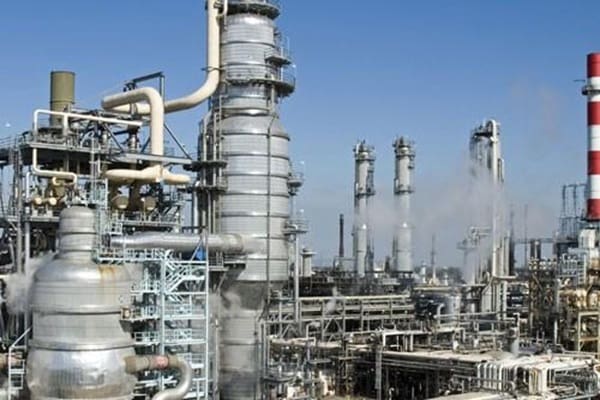
Also, the Dangote Refinery’s direct distribution model has intensified competition in the downstream petroleum market and improved supply stability. This, according to industry watchers, is expected to increase in 2026 as the refinery begins direct supply to filling station owners and other bulk buyers while rolling out incentives to earn a larger market share, while reducing the cost of petroleum products across the country.
Power Sector
Electricity Act reforms & Power Grid Decentralization
With the Electricity Act 2023 providing a legal framework for decentralization of the electricity market and power grid expansion, experts believe that 2026 will be the test year for several states as they attempt to launch their own independent electricity markets, moving away from total reliance on the national grid.
Also, the government aims to add 4,000 MW of power capacity to the national grid by the end of 2026.
Closing Metering Gap
Experts have observed that closing the metering gap is one of the vital ways of boosting the commercial viability of Nigeria’s power sector, as it would help in improving revenue collection. About 5.38 million registered electricity customers nationwide remain unmetered as of August 2025, according to a report by the Nigerian Electricity Regulatory Commission (NERC).
Observers note that only an aggressive rollout of the National Mass Metering Programme can solve it. The federal government has set a target of installing four million smart meters during 2026 alone to close the metering gap and eliminate estimated billing.
READ ALSO: Dangote Accuses Fuel Importers of Sponsoring False Reports of Refinery Shutdown
The government also plans to fully implement “Cost-Reflective Tariffs” this year to make the power sector financially viable for investors.
The Presidential Power Initiative (PPI), in partnership with Siemens Energy, enters a decisive year for Phase One completion.
Renewable Energy Targets
Nigeria’s renewable energy targets are long-term ambitions aimed at achieving carbon neutrality by 2060. There is a national target of generating 30 GW of electricity by 2030, with 50 per cent from renewables.
With the above goal, the government’s primary focus in 2026 is to increase investment and expand solar power access to unserved communities.
The Director General of the Energy Commission of Nigeria, Mustapha Abdullahi, affirmed that increased investments in renewable energy will remain a key component of Nigeria’s energy transformation strategy in 2026, to enhance electricity supply, boost economic growth, and promote the country’s clean energy objectives.
“More communities have been identified and mapped out for solar power connections as the Federal Government expands renewable energy interventions nationwide,” Abdullahi stated recently.
Potential Challenges and Defining Issues
While expressing cautious optimism on the 2026 outlook for Nigeria’s energy sector, experts have warned that gains from 2025 are “fragile and far from transformational.”
Execution: Analysts believe that progress in Nigeria’s energy sector will depend on overcoming several persistent challenges. These include issues of liquidity in the gas-to-power market, security of oil and gas infrastructure, and regulatory predictability, which remain major hurdles to investor confidence.
In its energy outlook for 2026, energy policy analyst and partner, Bloomfield Law Practice, Mr. Ayodele Oni, said Nigeria’s energy sector will be shaped by more of execution than mere policy announcements. This means emphasis on turning policy, licenses, and transactions into barrels of oil, cubic feet of gas, and stable megawatts of power.
READ ALSO: Dangote Refinery, Marketers Set New Petrol Prices amid Rising Competition
Also, in his outlook for 2026, Partner and Energy Utilities and Resources Leader for West Africa at PWC, Pedro Omontuemhen, said reforms such as the Electricity Act and the National Integrated Electricity Policy are expected to significantly reshape Nigeria’s power sector landscape in 2026. Omontuemhen maintained that they are expected to be game-changers, catalyzing further privatization, improving market liquidity, and attracting much-needed private investment.
Downstream Reliability: While the Dangote Refinery is operational, its impact in 2026 depends on operational stability, feedstock consistency, and logistics, which will determine Nigeria’s actual reduction in fuel imports.

Victor Ezeja is a Nigerian journalist skilled in producing insightful news analyses, feature stories, and interviews that simplify complex issues and drive informed public discourse. His work combines rigorous research, balanced reporting, and compelling storytelling to highlight developments shaping industries and society. Victor, who holds a Master's Degree in Mass Communication, specializes in energy, aviation, business, and economic reporting. He can be reached via @VICTOREZEJA on X