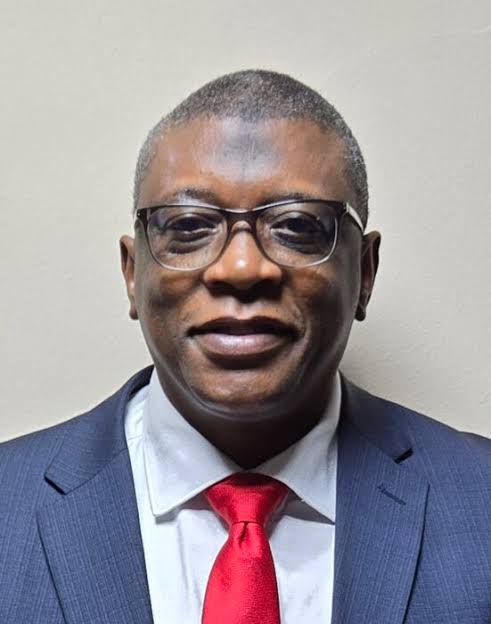
As Nigeria marks 65 years of Independence on Wednesday, October 1, a renowned economist, Muda Yusuf, said there are critical areas the government must prioritise to drive economic growth that would positively impact the lives of the masses for the next decade. Yusuf, chief executive officer (CEO) of the Centre for the Promotion of Private …

As Nigeria marks 65 years of Independence on Wednesday, October 1, a renowned economist, Muda Yusuf, said there are critical areas the government must prioritise to drive economic growth that would positively impact the lives of the masses for the next decade.
Yusuf, chief executive officer (CEO) of the Centre for the Promotion of Private Enterprise (CPPE), outlined the priority areas in a statement on Monday, September 29.
He noted that Nigeria’s economic history at 65 is one of resilience, missed opportunities, and enormous untapped potential.
He said, however, that the current reform agenda of the government presents a rare opportunity to reset the economy on a path of stability, competitiveness, and shared prosperity.
READ ALSO: Workers Locked Out at NUPRC Headquarters Amid PENGASSAN–Dangote Dispute
“Seizing this moment will require consistent policies, institutional strengthening, and a deliberate effort to ensure that economic growth translates into improved living standards for citizens,” Yusuf said.
Pinnacle Daily reports that Nigeria gained its independence on October 1, 1960, from Britain, its erstwhile colonial master.
Strategic areas of focus
Nigeria’s economy has passed through thick and thin, but looking ahead for the next decade, Yusuf said the country must strategically focus on deepening economic diversification by scaling up value addition in agriculture, manufacturing, and solid minerals.
The government must strengthen governance and institutions by enhancing transparency, reducing the cost of governance, and improving fiscal responsibility and management.
He further suggested that the government must invest in human capital by prioritising education, health, and vocational training to harness the demographic dividend.
Another area is that the government must accelerate infrastructure development, including power, transport, and broadband, which must be prioritised through public-private partnerships (PPPs) and innovative finance.
To ensure inclusive growth, he added that the government must focus on embedding poverty reduction, job creation, and social protection in fiscal and monetary policy.
READ ALSO: Student Loan Portal Closed, Reopens October
According to Yusuf, the past two years of President Bola Tinubu’s administration have seen the government implement bold reforms, including exchange rate unification, fuel subsidy removal, and tax policy adjustments.
“These measures have imposed short-term pain — high inflation and reduced household purchasing power — but early signs of macroeconomic stabilisation are emerging.
“To sustain reform momentum, these measures must be complemented by targeted social protection programmes — cash transfers, food security interventions, and job-creation initiatives — to shield vulnerable households and maintain public support,” he said.
Highlights on how Nigeria’s economy fared
Highlighting how Nigeria’s economy has journeyed over the past 65 years, Yusuf said the transformation has been shaped by cycles of boom and bust with far-reaching reforms, recurring crises, and enduring struggles with diversification.
“As the nation marks 65 years of independence, reflecting on this trajectory is essential to chart a more sustainable, competitive, and inclusive path for the future,” he stressed.
He stated that from the early years of independence, the Nigerian economy was largely agrarian, productive, and inclusive as agriculture contributed an estimated 60 per cent of gross domestic product (GDP) and employed the majority of the country’s workforce.
He pointed out that the export economy was anchored on cash crops — cocoa, groundnuts, palm oil, and rubber — and citizens were actively engaged in the entire value chain.
He noted governance was decentralised, with regions controlling resources and revenues, which promoted balanced development, accountability, and healthy competition.
“This early experience offers an enduring lesson: decentralisation and local ownership of resources drive innovation and inclusive growth.
“Restoring a more fiscally federal structure could once again foster subnational competitiveness, stimulate innovation, and encourage states and regions to take greater ownership of economic outcomes,” Yusuf said.
READ ALSO: Student Loan Portal Closed, Reopens October
But when in the 1970s, oil became the dominant source of public revenue and foreign exchange, it created structural vulnerabilities as agriculture was neglected, leading to food import dependence.
“Corruption and rent-seeking behaviour escalated, while import-substitution industrialisation became overly dependent on imported inputs, leaving domestic value chains underdeveloped,” he noted.
The CPPE highlighted further that Nigeria’s oil and gas sector was later to be plagued by poor governance, corruption, and rent-seeking, leading to the collapse of state-owned refineries, heavy dependence on imported petroleum products, and widespread crude oil theft.
“This mismanagement undermined fiscal stability and reduced the sector’s developmental impact,” he said.
Recent developmental push
According to the renowned economist, the Dangote Refinery and petrochemical complex and ongoing industry reforms signal a potential turnaround and, if sustained, could restore value to the sector, enhance energy security, and catalyse new downstream and petrochemical investments.
He noted concerns that the last two decades have seen a deterioration in national security — insurgency, banditry, kidnapping, ethnic and religious conflicts, farmers-herders clashes and armed robbery — which disrupted agriculture, manufacturing, and mining, and eroded investor confidence.
“Restoring security is therefore not just a social imperative but an economic one, necessary to rebuild productivity and unlock investment in the real economy,” Yusuf said.
Nigeria’s population of an estimated 230 million is both a significant opportunity and a daunting challenge.
He said infrastructure — roads, power, housing, education, and healthcare — remains grossly inadequate, undermining productivity and competitiveness, adding that aggressive infrastructure investment, leveraging public-private partnerships and innovative financing models, is no longer optional but an urgent necessity.

Alex is a business journalist cum data enthusiast with the Pinnacle Daily. He can be reached via ealex@thepinnacleng.com, @ehime_alex on X