

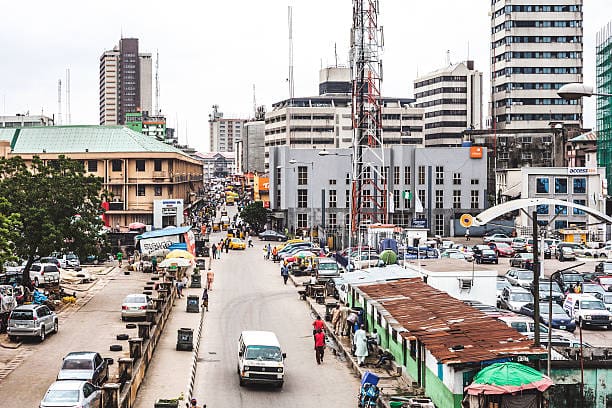
Nigeria’s economy is expected to maintain steady growth through 2027 as recent reforms continue to strengthen macroeconomic stability, according to the International Monetary Fund (IMF).
The Bretton Woods Institution, however, warned that rising food and energy costs, worsening poverty, election-related pressures and weak participation in the global artificial intelligence (AI) boom could threaten the country’s recovery.
The IMF said in its July 2026 World Economic Outlook, where it retained Nigeria’s economic growth forecast at 4.1 per cent for 2026 and projected a slight improvement to 4.3 per cent in 2027, unchanged from its April outlook.
The projections suggest that the Fund believes Nigeria’s economic reforms have created a more stable foundation despite heightened global uncertainty.
It, however, stressed that stronger growth alone would not be enough unless the country addresses the mounting pressures facing households and businesses.
Growth Holds Firm as Reforms Strengthen Economy
The IMF said Nigeria remains one of the larger economies in Sub-Saharan Africa, benefiting from recent macroeconomic reforms and improving external conditions.
It noted that “Nigeria is supported by improved macroeconomic stability and favourable terms-of-trade effects,” pointing to stronger economic fundamentals that have helped keep growth projections unchanged despite global volatility.
The outlook mirrors the recent improvement in Nigeria’s macroeconomic indicators.
According to the IMF, the country is entering a period of greater stability as reforms continue to support investor confidence and economic activity.
The Fund expects the economy to grow by 4.1 per cent this year before accelerating slightly to 4.3 per cent in 2027.
While this remains below Nigeria’s long-term growth potential, it reflects a more resilient economy than in previous years, attributing part of the improved outlook to favourable terms of trade.
As an oil-exporting economy, Nigeria stands to benefit from stronger commodity prices, with crude oil prices projected to rise by 31.8% in 2026 compared to the previous year.
Higher oil prices could strengthen export earnings, improve foreign exchange inflows and support government revenue, reinforcing the macroeconomic gains already achieved through recent reforms.
Despite these anticipations, the IMF stressed that these improvements have not removed the country’s vulnerabilities.
READ ALSO:
- CBN Warns Against Rejecting Standard ₦100 Notes, Threatens Sanctions
- IMF-Backed Monetary Tightening Could Push More Nigerians into Poverty — CPPE
- IMF Cuts Nigeria’s 2026 Growth Outlook to 4.1% on Middle East War Shock
- CPPE Projects Stronger H2 Economy, Warns 2027 Politics Could Derail Recovery
Rising Living Costs, Elections and AI Gap Threaten Recovery
Despite the stable growth outlook, the IMF warned that higher prices for necessities remain the biggest risk to Nigeria’s economic recovery.
It said “higher prices for essentials are expected to further aggravate poverty and food insecurity,” even as macroeconomic conditions continue to improve.
The warning comes as global food prices are projected to increase by eight per cent in 2026 because of higher energy and fertiliser costs.
For Nigeria, where food inflation remains a major concern, the IMF believes these pressures could significantly worsen household welfare.
The Fund warned that disruptions in fertiliser and energy markets could further weaken food security, particularly across Sub-Saharan Africa, where smallholder farmers often struggle to compete for essential agricultural inputs.
Beyond food inflation, the IMF identified political developments as another significant risk.
It cautioned that “higher food and energy prices could heighten the risk of social unrest and domestic political instability,” particularly in vulnerable economies and “countries with upcoming elections.”
The report suggests that election cycles could place additional pressure on fiscal management as governments face increasing demands to cushion households from rising living costs.
However, rather than expanding broad subsidies or introducing price controls, the IMF recommended targeted support for vulnerable households.
It advised governments to provide “temporary, tightly targeted support” while building stronger systems to deliver social assistance efficiently.
The Fund argued that broad subsidies, tax cuts and price controls are “poorly targeted, fiscally costly, and politically difficult to unwind.”
Instead, it urged governments to preserve market signals, avoid export bans and strengthen international cooperation to reduce volatility in food markets.
The IMF also advised countries benefiting from stronger commodity prices to avoid excessive spending during periods of higher oil revenues.
Rather than increasing expenditure, it recommended saving or redeploying commodity gains within “a credible medium-term fiscal framework anchored in debt sustainability” to preserve fiscal buffers against future shocks.
Another structural challenge highlighted in the report is Nigeria’s limited participation in the global AI-driven technology expansion.
The IMF observed that Nigeria and many Sub-Saharan African economies remain “largely absent from the AI-driven global technology upswing,” limiting their ability to benefit from one of the world’s fastest-growing sources of productivity and investment.
The IMF added that this technological gap, combined with rising food insecurity, fiscal constraints and declining official development assistance, leaves countries like Nigeria more exposed to future commodity shocks and weaker long-term growth prospects.

Alex is a business journalist cum data enthusiast with the Pinnacle Daily. He can be reached via ealex@thepinnacleng.com, @ehime_alex on X