

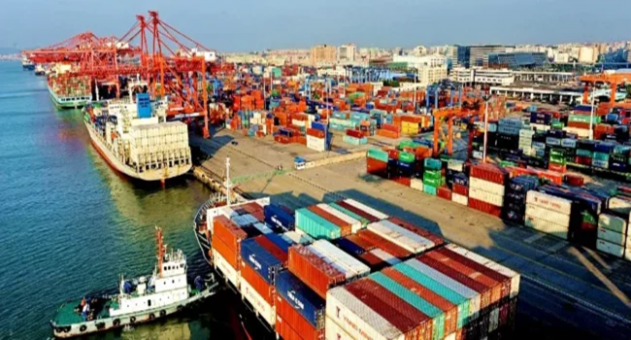
The Federal Government may lose close to $1 million in customs duties and taxes if the planned disposal of more than 2,500 empty shipping containers by Grimaldi Nigeria proceeds without compliance with existing customs regulations, a maritime industry expert has warned.
Speaking during an interactive session with members of the Shipping Correspondents Association of Nigeria (SCAN), maritime trade consultant, Mr. Okey Ibeke, called on the Nigeria Customs Service (NCS) to immediately suspend the proposed sale and investigate whether the company complied with customs procedures governing temporary imports.
Ibeke expressed concern that the containers, reportedly imported under temporary admission arrangements, were being offered for sale within Nigeria without undergoing the mandatory conversion process required under customs regulations.
According to him, reports indicate that the containers are being sold for between $1,600 and $2,000 each, with payments expected to be made through U.S. dollar domiciliary accounts.
He warned that beyond the potential revenue loss, the transaction could undermine the Federal Government’s efforts to strengthen the naira by encouraging dollar-denominated transactions within the domestic economy.
Under Nigeria’s temporary importation regime, shipping containers are admitted into the country duty-free on the condition that they are re-exported after use. Before such containers can be legally sold locally, they must first be converted to permanent import status through customs valuation and the payment of applicable duties, taxes and levies.
“Any sale conducted without fulfilling these requirements could amount to a violation of the Nigeria Customs Service Act 2023 and result in significant revenue losses to the government,” Ibeke said.
READ ALSO:
- FG Targets ₦605bn Advertising Boom, $1bn Spectrum Revenue as Digital Switch-Over Begins June 17
- FGN May Bond Auction Draws ₦796bn as Investors Favour Longer-Term Debt
- Nigeria’s Ports Record 1,085% Surge in Export Containers in Q3
- FG to Sell ₦600bn Bonds in May Auction
He estimated that the government stands to lose between $350 and $400 in customs duties and taxes on every container sold without proper conversion. Based on the reported disposal of 2,500 containers, he said the potential revenue loss could approach $1 million.
Ibeke noted that the issue extends beyond the Grimaldi transaction and reflects a broader challenge within Nigeria’s maritime sector.
Growing Problem of Empty Containers
According to him, the country’s long-standing trade imbalance, marked by high import volumes and relatively low export activity, has led to the accumulation of thousands of empty containers at ports and inland locations nationwide.
He explained that rising costs associated with repositioning empty containers to Asia and Europe have prompted some shipping lines to dispose of them locally instead of re-exporting them as required under customs regulations.
“With shipping lines facing increasing costs of repositioning empty containers to Asia and Europe, many are reportedly disposed of locally rather than re-exported,” he said.
Industry observers, he added, have noted that thousands of decommissioned shipping containers have been converted for alternative uses, including offices, retail outlets, storage facilities, cold rooms and security posts.
Historical Losses Could Exceed $600m
Ibeke estimated that as many as 250,000 containers may have been sold or converted for local use in Nigeria over the past three decades.
Using an average container value of $1,500, he projected that cumulative losses from unpaid customs duties and Value Added Tax could exceed $375 million, while total liabilities, including penalties and other charges, could surpass $600 million.
He therefore urged the Comptroller-General of Customs to halt all ongoing sales of containers imported under temporary admission arrangements and launch a comprehensive audit of shipping lines and agents involved in handling such containers over the years.
The maritime expert also called for a reconciliation of customs import records with port exit data to determine the number of containers that were re-exported, properly converted to permanent import status, or disposed of without regulatory approval.
According to him, recovering outstanding duties, taxes, levies and penalties from operators found to have breached customs regulations would boost government revenue, improve transparency in the maritime sector and strengthen compliance with existing laws.
He added that such measures would support the Federal Government’s broader economic reform agenda and efforts to plug revenue leakages across critical sectors of the economy.

Esther Ososanya is an investigative journalist with Pinnacle Daily, reporting across health, business, environment, metro, Fct and crime. Known for her bold, empathetic storytelling, she uncovers hidden truths, challenges broken systems, and gives voice to overlooked Nigerians. Her work drives national conversations and demands accountability one powerful story at a time.