

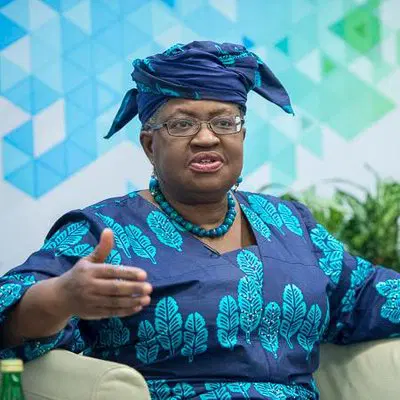
WTO DG backs state’s $100 million investment fund and urges focus on industrialisation, special economic zones and the blue economy.
Director-General of the World Trade Organisation (WTO), Dr. Ngozi Okonjo-Iweala, has declared that Delta State has the potential to emerge as Nigeria’s next major industrial and economic hub alongside Lagos, urging the state to seize evolving global trade opportunities through strategic investments and industrialisation.
Speaking on Monday at the Delta State Economic and Investment Summit, Okonjo-Iweala also endorsed the state’s newly unveiled $100 million (about N137.8 billion) Viability Gap Fund, describing it as the type of intervention needed to attract private sector investment.
“I am convinced that Delta possesses the ingredients to become Nigeria’s next great industrial hub, standing alongside Lagos as an engine of the national economy. The emergence of a new growth pole here in Delta State would be good for Nigeria as a whole,” she said.
Commending Governor Sheriff Oborevwori’s administration for taking practical steps to improve the investment climate, Okonjo-Iweala said the decision to establish a fund to de-risk private sector investments demonstrated a commitment to translating economic ambitions into action.
“The reason I came is because you take action. The fund you have just announced to de-risk investment is exactly the kind of thing that we need,” she stated.
Governor Oborevwori announced that the state had set aside $100 million, equivalent to N137.8 billion, as a Viability Gap Fund to support strategic investments and accelerate industrialisation.
According to the governor, the initiative is designed to reduce investment risks, fast-track project implementation and attract both local and foreign investors.
‘Global Trade Shift Offers Delta Fresh Opportunity’
Okonjo-Iweala said changing global trade patterns have created opportunities that did not exist a decade ago, urging Delta State to position itself as a preferred investment destination.
“The world is looking for diversification. These opportunities were not available 10 or 15 years ago. The question is whether we will seize them or allow them to go elsewhere,” she said.
The WTO Director-General identified Special Economic Zones (SEZs) as one of the most effective tools available to governments seeking to industrialise despite limited fiscal resources.
She stressed that successful industrial zones must be supported by reliable electricity, quality road and rail infrastructure, water supply, digital connectivity and strong collaboration with the Federal Government.
According to her, these fundamentals are essential for attracting long-term investments and building globally competitive industries.
Focus on Competitive Industries
Rather than spreading resources across multiple sectors, Okonjo-Iweala urged Delta State to identify a few industries where it enjoys clear comparative advantages.
She advised the state to develop complete value chains from production and processing to financing, quality standards and market access—to maximise economic value and competitiveness.
The WTO chief also identified the blue economy as one of Delta State’s strongest opportunities for economic transformation.
She noted that Nigeria currently imports about 573,000 metric tonnes of fish and fish products valued at nearly $866 million annually, arguing that Delta is strategically positioned to reverse that trend.
According to her, investments in fisheries, cold chain infrastructure, port services and marine logistics could transform the state into Nigeria’s blue economy hub.
READ ALSO:
- WTO Forecast Bleak Trade Growth in 2026 on Trump’s Tariff Effect
- Cardoso, Okonjo-Iweala to Lead Abuja Forum on Economic Resilience
- Tariff Fears Fuel Q1 Trade, WTO Predicts Slowdown
- Underfunding Threatens Nigeria’s $296bn Blue Economy Potential — Oye
Okonjo-Iweala also commended Delta State’s fiscal management, describing it as one of Nigeria’s strongest-performing states in terms of debt sustainability.
She urged the government to sustain prudent financial management, warning that long-term development would be difficult without fiscal discipline.
Expressing confidence in the state’s future, she said Delta has the potential to evolve from a resource-dependent economy into one that is diversified, inclusive and resilient.
Seplat Chairman Outlines Growth Blueprint
Also speaking at the summit, Founding Chairman of Seplat Energy and Chairman of the Delta State Economic and Investment Summit, Austin Avuru, called for a deliberate shift away from traditional economic models.
He urged the state government to prioritise maritime reforms, industrial parks and commercial agriculture to attract large-scale private sector investment and maximise the benefits of ongoing infrastructure development.
According to Avuru, Delta must intentionally build a competitive and sustainable economy by focusing on sectors where it enjoys natural advantages rather than relying on conventional sources of revenue.
He said such an approach would position the state for long-term economic growth and make it more attractive to investors.

Esther Ososanya is an investigative journalist with Pinnacle Daily, reporting across health, business, environment, metro, Fct and crime. Known for her bold, empathetic storytelling, she uncovers hidden truths, challenges broken systems, and gives voice to overlooked Nigerians. Her work drives national conversations and demands accountability one powerful story at a time.