

By Esther Ososanya
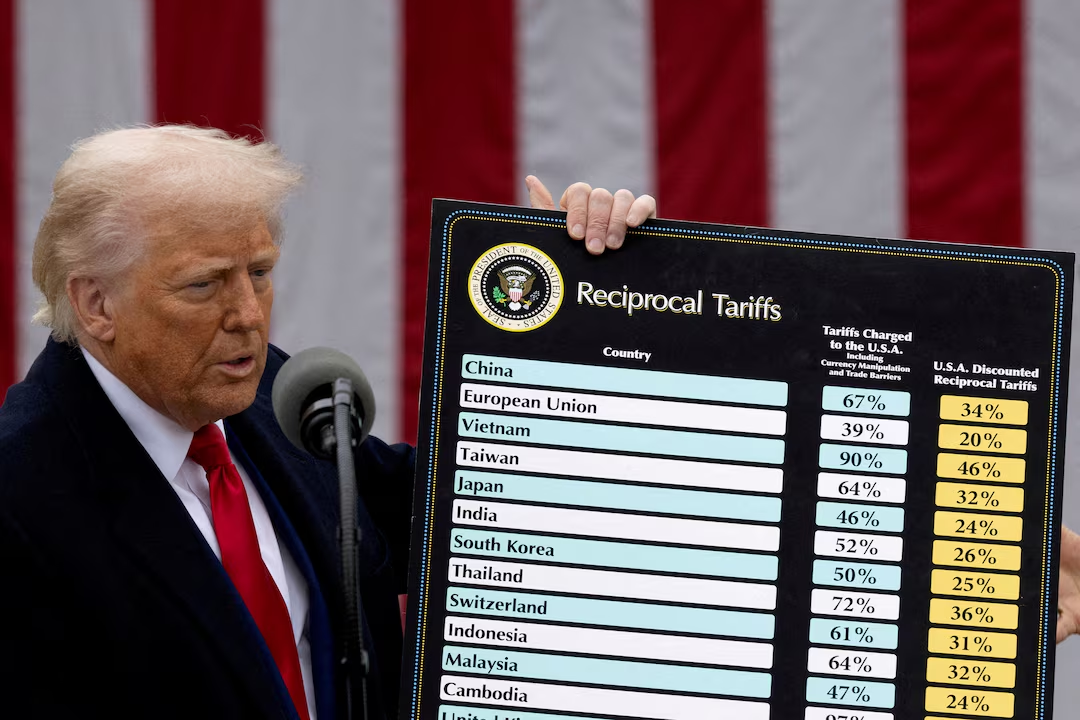
Brazil’s $2 trillion economy is proving far more resilient than expected in the face of President Donald Trump’s sweeping 50% tariff on Brazilian imports to the United States.
Thanks to limited trade exposure to the U.S., strong commodity demand from China, and broad exemptions from the new tariff, analysts and investors are betting that Latin America’s largest economy will ride out the storm with minimal macroeconomic turbulence.
According to economists, the tariff set to take effect this Wednesday will apply to less than 36% of Brazilian exports to the U.S. by value after President Trump’s executive order excluded key sectors like aviation, oil, orange juice, and ethanol. Many of the affected products are commodities such as beef, coffee, and textiles, which experts say can be redirected to other markets with little long-term impact.
“We were already expecting a limited hit, but with the exemptions, the direct impact on GDP has shrunk even further,” said Luiza Pinese, economist at XP Inc. She cut her forecast for the GDP impact from 0.3 to just 0.15 percentage points in 2025.
Diversification as a Defense Mechanism
While Canada and Mexico send around 75% of their exports to the U.S., Brazil sends just 12%, making it less vulnerable to American protectionism. By contrast, China now accounts for 28% of Brazil’s total exports, more than double the U.S. share, driven by surging demand for iron ore, soybeans, crude oil, and animal protein.
“Brazil is no longer overly dependent on any single market,” said Planning Minister Simone Tebet during a recent investment forum. “In agribusiness, nearly half our trade is with Asia. For industry, we export four times more to Asia than to the U.S.”
This robust export realignment, alongside partnerships within BRICS, Mercosur, and the EU, has allowed Brazil to absorb external shocks while maintaining fiscal and economic stability.
Investor Outlook Remains Bullish
Financial markets in São Paulo have so far shrugged off tariff headlines. Brazilian stocks have remained relatively flat, and the real has stabilised after initial volatility.
Goldman Sachs has maintained its 2025 growth forecast at 2.3%, citing what it called “notable exemptions and resilient trade fundamentals. ” The bank also noted that fiscal authorities are preparing support packages for affected sectors, particularly agribusiness and light manufacturing, without destabilising public finances.
“Brazil’s large domestic market, combined with targeted fiscal buffers, means the macroeconomic impact will be manageable,” Goldman analysts said in a client note.
Some economists believe the tariffs could even accelerate Brazil’s monetary policy easing cycle. With fewer agricultural exports going abroad in the short term, domestic supply may increase, helping to ease food inflation.
“Lower inflation will create room for the central bank to begin cutting rates sooner,” said Thiago Carlos, an emerging markets portfolio manager at PIMCO. “The benchmark Selic rate is still at 15%, which is tight by any standard. Easing could come before the end of Q3.”
READ ALSO: Trump Postpones Tariff Hikes on Mexico as Trade Deadlines Approach
Still, not all regions will escape unscathed. The Northeast, Brazil’s most economically vulnerable region, faces harsher consequences. Its low-value-added, labour-intensive exports—such as fresh fruit, seafood, textiles, and footwear—are not exempted and are now subject to the full 50% tariff.
“There are about 4,000 product categories exported to the U.S., and the exemptions only cover around 700,” warned Luis Otavio Leal, chief economist at G5 Partners. “Smaller firms and regional exporters may feel significant pain unless the government intervenes quickly.”
The trade measures also come at a time of tense diplomatic relations between Brasília and Washington. President Luiz Inácio Lula da Silva has denounced Trump’s tariff order as “economic blackmail”, accusing him of interfering in Brazil’s internal affairs, particularly the Supreme Court’s trial of right-wing former president Jair Bolsonaro.
Nonetheless, Lula has left the door open to negotiation—though few expect a quick resolution.
Not a Crisis, but a Test
While the 50% tariff is headline-grabbing, Brazil’s economy is not in crisis. The country’s diversified trade portfolio, proactive fiscal planning, and favourable commodity positioning have created a buffer few emerging markets can boast of.
If anything, Brazil may emerge from this test as a case study in economic decoupling from U.S. trade dominance, a shift that many developing economies are now watching closely.
“The U.S. is important, but Brazil has learnt to look east, south, and within,” said Tebet. “And that’s why we’re not panicking.”
Key Figures & Forecasts
| Indicator | Value |
|---|---|
| Brazil’s 2025 GDP Growth Forecast | 2.3% (Goldman Sachs) |
| % of Exports to U.S. | 12% |
| % of Exports to China | 28% |
| Share of Brazilian Exports Affected by Tariff | 36% (Post-Exemptions) |
| Tariff Rate | 50% |
| Selic Rate (Interest Rate) | 15% |
| Potential GDP Impact from Tariff | -0.15% (XP Inc.) |

Esther Ososanya is an investigative journalist with Pinnacle Daily, reporting across health, business, environment, metro, Fct and crime. Known for her bold, empathetic storytelling, she uncovers hidden truths, challenges broken systems, and gives voice to overlooked Nigerians. Her work drives national conversations and demands accountability one powerful story at a time.