The Nigerian Government has signalled a strategic shift from heavy borrowing as it seeks to reduce debt-related risks and reassure investors amid tightening global financial conditions. Minister of Finance and Coordinating Minister of the Economy, Wale Edun, hinted at the policy direction during an interview with Bloomberg at the ongoing 56th World Economic Forum (WEF) …
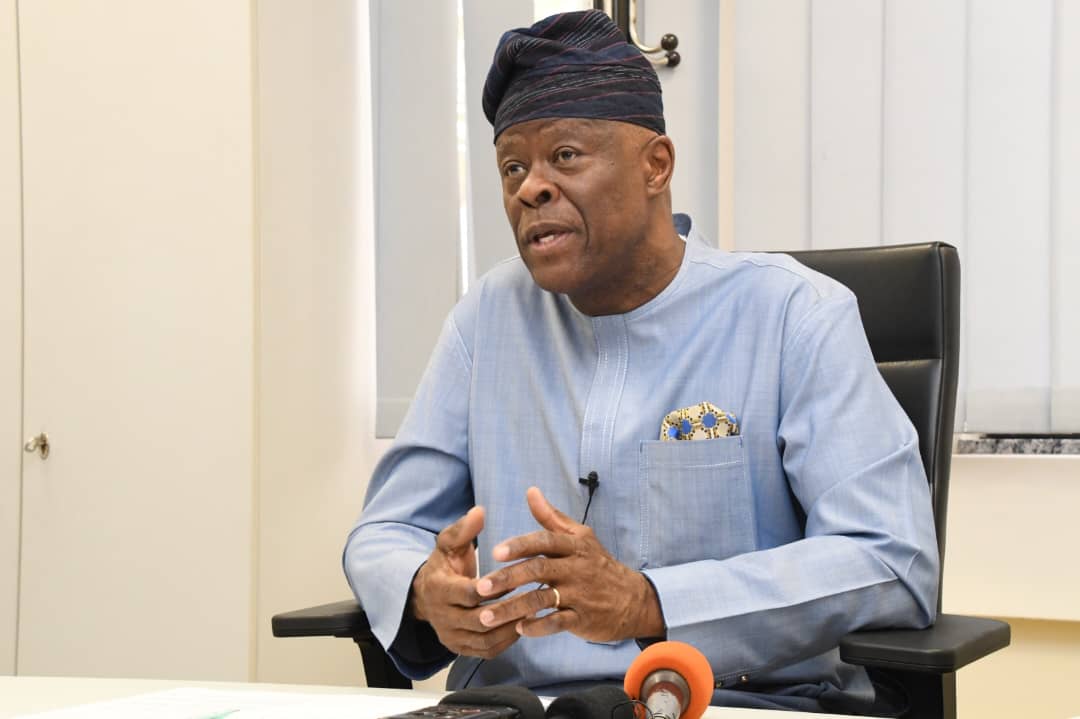
The Nigerian Government has signalled a strategic shift from heavy borrowing as it seeks to reduce debt-related risks and reassure investors amid tightening global financial conditions.
Minister of Finance and Coordinating Minister of the Economy, Wale Edun, hinted at the policy direction during an interview with Bloomberg at the ongoing 56th World Economic Forum (WEF) in Davos, Switzerland.
“The issue now is to focus on revenue, focus on domestic resource mobilisation,” he said. “We’re hoping to rely less on borrowing.”
Pinnacle Daily reports that the week-long World Economic Forum, which started on Monday in Davos, Switzerland, will see world leaders, policymakers, and business executives discuss global economic and policy issues.
The minister’s comments come at a time when emerging markets, including Nigeria, face heightened investor scrutiny over debt sustainability, fiscal deficits, and exposure to volatile global capital flows.
According to Edun, the Nigerian government is implementing fiscal reforms aimed at strengthening public finances and reducing vulnerability to external shocks.
READ ALSO:
- Davos Talks, Inflation Data to Shape Investors’ Mood in Week Jan 19–23
- IMF Upgrades Nigeria’s 2026 Growth Forecast to 4.4%
- N7.15bn Freeze: Parallex Bank asks Court to Strike out FHT Suit
- FG Owes N141.08trn as Nigeria’s Public Debt Rises to N152.4trn in June
While acknowledging that the country retains the option of accessing international bond markets if necessary, he stressed that the government’s priority is to mobilise domestic revenue and reduce dependence on debt-financed spending.
He outlined efforts to raise tax revenue, improve compliance, and strengthen fiscal sustainability, noting that these measures are designed to curb borrowing while improving the government’s capacity to fund growth internally.
Since taking office in 2023, President Bola Tinubu’s administration has introduced reforms intended to stabilise the economy and address long-standing fiscal imbalances.
These include the removal of foreign exchange restrictions, the elimination of fuel subsidies, and a broad overhaul of the tax system.
Under the reform agenda, the government is targeting an increase in tax revenue to 18 per cent of gross domestic product next year, up from about 14 per cent currently, as part of a broader plan to narrow fiscal deficits and ease pressure on public debt.
Edun said the policy thrust is aimed at long-term economic sustainability and restoring investor confidence by lowering Nigeria’s exposure to external debt and foreign currency risks.
Pinnacle Daily reported that the International Monetary Fund (IMF) recently upgraded Nigeria’s growth forecast to 4.4 per cent for 2026, from an estimated 4.2 per cent in 2025, despite weaker oil prices, which remain Nigeria’s main source of foreign exchange.
The IMF noted that ongoing reforms are expected to stabilise revenue collection and support fiscal sustainability.
“The combination of domestic resource mobilisation and ongoing reforms underscores Nigeria’s effort to reduce debt dependence and strengthen its economic foundations,” the IMF had said.
The coordinating minister is expected to use the Davos meetings to engage global investors and policymakers, addressing concerns around policy consistency, inflation, foreign exchange stability, and the government’s commitment to fiscal discipline.
Nigeria’s participation at WEF 2026 also includes the debut of Nigeria House Davos, the country’s first official national pavilion at the forum, as the government seeks to reposition the economy and manage investor risk perceptions in a challenging global environment.

Alex is a business journalist cum data enthusiast with the Pinnacle Daily. He can be reached via ealex@thepinnacleng.com, @ehime_alex on X