

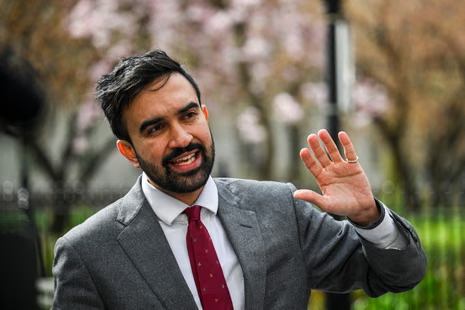
In a historic moment for the city and the nation, Zohran Mamdani has been elected Mayor of New York City, becoming the first Muslim to hold the office and the youngest mayor in more than a century.
Mamdani, aged 34, a state assembly member from Queens and a self-described democratic socialist, secured a decisive victory in the 2025 mayoral election, marking a transformative shift in the city’s political direction.
Campaign and Platform
Mamdani’s campaign attracted widespread attention for its bold, progressive platform focused on affordability, housing, public transport, and childcare. His vision centred on social equity and public welfare, with major pledges including free bus travel for all New Yorkers, a freeze on rent-stabilised housing units, and the creation of city-run grocery stores to make food more affordable.
READ ALSO: Amid Trump’s Threat, Tinubu Moves To Fill Ambassadorial Vacancies
He also called for raising the minimum wage and increasing taxes on the wealthy and large corporations to fund these ambitious social programmes.
The campaign relied heavily on grassroots organising and digital outreach, successfully mobilising younger voters and historically under-represented communities across the five boroughs.
Context and Significance
New York City, America’s largest and most influential metropolis, serves as a global hub for finance, culture, and politics. Mamdani’s election therefore carries significance well beyond its municipal boundaries.
His victory represents a generational shift in leadership, with a 34-year-old mayor bringing new energy to City Hall. It also heralds a new era of representation.
Mamdani is not only the first Muslim to lead the city but also the first person of South Asian descent and the first African-born individual (born in Uganda) to hold the position.
Politically, Mamdani’s triumph signals a leftward shift within the Democratic Party, reinforcing the growing influence of progressive movements in urban America. His success mirrors broader national trends, where voters in major cities are increasingly supporting policies aimed at social justice, economic equality, and inclusive governance.
Challenges Ahead
Despite the historic nature of his victory, Mamdani faces considerable challenges as he steps into office. His ambitious policy agenda, from free public transport to expanded social services, will demand significant funding and cooperation from both the city council and the state legislature. Building broad coalitions will be essential to turning campaign promises into reality.
READ ALSO: U.S. Eases Tariffs as China Pledges Crackdown on Fentanyl, Rare Earths Exports
He must also navigate deep political and ideological divides. Critics have questioned his past positions on policing, law enforcement, and foreign policy, particularly regarding Israel–Palestine.
To succeed, Mamdani will need to reassure sceptics, unify a diverse electorate, and manage expectations from both supporters and opponents.
Furthermore, he inherits a city under pressure. New York continues to grapple with rising housing costs, economic inequality, and public safety concerns. Delivering measurable improvements in these areas will be key to sustaining his political momentum and credibility.
What It Means for New York and Beyond
For New Yorkers, this election could reshape the relationship between government and residents, particularly among younger and marginalised voters who see Mamdani’s victory as a reflection of their own aspirations.
For the United States, his election reflects a broader transformation in urban politics, one that embraces diversity, inclusion, and a new generation of leadership.
READ ALSO: Democrats Record Major Victories Across US, Mamdani Makes History as New York’s First Muslim Mayor
From a global perspective, the election offers valuable insight into how identity, representation, and progressive governance are redefining the politics of major cities. For British and international observers, it also highlights the increasing importance of urban leadership in tackling complex social and economic challenges in an era of rapid change.
