

Nigeria has attracted over $2.6 billion in foreign direct investment (FDI) into its mining sector within the past two years, Minister of Solid Minerals Development, Dele Alake, has revealed.
He credited the surge to sweeping reforms, including improved governance, digitisation of licensing processes, and a sustained crackdown on illegal mining activities.
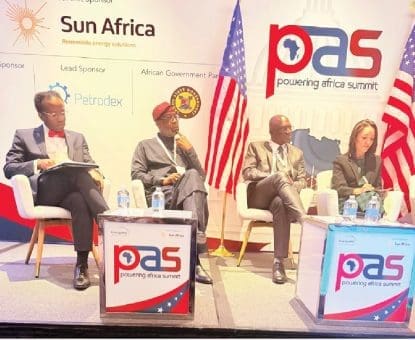
Speaking at the Powering Africa Summit in Washington, D.C., Alake called for stronger collaboration between the United States and African nations through the establishment of regional energy hubs to fast-track cross-border mining industrialisation and strengthen global supply chains for critical minerals.
The minister made this appeal during a high-level panel session titled “Critical Minerals in Africa: Meeting Global Demand,” where he stressed that Africa’s vast mineral resources can only be fully harnessed through sustainable partnerships and integrated infrastructure development.
In a statement issued by his media aide, Segun Tomori, Alake proposed the creation of regional industrial corridors similar to the Lobito Corridor. He identified the Lagos-Abidjan corridor spanning Nigeria, Benin, Togo, Ghana, and Côte d’Ivoire, as well as the Walvis Bay Corridor, as potential economic game changers for the continent.
According to him, shared infrastructure, including energy generation, could power multiple countries within such corridors, driving local beneficiation, technology transfer, manufacturing, and deeper regional integration.
READ ALSO:
- Nigeria to De-Risk Mining Investments with Global Asset Protection Framework – Alake
- Why Nigeria Revoked 4,700 Mining Licenses, What Next?
- How Strong Naira Lifts Imports, Pressures Exports, State Revenues
- Rising Admin Costs, Loan Burden Threaten Multiverse Mining’s Q1 Performance
“If three to five such corridors are developed across Africa, we would significantly accelerate industrialisation, creating mutual benefits for both Africa and its global partners,” he said.
Alake also highlighted progress recorded under the administration of President Bola Ahmed Tinubu, noting that reforms have strengthened regulatory frameworks, enhanced ease of doing business, and positioned mining as a key pillar of Nigeria’s economic diversification drive.
He explained that new policies now guarantee secure tenure for mineral title holders, providing the long-term stability required to attract and sustain investments.
The minister disclosed that the government’s special enforcement unit, known as the Mining Marshals, has arrested over 350 suspected illegal miners—including foreign nationals—within a year, with more than 150 currently facing prosecution.
“This has sent a clear message that Nigeria is serious about sanitising its mining sector,” Alake said.
To further boost investor confidence, he outlined incentives such as tax waivers on imported mining equipment, full repatriation of profits after due taxes and royalties, and increased access to geological data.
He added that the government is intensifying efforts to generate internationally certified geological data to support informed investment decisions.
Also speaking at the session, Sarah Whitten, Senior Vice President at the U.S. Export-Import Bank, expressed readiness to support African mining projects but emphasised the need for political stability to unlock private sector capital.
“American banks are prepared to support viable projects, but our role is to catalyse and unlock private investment,” she said.
The panel brought together key stakeholders, including Guinea’s Minister of Energy, Sekou Camara, and executives from leading global firms such as Denham Capital, ReElement Technologies, and TechMet.

Esther Ososanya is an investigative journalist with Pinnacle Daily, reporting across health, business, environment, metro, Fct and crime. Known for her bold, empathetic storytelling, she uncovers hidden truths, challenges broken systems, and gives voice to overlooked Nigerians. Her work drives national conversations and demands accountability one powerful story at a time.