

By Esther Ososanya
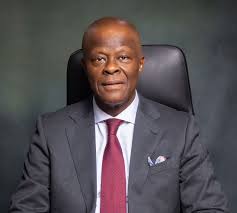
Nigeria’s Minister of Finance and Coordinating Minister of the Economy, Wale Edun, has declared the country “open for business” and ready to welcome global and domestic investors, citing a combination of improved macroeconomic indicators, fiscal reforms, and targeted policy measures under President Bola Ahmed Tinubu’s administration.
The declaration, made during a press briefing in Abuja on Thursday, came alongside fresh statistics showing that the economy is beginning to turn a corner after years of fiscal strain, currency volatility, and sluggish growth.
“These metrics speak to stability and send a clear message,” Edun said, referring to a first-quarter 2025 trade surplus of over $4 billion, a 9.8% rise in exports, and foreign reserves now standing close to $40 billion.
“Nigeria’s economy is no longer in crisis mode but on a steady growth path, a foundation investors can plan around,” he added.
One of the clearest changes, Edun noted, has been the restoration of fiscal discipline through an end to excessive central bank financing of the government.
He revealed that there have been no debits to Ways and Means advances since the start of this administration, halting a practice critics say fuelled inflation and weakened confidence in government finances.
Following GDP rebasing, Nigeria’s debt-to-GDP ratio has dropped from 52.1% to 38.8%, giving the government greater room to manoeuvre in the capital market and service existing obligations.
In the first half of 2025, gross revenues rose by 37.4% compared to the same period in 2024. This revenue surge enabled the government to pay more than ₦2 trillion to contractors to clear outstanding capital obligations from last year.
“We have no pending obligations that are not being processed and financed,” Edun stressed, adding that the 2025 focus is now on timely capital releases to ensure projects progress without funding gaps.
State Governments Flush with Funds
The finance minister also highlighted a dramatic turnaround in subnational finances. Since mid-2023, the combined fiscal balance of state governments has grown from ₦2.8 trillion to ₦7.1 trillion — a surplus that has boosted their ability to invest in infrastructure, health, and education.
He attributed this to two key factors: the removal of fuel subsidies, which previously consumed around 5% of GDP, and the timely release of funds owed to states in compliance with contractual obligations.
From January 2026, Nigeria will embark on its most ambitious tax reform in decades, consolidating all tax laws into a single transparent code. More than 50 overlapping taxes will be eliminated, reducing bureaucracy and making compliance easier for businesses.
Complementing the reform is a Revenue Optimisation and Assurance Platform that will digitise and centralise collections from ministries, departments, and agencies.
Using artificial intelligence, the system aims to detect and block leakages, improve real-time monitoring, and strengthen financial intelligence for policy decisions.
Growth Targets and Sector Priorities
The government’s medium-term goal is 7% annual GDP growth, to be driven by a mix of public investment, private capital inflows, and job creation.
Priority sectors include:
- Agriculture — with an urgent need to improve performance beyond the 0.7% growth seen in Q1 2025.
- Infrastructure — including public-private partnerships for the Third Mainland and Carter bridges in Lagos.
- Energy — raising generation capacity to 6,000 megawatts by year-end and completing the Ajaokuta-Kaduna-Kano gas pipeline.
- Technology, education, and health as key enablers of productivity and social development.
READ ALSO: Edun Seeks Stronger Public-Private Ties in Non-Interest Finance
Edun disclosed that 8 million of the targeted 15 million vulnerable Nigerians have already received direct cash transfers under the government’s social protection programme. Each beneficiary is biometrically verified and paid digitally to ensure transparency.
Other support initiatives include the Nigeria Education Loan Fund (NELFUND), the upcoming Youth Investment Bank, a consumer credit scheme, and a €600 million creative economy facility with special provisions for young women entrepreneurs.
Edun insisted that all these reforms are designed to send a strong signal to domestic and foreign investors that Nigeria is not only politically committed to stability but also building a predictable policy environment.
“Our commitment is to build an economy that works for everyone with transparency, resilience, and purpose,” he concluded.
ECONOMIC SNAPSHOT (Q1 2025)
- Trade Surplus: $4.04 billion
- Export Growth: +9.8%
- Foreign Reserves: $39 billion
- Debt-to-GDP: 38.8% (down from 52.1%)
- State Surplus: ₦7.1 trillion (up from ₦2.8 trillion in 2023)

Esther Ososanya is an investigative journalist with Pinnacle Daily, reporting across health, business, environment, metro, Fct and crime. Known for her bold, empathetic storytelling, she uncovers hidden truths, challenges broken systems, and gives voice to overlooked Nigerians. Her work drives national conversations and demands accountability one powerful story at a time.