

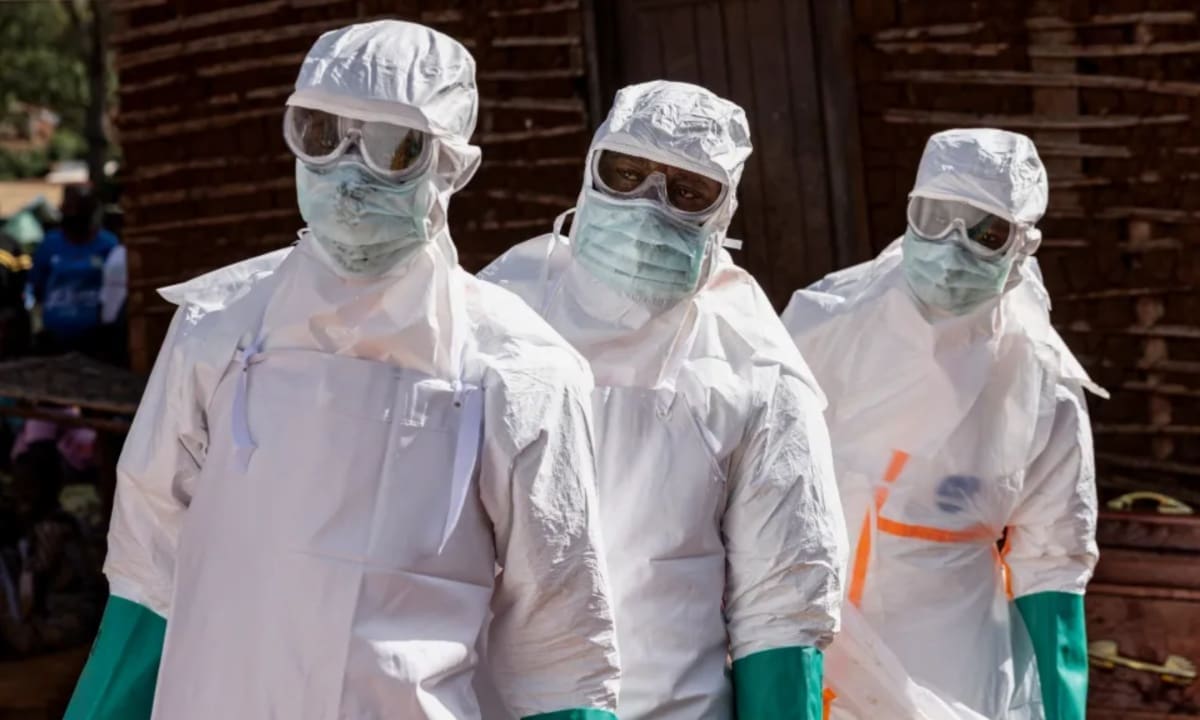
The Federal Government has confirmed an Ebola virus disease case in the Federal Capital Territory and identified 44 contacts, urging passengers who travelled with the infected woman to cooperate with public health authorities as efforts to contain the infection continue.
The Minister of Health and Social Welfare, Prof Muhammad Pate, made the appeal on Tuesday following laboratory confirmation of the case on October 20, 2026.
The patient, who recently arrived in Nigeria on an international flight from Uganda, developed symptoms on October 7 and sought medical attention at a private hospital in Abuja on October 11. Her condition subsequently worsened, and further tests confirmed the infection.
She is currently in isolation and receiving medical care.
Pate said contact tracing was ongoing, covering healthcare workers, patients, caregivers and people who travelled with the woman. Contact tracing involves identifying people who may have been exposed to an infected person so health authorities can assess their risk and monitor them for symptoms.
“Contact tracing has been conducted, and it’s underway as we speak, with 44 contacts already identified,” the minister said.
READ ALSO:
- ‘Wonder of Zaria’ Scandal: Group Says Buba’s Ambition Exposed Nigeria’s Security Failure, Demands Probe
- NRS Unveils ‘Rev360’ to Track Tax Evaders, Drive Revenue
- AMAA 226: Nigeria, South Africa, Ghana in Race for Best African film
- Deutsche Bank Sees More Naira Gains, Flags Borrowing Risk
He urged anyone contacted by public health teams, including passengers who might have travelled with the patient, to provide the information requested and comply with official guidance.
“Anyone contacted during the contact tracing period that we are in, including those who may have travelled with that individual, should provide the necessary information requested and follow public health advice,” he said.
The interval between the onset of the patient’s symptoms and laboratory confirmation has made contact tracing a critical part of the response as authorities work to establish who may have been exposed during the relevant period.
The case comes amid heightened concern over the cross-border spread of Ebola following recent developments in East Africa.
On October 6, the Nigeria Centre for Disease Control and Prevention announced increased surveillance after Kenya confirmed an imported case of Ebola disease caused by the Bundibugyo virus, linked to an outbreak in the Democratic Republic of the Congo.
The NCDC warned that international travel and population movement could facilitate the importation of the disease into Nigeria.
The agency said it was strengthening preparedness through surveillance, laboratory testing, isolation and referral systems, contact tracing, infection prevention and control, and coordination with state and international health authorities.
Pate said the government was also strengthening surveillance and supporting the private hospital where the patient received treatment to reinforce infection prevention and control measures.
He urged public and private health facilities nationwide to remain vigilant, promptly isolate suspected cases and immediately report them to public health authorities.
Pinnacle Daily reports that Ebola is a severe viral disease transmitted primarily through direct contact with the blood or other body fluids of an infected person who has developed symptoms, or through contaminated materials.
Symptoms typically appear between two and 21 days after exposure and may include fever, severe headache, weakness, muscle pain, vomiting and diarrhoea.
People identified as contacts are not necessarily infected. Health authorities need to establish whether they were exposed and monitor them in line with public health guidance.
The minister urged Nigerians to remain calm, practise regular hand hygiene, avoid contact with the body fluids of anyone suspected of having Ebola and refrain from spreading unverified information or stigmatising people who might have been exposed.
He recalled Nigeria’s successful containment of the 2014 Ebola outbreak, saying the country had the public health expertise and response systems required to manage the current case.
The government said investigations and contact tracing were continuing, with further updates expected as more information became available.
Members of the public can contact the NCDC’s toll-free line, 6232, which operates 24 hours a day, seven days a week, for information or to report a suspected case.

Alex is a business journalist cum data enthusiast with the Pinnacle Daily. He can be reached via ealex@thepinnacleng.com, @ehime_alex on X