

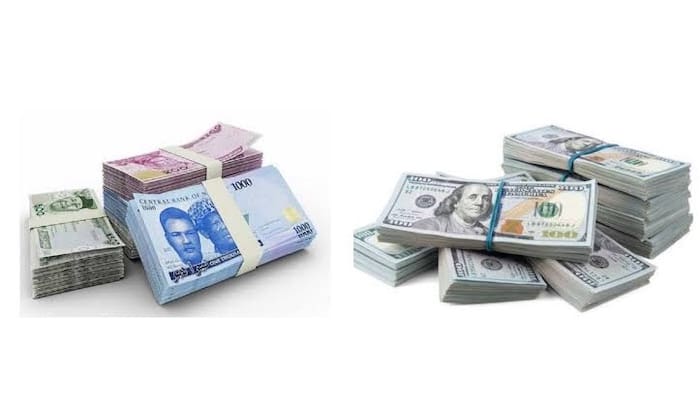
Deutsche Bank AG has added Nigeria to its frontier foreign exchange monitor, forecasting further appreciation of the naira but warning that rising government borrowing could threaten the currency’s gains.
According to Bloomberg, the German lender said in a client note on Monday that the naira remained undervalued, supported by attractive returns on naira investments and favourable real interest rates.
“The principal risk to the outlook is from the fiscal side,” Deutsche Bank said.
The bank pointed to the Debt Management Office’s fourth-quarter bond issuance calendar, which signals “elevated issuance levels”.
It expects government spending to increase ahead of Nigeria’s January elections but sees “less risk from the elections themselves.”
The naira has appreciated nearly eight per cent against the dollar this year, placing it among the 10 best-performing currencies out of 144 tracked by Bloomberg.
Its gains have also supported returns on Nigerian equities and local-currency bonds, which rank among the highest-performing globally.
Deutsche Bank’s frontier foreign exchange monitor also tracks Angola’s kwanza and Ghana’s cedi, stating that the three African economies had performed well despite the economic effects of the conflict in the Middle East.
Higher crude oil prices have supported the current-account positions of Nigeria and Angola, while stronger gold prices have benefited Ghana.
READ ALSO:
- How Strong Naira Lifts Imports, Pressures Exports, State Revenues
- SEC Seeks Policy Stability for Frontier Market Return
- SEC Targets ₦750trn Market as Nigeria Pushes $1trn Economy
- Stronger Naira a Double-Edged Sword for Nigeria — Expert
The bank also identified high real interest rates and ample foreign exchange reserves as factors attracting investment into the three economies.
Borrowing could test naira stability
Deutsche Bank’s warning highlights a key challenge for Nigeria in sustaining currency stability while financing government spending.
Higher interest rates can attract foreign investors seeking better returns on naira-denominated assets, increasing demand for the local currency.
However, heavy government borrowing can raise debt-servicing costs and put pressure on public finances, particularly when spending increases without corresponding revenue growth.
The outlook also matters for businesses and households, as a stronger naira could reduce the local-currency cost of imported goods, raw materials and equipment, potentially easing some cost pressures.
It could also improve returns for foreign investors converting naira investments back into dollars, provided exchange-rate gains are sustained.
However, appreciation alone does not guarantee lower prices or stronger economic activity, as the durability of the gains will depend on foreign exchange supply, investor confidence and the government’s ability to manage borrowing and spending.
Reserves and capital flows remain important
Pinnacle Daily reported in March that Nigeria recorded net borrowing of $1.69 billion in 2025, despite rising external reserves, as portfolio investment inflows declined and payments to foreign investors increased.
In June, the publication also reported that strong demand for Central Bank of Nigeria (CBN) open market operations (OMO) and Treasury bills helped attract capital and support the naira.
The report showed how high yields can draw investors into Nigerian securities and increase foreign exchange supply.
These developments illustrate the balance facing policymakers, as high interest rates and stronger reserves can support the currency, but reliance on foreign portfolio funds exposes the market to sudden withdrawals when returns or investor confidence weaken.
Deutsche Bank’s outlook therefore points to an opportunity for Nigeria to sustain currency gains, alongside a warning that fiscal policy could undermine them.
For businesses and investors, the key question is whether improved foreign exchange conditions can be maintained without increasing pressure from government borrowing.

Alex is a business journalist cum data enthusiast with the Pinnacle Daily. He can be reached via ealex@thepinnacleng.com, @ehime_alex on X