

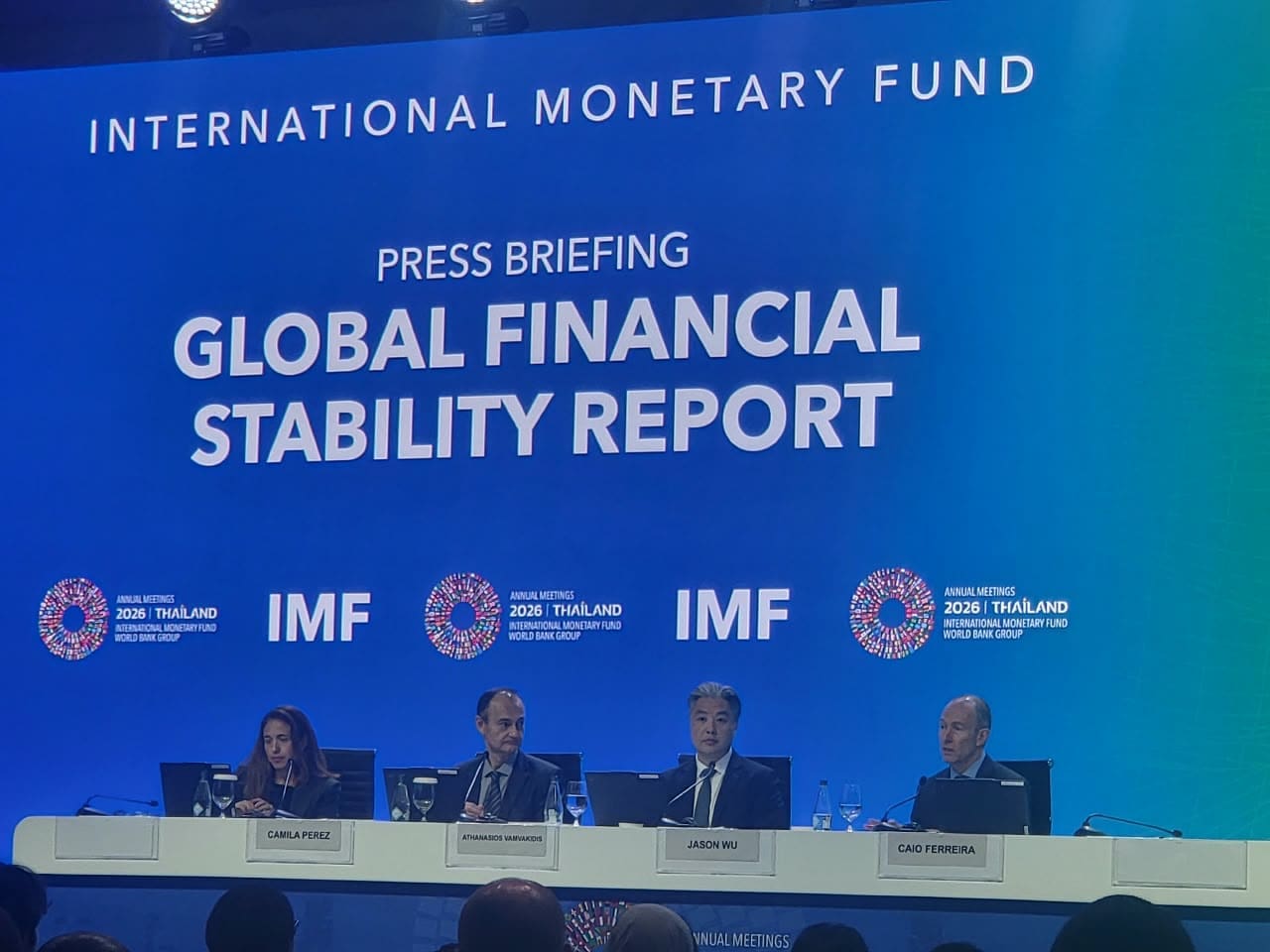
The International Monetary Fund (IMF) has said improvements in inflation suggest a less restrictive monetary policy stance could be appropriate for Nigeria. It added that the Central Bank of Nigeria (CBN) must remain data-driven and explain its decisions clearly to protect its credibility.
Jason Wu, Assistant Director in the IMF’s Monetary and Capital Markets Department, made the remarks while responding to questions on Nigeria’s monetary policy at the Fund’s briefing on global financial stability.
“We have seen improvements on the inflation front, which suggests that a perhaps not as tight monetary policy stance would be appropriate,” Mr Wu said.
He stressed, however, that credibility matters most. The central bank, he said, must be data-driven and able to explain its decisions clearly, and on both counts “the news is on the good front” so far.
He said continued reliance on data and transparent communication would be key to containing inflationary pressures.
Banks urged to tighten rules after recapitalisation
On strengthening the banking sector, Mr Wu said emerging economies typically move to impose appropriate regulations once recapitalisation is complete, to prevent risks from building up in future. These include adequate capital and liquidity requirements and timely recognition of credit losses and bad loans.
He singled out the sovereign-bank nexus as an important concern in Africa, saying regulators and lenders must understand banks’ exposure to sovereign risk. Those measures, he said, are critical to building further resilience in the banking sector.
Answering a question on Eurobonds, Mr Wu said the Fund’s report finds that the market remains “very much open” and that financing is taking place.
READ ALSO:
- “Nigerians Are Suffering”: IMF Warns, Nudges Up Growth Outlook
- IMF Warns Energy Shock, AI Boom, and Record Debt Threaten Growth
- World Bank Courts Philanthropists as Public Funds Tighten
- Put ₦4.65trn to Work, Not Equities, World Bank to Nigerian Banks
IMF officials also cautioned that conditions are unusual. Emerging and frontier markets have been resilient, supported by sound domestic policies and strong fundamentals. Yields are high while spreads are unusually narrow. If yields rise because of developments in advanced economies or fresh energy shocks, spreads could widen from already elevated borrowing costs.
Even well-managed emerging markets must therefore strengthen their resilience to prepare for more adverse scenarios, the officials said. Mr Wu added that transparency, including making sure investors know a country’s outstanding obligations, is a good way to reassure them and keep the market open to emerging economies, including African borrowers that need to raise funds in foreign currencies.
Cyber preparedness is uneven, especially in emerging markets.
On cyber risk, an IMF official said a country’s resilience depends heavily on its level of preparation and cyber maturity, and that this varies widely. Globally there is a shortage of skilled professionals, and emerging markets often have limited capacity to deal with threats because they lack resources.
The Fund called for better incident reporting, stronger crisis coordination at home and across borders, and closer oversight of third-party service providers, since many financial services are outsourced. In advanced economies, the priority is continuity of service among critical providers, which means identifying them, mapping their financial and operational links to institutions and testing resilience across the system. The official referred reporters to an earlier Global Financial Stability Report chapter on cyber risk.
Says AI competition is healthy
Responding to a question on China and artificial intelligence, an IMF official said AI has become more global and that models now compete with each other, which pushes the technological frontier forward. The official described this as healthy competition because it helps manage expectations on financing, valuations and earnings.
Two scenarios are possible, the official said. In one, the frontier advances while investors grow more realistic about AI. In the other, information emerges late and suddenly, for instance if new models reveal that monetisation is weaker than expected or that investment is too high relative to returns, which could trigger a sell-off or turmoil. It is hard to predict which will prevail, the official said, though pushing the frontier is “a good thing” overall.

Sunday Michael Ogwu is a Nigerian journalist and editor of Pinnacle Daily. He is known for his work in business and economic reporting. He has held editorial roles in prominent Nigerian media outlets, where he has focused on economic policy, financial markets, and developmental issues affecting Nigeria and Africa more broadly.