

The International Monetary Fund (IMF) has raised its 2026 growth forecast for Nigeria by 0.1 percentage point to 4.2 per cent. It left its 2027 projection unchanged at 4.3 per cent and urged the government to cushion vulnerable households from rising food and energy prices.
The projections are in the Fund’s latest World Economic Outlook, titled “Resilience Under Strain, Urgent Choices”, which IMF Director of Research Silvana Tenreyro presented in Bangkok, Thailand.
What drives the upgrade
The IMF credited improved macroeconomic stability and favourable terms-of-trade effects for Nigeria’s outlook. It cautioned, however, that higher prices for essential goods are likely to worsen poverty and food insecurity.
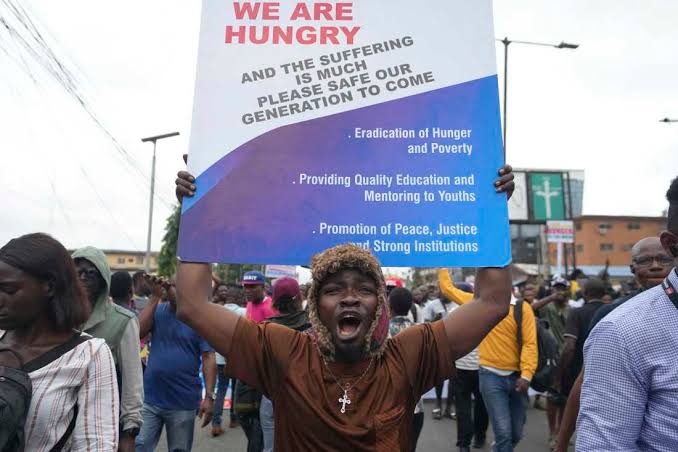
The forecast follows three years of economic reforms by the Tinubu administration. These have drawn praise for their boldness but have also pushed up poverty and eroded household purchasing power.
Global picture
The Fund expects world growth to slow to 3.1 per cent in 2026, 40 basis points below last year, before recovering to 3.4 per cent in 2027. Ms Tenreyro said the global economy remains resilient but that this resilience is under strain, with risks tilted to the downside.
War-driven increases in energy and commodity prices are lifting inflation and dampening activity. AI-related investment is supporting trade, demand and growth but is also adding to price pressures. Global headline inflation is projected to rise to 4.7 per cent in 2026 and ease to 4.1 per cent in 2027.
IMF: support the vulnerable, protect stability
Responding to a question from journalist Nancy Nnaji, Deniz Igan, Division Chief in the IMF’s Research Department, called for immediate relief from rising food and energy costs. She said this must not undermine medium-term stability.
Ms Igan cited Nigeria as an example. Growth has held up because the country is an energy exporter, she said, but pressures remain high and the Fund is “mindful that the population is suffering”. She added that food security also faces risks from El Niño.
READ ALSO:
- IMF Warns Energy Shock, AI Boom, and Record Debt Threaten Growth
- World Bank Courts Philanthropists as Public Funds Tighten
- Food Subsidies Can Drain Scarce Funds, IMF Warns
- World Bank Import Push Threatens Nigeria’s Gains – Centre
The IMF’s recommendation is “cash transfers and targeted, temporary income support” for the most vulnerable households, which she said would ease poverty and protect food security. Ms Igan added that the support should stay fiscally sustainable, through better spending efficiency and stronger revenue collection.
The World Bank and NBS data point the same way.
The World Bank raised its 2026 growth forecast for Nigeria to 4.3 per cent last week, from 4.0 per cent growth in 2025. It projects 4.4 per cent in both 2027 and 2028, citing macroeconomic stability, stronger investor confidence and a gradual recovery in private investment. Forecasts were upgraded for nearly three-quarters of Sub-Saharan African countries.
Data from the National Bureau of Statistics show real GDP grew 4.43 per cent year-on-year in the second quarter of 2026, up from 4.23 per cent in the same quarter of 2025.
Subsidy debate
The IMF’s call comes as opposition presidential aspirants Atiku Abubakar and Peter Obi press the government to restore elements of petrol subsidies.
The administration has announced a 30-day discount window on petrol sold by NNPC Limited, prioritising public transporters nationwide. Finance Minister Taiwo Oyedele said the measure is not a partial return of subsidy because it is funded from retailer margins and not from the federal budget or the Federation Account. Critics dispute this, arguing the government has reintroduced subsidies in response to opposition pressure.
What it means
For households
A 4.2 per cent growth rate suggests the economy is expanding, but the Fund itself acknowledges that higher food and energy prices are eroding what people can afford to buy. The reforms of the past three years have, by the IMF’s own account, added to poverty and weakened purchasing power.
For ordinary Nigerians, the practical hope lies in the Fund’s recommendation of temporary, targeted cash transfers. The IMF has not said when or whether the government will act, and the risk that El Niño could add pressure to food supplies means the cost of staples remains the main source of anxiety.
For policymakers
The IMF is not asking the government to choose between relief and stability. Its message is that both are needed and that support must be temporary, targeted at the most vulnerable and funded through better spending and stronger revenue collection.
That framing puts the 30-day NNPC petrol discount under scrutiny. The Finance Minister says it is financed from retailer margins, not the federal budget or the Federation Account, and is therefore not a subsidy.
Critics reject that reading. Whatever label is used, the measure is a broad price concession for public transporters, not the narrowly targeted income support the IMF describes. How the government balances the two approaches, particularly with opposition figures such as Atiku Abubakar and Peter Obi pressing for the subsidy to be restored, will shape the debate on fiscal discipline in the coming months.
For investors and markets
Within about a week, two major multilateral lenders have raised their growth forecasts for Nigeria, and the National Bureau of Statistics reported second-quarter growth of 4.43 per cent, up from 4.23 per cent a year earlier. Together these reinforce the case that macroeconomic conditions are stabilising, which both institutions cite as a key reason for their upgrades.
The upgrades are modest, however, and both institutions attach warnings about poverty and food insecurity. For investors, the lesson is that the reform story is gaining credibility on the numbers but remains exposed to social and political pressures. A government under pressure to ease hardship may be tempted to adopt measures that strain the budget, and that is the risk the IMF is trying to steer it away from.
For the wider outlook
The global backdrop adds to the uncertainty. The IMF expects world growth to slow to 3.1 per cent this year, with war-related energy and commodity price increases lifting inflation. As an energy exporter, Nigeria benefits from higher prices through improved terms of trade, which is part of the reason its growth outlook has improved. The same price environment, however, is raising costs for Nigerian consumers, so the upside for the economy and the burden on households are linked.

Sunday Michael Ogwu is a Nigerian journalist and editor of Pinnacle Daily. He is known for his work in business and economic reporting. He has held editorial roles in prominent Nigerian media outlets, where he has focused on economic policy, financial markets, and developmental issues affecting Nigeria and Africa more broadly.