

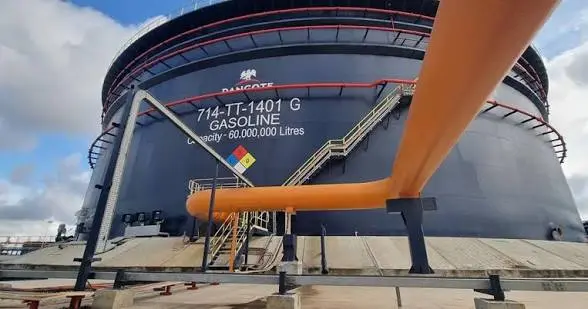
The Securities and Exchange Commission (SEC) has approved the initial public offering of Dangote Petroleum Refinery and Petrochemicals FZE, clearing the company to offer 4.1 billion ordinary shares at ₦525 each in a transaction that could raise about ₦2.15 trillion if fully subscribed.
The approval, which also covers the registration of the refinery’s existing 120.13 billion ordinary shares, brings Nigeria closer to what could become one of the largest capital-market transactions in the country’s history.
But the development also sharpens a question that had already begun to emerge from the Nigerian Exchange’s August trading pattern. And that is: where will the money for the Dangote Refinery IPO come from?
The answer matters because August presented a sharply divided market. While some of the NGX’s largest and most liquid stocks remained resilient, consumer goods and insurance shares suffered steep declines.
At the same time, trading volumes rose sharply while the value of transactions fell, suggesting that activity was increasingly concentrated in cheaper shares rather than in the high-value stocks that usually attract large institutional investors.
That pattern has strengthened speculation that investors are beginning to reposition portfolios ahead of the refinery’s public offer, potentially preserving cash for the new investment opportunity rather than committing more money to existing equities.
The refinery has said the SEC approval authorises it to proceed with its Completion Board Meeting and Signing Ceremony, marking another major step in the IPO process.
On August 18, the company said it had completed a $1 billion underwriting programme ahead of the planned offer, while Aliko Dangote, chief executive officer of the Dangote Group, said on Thursday, September 3, that the IPO would open in the next 10 to 12 days.
Pinnacle Daily can report that the proposed offer comes after months of extraordinary volatility on the NGX.
READ ALSO:
- NGX Slides 1.35% as Banking, Oil and Gas Stocks Lead Sell-off
- Dangote Slashes Petrol Price to N1,165, Diesel to N1,570/L
- Nigerian Stock Market Adds ₦4.52trn in May as Industrial, Insurance Stocks Drive Rally
- Dangote Refinery IPO to Open Within 12 Days
June brought a sharp correction, with the All-Share Index falling by 3.59 per cent in the week ended June 19 and declining by another 1.65 per cent by June 26, dragging market capitalisation to ₦148.905 trillion.
July then produced a powerful rebound, as the ASI surged by 6.35 per cent in the week ended July 10, as transaction value climbed to ₦220.568 billion. By July 24, market capitalisation had reached ₦159.588 trillion, while weekly transaction value rose to ₦306.143 billion.
August, however, changed the character of the rally, as trading became more selective, transaction values contracted sharply, and sector performance diverged.
The Premium Index rose by 0.86 per cent during the month, while the Banking Index gained 0.69 per cent. In contrast, the Consumer Goods Index fell by 8.91 per cent, and the Insurance Index dropped by 10.04 per cent.
The contrast suggests that August was not simply a broad retreat from Nigerian equities. Instead, investors appeared to be making increasingly selective decisions about where to keep their money as the market prepared for a potentially massive new share offer.
August rally reveals a market becoming more selective
The strongest pockets of the market in August were among large, highly capitalised and liquid companies.
The NGX Premium Index rose from 28,851.29 points on July 31 to 29,100.22 points by August 28, while the Banking Index climbed from 2,527.59 points to 2,544.92 points.
First Holdco gained 11.58 per cent in late August to close at ₦145.00, while Seplat Energy rose 10 per cent to ₦12,320.60.
Meanwhile, sectors dominated by smaller or less liquid stocks came under much heavier pressure. The Consumer Goods Index dropped from 4,405.53 points to 4,012.83 points, while the Insurance Index fell from 1,200.08 points to 1,079.54 points.
Unilever Nigeria fell by 18.94 per cent in mid-August, Dangote Sugar Refinery dropped 11.58 per cent, while International Energy Insurance declined by 26.61 per cent in the final week of the month.
The oil and gas sector also declined, though less sharply, with its index falling 1.09 per cent, while the Industrial Goods Index slipped 1.39 per cent.
The divergence became even clearer in trading activity, as total turnover volume rose from 19.840 billion shares in July to 26.261 billion shares in August, while average weekly volume increased from 3.968 billion shares to 6.565 billion shares.
However, the value of transactions moved in the opposite direction, as total turnover value fell from ₦1.268 trillion in July to ₦596.098 billion in August, while average weekly transaction value dropped from ₦253.673 billion to ₦149.025 billion. The number of deals also declined.
The gap between rising volumes and falling transaction values reflected the growing concentration of trading in cheaper shares, particularly insurance stocks.
In the week ended August 14, Fortis Global Insurance, Cornerstone Insurance and Consolidated Hallmark Holdings accounted for 9.488 billion shares, representing 78.07 per cent of total market turnover volume. However, they accounted for only 20.57 per cent of the value traded.
The same pattern continued the following week. Fortis Global Insurance, Lasaco Assurance and Consolidated Hallmark Holdings accounted for 4.168 billion shares, or 66.77 per cent of total market volume, but just 5.86 per cent of total transaction value.
By the week ended August 28, weekly transaction value had fallen to ₦123.223 billion. This suggests that while trading remained active, much of the market’s larger pools of capital were becoming more cautious.
That caution came as the NGX absorbed a substantial increase in the supply of shares through rights issues, private placements and public offers.
READ ALSO:
- Nigeria Looks Safer to Investors, but Debt Still Drains Gov’t Revenue
- Dangote Refinery IPO to Open Within 12 Days
- MCB Backs Tolaram with $51m Refinancing for Guinness Nigeria Deal
- More Money for States, but Nigerians Still Struggle – BudgIT
Lasaco Assurance listed 9.236 billion additional shares in August, while Veritas Kapital Assurance listed 15 billion shares and Prestige Assurance listed 2.369 billion shares. International Energy Insurance added 8.075 billion shares following its public offer.
Other companies also added new shares to the market during the period, including Sterling Financial Holdings.
The insurance sector was particularly affected by the influx of new shares. The rapid expansion in the number of available shares came as investor demand struggled to keep pace, contributing to the sector’s 10.04 per cent decline during August.
The market’s August performance therefore raises an uncomfortable question ahead of the Dangote Refinery IPO. If investors are already becoming more selective while existing companies continue to raise capital, can the market absorb a ₦2.15 trillion offer without drawing money away from listed equities?
Dangote IPO turns investor optimism into a liquidity test
Analysts believe the recent market weakness should not automatically be interpreted as a collapse in confidence.
Bismarck Rewane, managing director of Financial Derivatives Company, had noted that the decline should be seen in the context of the market’s strong earlier gains.
“The reality is that the market has to be viewed in context,” he said, noting that investors who entered the market in January were still sitting on gains of about 45 per cent despite the recent pullback.
According to him, the weakness is being driven more by expectations than by a deterioration in company performance.
“We had strong first-quarter earnings, while second-quarter results are yet to be released. What is happening now is more speculation than fundamentals,” he said.
But Rewane’s explanation points directly to the liquidity challenge that the Dangote Refinery IPO could create.
He believes liquidity is temporarily leaving the secondary market, where investors trade existing shares, as investors prepare for the refinery’s public offer.
“If pension funds stop buying listed shares to preserve liquidity for the IPO, demand for existing stocks weakens. At the same time, the supply of shares has increased following the banks’ recapitalisation exercise. With supply rising and demand falling, share prices naturally come under pressure.”
His assessment captures the central risk facing the NGX. That is, the Dangote Refinery IPO could become a major source of fresh capital and significantly deepen Nigeria’s stock market if it attracts new domestic and foreign money.
But if existing investors largely finance their purchases by selling shares they already own, the offer could instead trigger a rotation of liquidity across the market.
August’s performance suggests that investors may already be preparing for that possibility.
Uche Uwaleke, director of the Institute of Capital Market Studies at Nasarawa State University, thinks the market entered the second half of the year from a position of strength.
“I think we are winning. Nigeria is winning,” he said. “Performance has been above average.”
He pointed to stronger GDP growth, improvements in agriculture and manufacturing, a trade surplus, more than $10 billion in capital importation during the first quarter and stronger foreign exchange reserves as signs of improving macroeconomic conditions despite elevated inflation.
Uwaleke said the banking recapitalisation exercise was the biggest catalyst for the market’s strong first-half performance.
“The major driver of the market in the first half of the year was bank recapitalisation,” he said. “Investors expected banks that successfully raised fresh capital to generate stronger returns in the future.”
He said strong corporate earnings, attractive stock valuations and increased foreign investor participation also supported the rally.
David Adonri, managing director of HighCap Securities Limited, also linked the market’s earlier performance to improving investor confidence in Nigeria’s longer-term economic outlook.
“Investors focused on the long-term outlook rather than the immediate impact,” he said. “They saw the future potential of the reforms and moved into equities.”
Adonri said the rally eventually became so strong that concerns emerged about whether it could be sustained.
“What we are witnessing now is a major market correction following an extended and exceptionally strong rally,” he said. “After such a rapid rise, corrections are normal because they remove excessive optimism from stock valuations.”
Taken together, the analysts’ views suggest that August’s market movement was shaped by two competing forces.
On one side is continued confidence in Nigerian equities, supported by economic reforms, corporate earnings, bank recapitalisation and expectations of stronger future returns.
On the other is an increasingly urgent need for liquidity as investors prepare for one of the largest investment opportunities the Nigerian capital market has ever seen.
But the biggest question now is whether the Dangote refinery’s ₦2.15 trillion offer will bring genuinely new money into the Nigerian market or force investors to sell existing blue-chip holdings to fund their purchases.

Alex is a business journalist cum data enthusiast with the Pinnacle Daily. He can be reached via ealex@thepinnacleng.com, @ehime_alex on X