
The recent escalation of conflict in the Middle East, involving the US, Israel, and Iran, has highlighted the vulnerability of Nigeria to global energy shocks despite being a major oil producer, as fuel prices.
The conflict has once again highlighted a significant paradox in the Nigerian economy: while a rise in global crude prices (now above $100 per barrel), boosts government revenue, it simultaneously triggers domestic hardship through record-high fuel prices.
As the impact of the war continues to unfold, energy economist and co-founder of Dairy Hills, Mr. Kelvin Emmanuel, has called for the establishment of Strategic Petroleum Reserve (SPR), which he said has become an economic necessity to shield Nigeria from external volatilities.
Making a case for his proposal, Emmanuel made reference to Singapore, a country of about seven million people that has three refineries with total installed capacity of 1.2 million and always has about 100 million barrels of crude and refined petroleum products in storage.
Buffering Against Imported Inflation
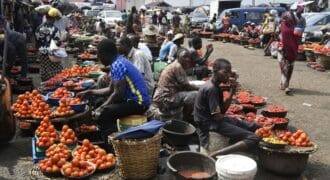
Despite being a major producer, Nigeria remains vulnerable because its domestic fuel prices are now largely deregulated and tied to international benchmarks. Following the strikes in Iran on February 28, 2026, petrol prices in Nigeria jumped from about ₦900 to over ₦1,250 per litre in just two weeks.
An SPR, according to experts, allows the government to release cheaper, stored crude to domestic refineries during global price spikes. This measure can help keep pump prices stable even when the Strait of Hormuz, through which about 20 per cent of the world’s oil and gas shipping passes, is disrupted.
Emmanuel said that currently, Nigeria does not have spot barrels of crude oil and LNG cargoes that it can use to take advantage of sudden price hikes. He also stated that the country does not have a strategic reserve stock that the government can release to domestic refineries at a time of global supply disruption, as is the case now, which has led toa shortage crisis. According to him, Nigeria is unable to exploit such an advantage because the majority of the products are tied to forward sale agreements by off-takers.
How Nigeria can set up Strategic Petroleum Reserve
A Strategic Petroleum Reserve is a government-controlled stockpile of crude oil or refined products, designed to cushion the economy during severe supply disruptions. The recent crisis shows exactly how such a reserve would function as a critical line of defence for Nigeria. According to reports, the United States began releasing crude from its Strategic Petroleum Reserve during the first week of the war to stabilise prices and protect its citizens and economy from the impact of high fuel prices.
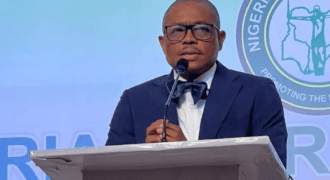
“Nigeria needs a Strategic Petroleum Reserve Authority and this might need the National Assembly to establish it. There are several countries in the world that have strategic petroleum reserve authority,” Emmanuel stated in an interview on Arise News over the weekend.
He suggested that the government can set up an SPR levy that will obligate all oil producers and joint venture partners to deposit about 0.5 to 1 per cent of their daily production into the Strategic Petroleum Reserve stock.
The energy economist further stated that the government can also take advantage of the oil price windfall or use some percentage of royalties that go into the government coffers to deposit in the SPR stock or create an SPR bond or collapse the Excess Crude Account, that is meant to save any difference between the budget benchmark and the open market rate, into the SPR stock.
Highlighting the benefit of SPR, Emmanuel said: “When you create a Strategic Petroleum Reserve Authority, they have a domestic crude intervention stock that can serve domestic refineries.”
Ensuring Refinery Continuity
Refineries like Dangote, which recently reached its full capacity of 650,000 bpd, require a steady supply of crude oil feedstock to avoid shutdown that could be caused by disruption of the logistical chains due to geopolitical conflicts such as the current one in the Middle East. But a strategic reserve can act as a buffer, ensuring that domestic refineries do not shut down if international supply chains or domestic production falters, said Emmanuel.
Highlighting the reality on ground in Nigeria, Emmanuel said: “Nigeria does not have a strategic reserve stock that is dedicated for times like this conflict (Middle East war), that is separate from the crude held at terminals that are either presold, belongs to operators, that are royalty oil, tax oil or that falls under forward sale agreements that the government has presold through financialization and collected cash upfront in exchange for paying back the crude oil with interest over a period of time.”
“Nigeria does not have a strategic petroleum reserve stock,” he added.
He explained that by having an SPR, Nigeria can sell its fresh crude on the global market at spot prices for profit while using its old stored crude to protect the domestic economy.
Recent industry analysis suggests that building a 30-day strategic reserve is a manageable investment compared to the cost of economic instability. There are reserves built for 30 days, 45 days and 90 days (global standard).
The energy and economic expert recalled that former President Olusegun Obasanjo created the Excess Crude Account in 2004, but the governors in 2011 fought and rejected plans by the Goodluck Jonathan administration to collapse the ECA into the Sovereign Wealth Fund.
READ ALSO:
- Global Energy Shock: Gulf Oil Infrastructure Crumbles as War Enters Third Week
- Nigeria Should Stop Crude Export, Sell to Dangote Refinery – Ken Ife
- Middle East Tensions: Concerns as Fuel Prices Rise in Nigeria After Oil Price Surge
He pointed out that when the National Sovereign Investment Authority (NSIA) was created, the government committed an error by failing to set aside at least 15 per cent or 20 per cent equity in NNPC as a concessionaire of Nigeria’s oil and gas assets for NSIA so that a portion of the revenues that are earned by the state-owned enterprise for oil and gas go into a savings that can be a buffer in times of crisis as currently being experienced by the country.
Investing in a National Tanker Fleet
He added that apart from creating a strategic petroleum reserve stock to ensure release to local refineries in times of scarcity, Nigeria can also invest in building a national tanker fleet, having a Very Large Container Carrier (VLCC) that it can lease out and make money in times of global energy crisis. This he said, creates opportunity for the government to profit from a hike in shipping costs in times of emergencies, as countries that currently have such facilities now earn more revenue from leasing them out.
He regretted that, after Obasanjo, as military president, ordered 19 such vessels in 1976, and they were received by the government of Shehu Shagari in 1980, they were nowhere to be found by 1995.
“You need a strategic national tanker fleet to take advantage of the fact that if you are creating a strategic petroleum reserve, and you have throughput in different parts of the country to be able to hedge and also develop a basket for crude trading. It makes it easy for the government to profit from not just the hike in shipping cost, but also the hike in seasonal swing in prices of crude oil and also use those crude inventories as a basis to borrow money from lenders to fund any budget deficit it might have.”
Nigeria currently can’t supply Crude to Dangote Refinery
He said that apart from not having a strategic petroleum reserve stock, Nigeria currently cannot supply Dangote Refinery the crude stock it needs to produce refined products.
He said this domestic supply shortage is forcing the company to import crude using FX sourced from the open market.
Explaining why changes in global crude price influence price adjustment at the Dangote Refinery, Emmanuel said the company gets crude supply from the NNPC at the prevailing market rate, adding that there is no special incentive that could enable it to freeze any sudden hike in price of petroleum products.
He said if the Nigerian government wants Dangote Refinery to freeze prices, it should supply the company with adequate feedstock to avoid crude importation and the costs associated with it.
He advised that the government should be proactive by developing a framework for managing crises and not only come up with interventionist measures in times of emergency.
According to him, the government should develop a clear “legislative framework and establish a strategic petroleum reserve that will not only manage a domestic petroleum reserve stock for a crisis like this, but that will also manage international petroleum reserve stored in throughput terminals that it can either lease or build over a period of time.”

Victor Ezeja is a passionate journalist, scholar and analyst of socioeconomic issues in Nigeria and Africa. He is skilled in energy reporting, business and economy, and holds a master's degree in Mass Communication. He can be reached via @VICTOREZEJA on X