
IEA Warns of historic supply shock as Middle East refineries, oil terminals face persistent attacks
The Middle East energy landscape, long considered a major contributor to the global economy, is systematically being dismantled as the war between the United States, Israeli and Iran enters its third week.
What began as a campaign targeting military assets has spiraled into a scorched-earth struggle for control of the world’s most vital oil corridors.
Since hostilities began on February 28, 2026, the scale of destruction to energy infrastructure has reached unprecedented levels, far surpassing any previous regional conflict.
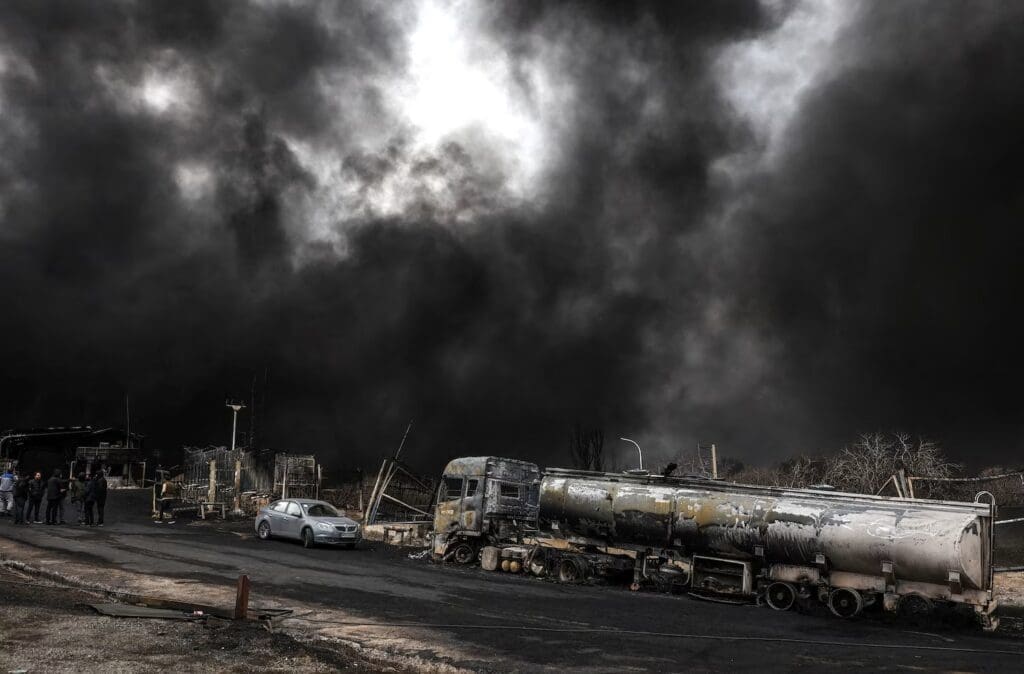
Iran had after the joint attack by the U.S. and Israel that led to the killing of the country’s Supreme Leader, Ayatollah Ali Khamenei, launched attacks on facilities in neigbouring Gulf countries, including Qatar, the United Arab Emirates (UAE), Bahrain, Iraq, Kuwait, Oman, Jordan and Saudi Arabia in retaliation. The attacks by Iran (mostly through missiles and drones) are basically targeting energy infrastructure, U.S. assets, and military bases in the Gulf region. Israel has also carried out similar attacks in parts of Iran. The energy facilities include refineries, oil pipelines, gas hubs and shipping terminals.
The International Energy Agency (IEA) said the war in the Middle East is creating the largest supply disruption in the history of the global oil market. The agency described the Gulf region as a key source of exports of refined oil products to global markets.
It said: “The disruption to oil and gas flows through the Strait of Hormuz, and to energy infrastructure in the region, has major implications for energy security and affordability – and for the world economy.”
The Toll on Infrastructure
According to data from the Conflict and Environment Observatory (CEOBS) and maritime intelligence reports, at least 30 oil processing and storage facilities across Iran have been targeted by Israeli airstrikes, within the first and second week of March. It also says over 90 Iranian vessels have been destroyed, while at least 12 merchant ships and tankers have been struck in the Persian Gulf.
Major Oil Facilities Impacted as of March 14, 2026
| Facility | Location | Status |
| Ras Tanura Refinery | Saudi Arabia | A major refinery operated by Saudi Aramco was hit on March 2, 2026, by an Iranian drone strike. Production was suspended after the strikes. |
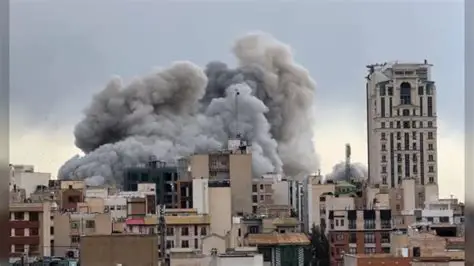
| Shahran oil depot | Tehran, Iran | A large fuel storage facility supplying Tehran was hit during Israeli airstrikes. Large fires and fuel leaks were reported. |
| Shahr-e Rey | Tehran, Iran | One of Iran’s biggest refining complexes was also hit by airstrikes. |
| Aghdasieh oil storage facility | Tehran | A fuel storage warehouse in northeast Tehran was razed by fire after an airstrike. |
| Karaj oil depot | (Alborz Province, Iran) | A regional oil storage depot west of Tehran was targeted in the drone attack. |
| Bapco Refinery | Bahrain | The refinery located on the east coast of Bahrain was struck by missiles, causing significant structural damage, as reported. |
| Fujairah Oil Terminal | UAE | A fire broke out at the Fujairah Oil Terminal after debris from an intercepted Iranian drone struck a storage tank on March 3. |
| Ruwais Refinery | UAE | The refinery shut down for damage assessment after a drone attack caused a fire on March 10. |
| Tehran fuel logistics/transfer center | Iran | An oil distribution hub supplying northern Iran was also struck in the early phase of the war. |
| Ras Laffan LNG Terminal | Qatar | The terminal was shut down by the state-owned firm QatarEnergy following a drone strike. |
| North Field LNG | Qatar | Production has been halted in the massive offshore gas field following missile interceptions. The field supplies the raw material, which is then processed into LNG at the Ras Laffan terminal. |
| Kharg Island Terminal | Iran | Military sites destroyed, oil infrastructure still intact but threatened. |
The Kharg Island Standoff
The most significant threat remains focused on Kharg Island, the terminal that reportedly handles about 90 per cent of Iran’s crude exports. While President Trump announced on Friday, March 13, that U.S. forces had “obliterated” 90 military targets on the island, he claimed to have intentionally spared the oil infrastructure for now. He, however, issued a stark warning that if Tehran interferes with ships in the Strait of Hormuz, he will reconsider his decision not to “wipe out the Oil Infrastructure.”
However, Tehran has countered. The Iranian military warned on Saturday that if Kharg’s oil terminals are touched, they will immediately destroy all U.S.-linked energy assets across the Gulf region. “If Iran’s oil and energy infrastructure is attacked, we will immediately destroy and reduce to ashes the energy facilities owned by companies cooperating with the US,” the military command spokesman Ebrahim Zolfaghari warned.
Economic Impacts
The physical damage to pipes and tanks is only half the story. The Strait of Hormuz, through which 20 per cent of the world’s traded oil and a similar share of liquefied natural gas (LNG) usually pass, is now regarded as a de facto “no-go zone.” Daily transit of oil vessels through the Strait has reportedly dropped by about 90 per cent, from an average of 84 vessels to fewer than 10.
The halting of tanker traffic through the Strait of Hormuz has caused oil prices to surge, with Brent futures soaring above $120 per barrel, about a 40 per cent increase since the war started. Prices subsequently eased with Brent crude dropping to around $89 per barrel last week before rising again to $103 as of Saturday, March 14.
READ ALSO:
- Middle East Tensions: Concerns as Fuel Prices Rise in Nigeria After Oil Price Surge
- U.S.-Iran War: More Pressure on Domestic Fuel Prices as Oil Rises Above $100
- Thousands of Flights Remain Cancelled, Billions of Dollars Lost as U.S.-Israel War Against Iran Continues
- Middle East Conflict May Push Shipping Lines Away From Nigeria, Experts Warn
The market is currently facing a daily deficit. In its oil market report for March 2026, IEA said shipments of crude and oil products through the Strait of Hormuz have fallen sharply, from about 20 million barrels per day (bpd) before the war to a trickle currently. According to IEA, the situation has forced Gulf countries to cut total oil production by at least 10 million barrels per day, warning that supply losses would increase if shipping does not resume soon.
Highlighting the scale of the attacks on oil assets, it said: “More than 3 million bpd of refining capacity in the region has already shut due to attacks and a lack of viable export outlets. Runs elsewhere will be increasingly limited due to feedstock availability.”
The agency projects that global oil supply will drop by 8 million bpd in March.
While the IEA has authorised the release of 400 million barrels from strategic reserves, experts warn that this is a “Band-aid on a bullet wound” as long as refineries remain in the crosshairs.
Amnesty International calls for ceasefire on Targeting Energy Facilities
Amnesty International has called on Israel, the U.S. and Iran to immediately cease what it described as “unlawful attacks” on energy facilities providing essential services such as electricity, heating and running water in the Gulf region.
The NGO warned that the attacks pose risks of “devastating civilian harm” and “environmental impacts.”
“The potential for vast, predictable, and devastating civilian harm arising from strikes targeting energy infrastructure, including uncontrolled deadly fires, major disruptions to essential services, environmental damage, and severe long-term health risks for millions, means there is a substantial risk such attacks would violate international humanitarian law and in some cases could amount to war crimes,” said Heba Morayef, Regional Director for the Middle East and North Africa at Amnesty International.
Morayef stated that, despite reasons cited to justify targeting energy infrastructure, all parties have a clear obligation, under international humanitarian law, to take all measures to reduce civilian harm by refraining from “attacks that cause disproportionate death or injury to civilians or damage to civilian objects.”
“This includes any foreseeable knock-on, indirect adverse effects on civilians’ lives and health, such as exposure to toxic chemicals,” she added.
Amnesty International quoted Iranian officials saying that at least 1,255 people have been killed in Iran since February 28, when the conflict began. It further stated that at least 17 people have been killed in the Gulf since Iran began its attacks on Gulf countries, adding that about 570 people have been killed in Israeli attacks in Lebanon, while attacks in Israel have killed 12 people.
Shocks on Global Markets
The energy shock is now biting deeply into the global economy. As Brent crude prices have surged past $103 per barrel, a level not seen in years, analysts at JP Morgan have warned of “visible shortages” emerging in Asia and Europe within days.
“This is essentially the biggest supply shock at least in modern global oil market history,” said Hunter Kornfeind of Rapidan Energy Group.
Nobel Prize-winning economist Philippe Aghion warned that if prices approach $150, the world could face an energy crisis similar to 1973. In Asia, stock indexes in Japan and South Korea have fallen by as much as 15% since the war began, according to a BBC report.
The impact is cascading beyond fuel. There are indications that fertilizer prices are also spiking as the Middle East is a major source of urea, threatening food production costs just as the planting season begins.

Victor Ezeja is a passionate journalist, scholar and analyst of socioeconomic issues in Nigeria and Africa. He is skilled in energy reporting, business and economy, and holds a master's degree in Mass Communication. He can be reached via @VICTOREZEJA on X