

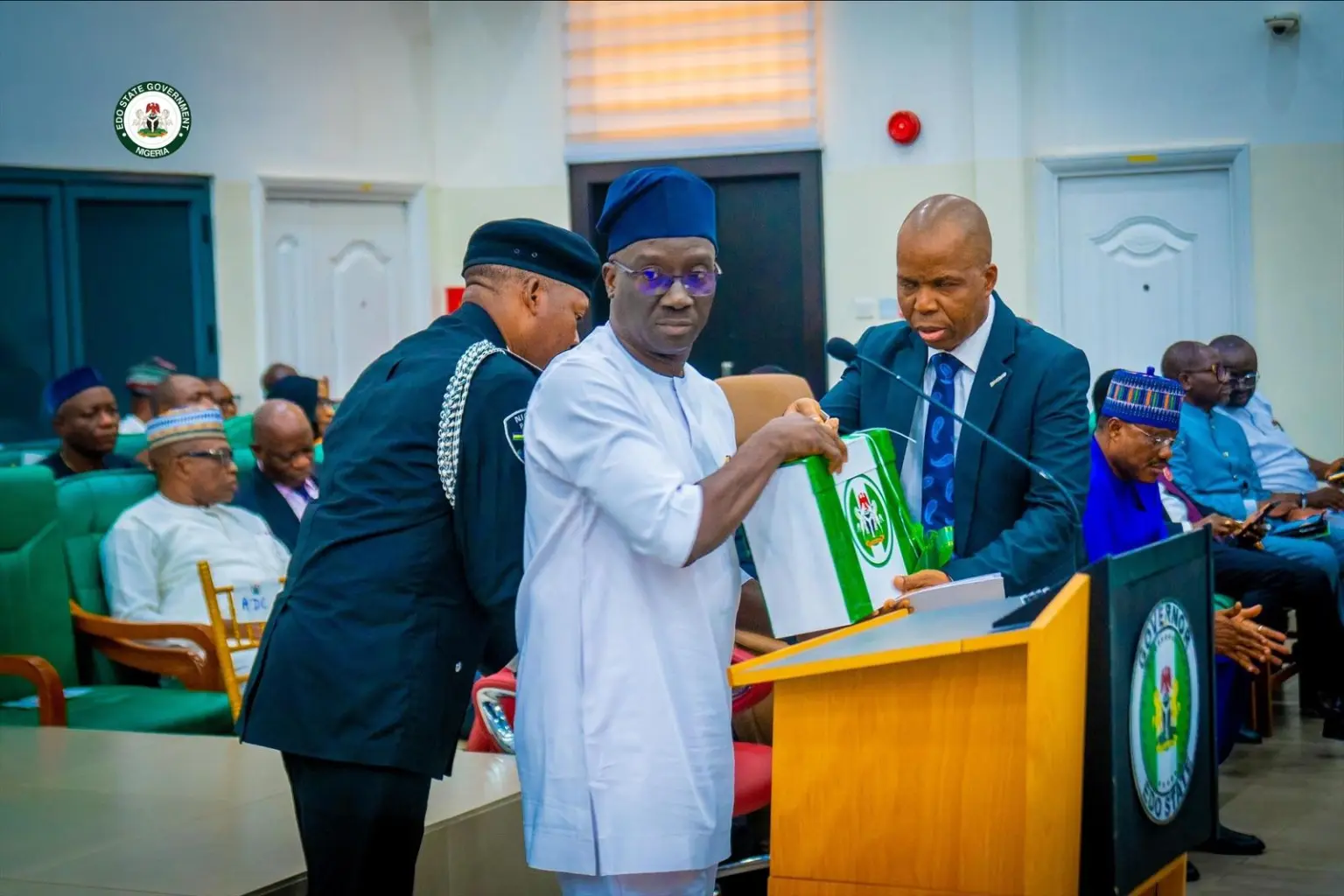
Warnings of severe flooding in 2026 are casting a spotlight on infrastructure resilience in Edo State, even as the government ramps up spending on roads, bridges and public assets aimed at stimulating economic activity.
The Nigerian Meteorological Agency (NiMet) has predicted above-normal rainfall during the 2026 rainy season, identifying Edo as one of the states facing a high risk of flooding and related climate hazards.
In response, the National Emergency Management Agency (NEMA) has urged residents to prepare and follow early warning systems issued by disaster management agencies.
At a stakeholder forum in February, the head of NEMA’s Benin Operations Office, Kenneth Ojudeire, reportedly outlined the agency’s priorities ahead of the rainy season.
“We will strengthen community engagement, early warning dissemination, resource mobilisation and rapid response mechanisms to enhance our performance,” he said.
The warning comes as residents and businesses continue to raise concerns about the condition of key infrastructure across the state.
Infrastructure drive as economic strategy
Edo State authorities say the response lies partly in an aggressive infrastructure expansion designed to improve mobility, unlock commerce and connect communities.
Governor Monday Okpebholo has repeatedly emphasised road construction and urban connectivity as central pillars of the administration’s economic agenda.
During inspections of projects in Benin City and surrounding communities, the governor framed the infrastructure drive as a catalyst for economic growth.
“We are changing things in Edo State. Our infrastructural projects are creating jobs, improving mobility, and lifting communities out of neglect,” he said.
According to the state government, major road works are underway along the Sapele Road corridor and in areas including Evbhukhu, Amagba, Ogheghe, Old Sapele Road, Uhie Road, Charismatic Renewal Road and Oghede Upper Ekenhuan Road.
He believes that expanding these corridors will open up communities and boost trade, particularly for agricultural and informal sector businesses.

Residents cite poor roads, flooding
Despite the ongoing projects, residents in parts of Benin City and Edo Central say deteriorating roads and poor drainage continue to disrupt daily life.
Communities such as Evbuotubu have repeatedly complained about damaged roads affecting mobility, housing and commercial activity.
Online discussions frequently reference “bad roads and collapsing infrastructure” as persistent challenges across areas, including Ogheghe Road, Old Sapele Road and the Oko ADP axis.
Flooding has become another major concern during the rainy season. Residents say blocked drainage channels and weak stormwater systems cause streets to become submerged, damaging homes and road surfaces.
READ ALSO:
- Cross River Residents Spend More on Petrol in January – Report
- CBN Tightens Instant Payment Rules, Introduces New Fraud Controls for Banks
- Video: Heavy Downpour Leaves Parts of Abuja Waterlogged, Raises Flood Concerns
- NiHSA Warns of Toxic Groundwater Contamination in Lagos, Kebbi, Kogi
- African Energy Bank Will Boost Energy Security, Inclusive Growth – Lokpobiri
Environmental degradation has also worsened the problem, even as erosion sites created by heavy rainfall are widening gullies and undermining nearby buildings and transport routes. Emergency officials say the infrastructure stress is compounded by recurring disasters.
The Edo State Emergency Management Agency has reported dozens of incidents involving floods, storms and fires in recent years, affecting thousands of residents and frequently resulting in damaged roads, destroyed homes and disruptions to commerce.
Revenue growth, but weak capital receipts
Pinnacle Daily review of the state’s fiscal data suggests that while Edo has strengthened its revenue base, funding capital infrastructure remains uneven.
In 2025, the state generated a total income of ₦560.31 billion, equivalent to 70 per cent of its ₦799.82 billion budget.
Recurrent revenue performed strongly, reaching ₦511.23 billion or 92 per cent of the annual target. Federal allocations accounted for ₦412.78 billion of this amount, while internally generated revenue contributed ₦98.45 billion.
Pay-As-You-Earn tax receipts exceeded expectations, delivering 126.4 per cent of the target.
However, capital revenue significantly underperformed, with only ₦10.69 billion realised—just 5.3 per cent of the budgeted amount—largely due to the failure of expected capital drawdowns to materialise.
Roads dominate infrastructure spending
Despite the revenue imbalance, infrastructure remained the largest driver of capital expenditure.
Edo’s budget for general infrastructure was initially set at ₦186.15 billion but was later revised upward to ₦354.01 billion as the state accelerated priority projects.
By the end of the fourth quarter, actual spending reached ₦211.06 billion, representing 59.6 per cent of the revised target.
Road development accounted for the bulk of the spending. With a revised allocation of ₦338.53 billion, the state spent ₦208.71 billion on road infrastructure, achieving 61.7 per cent of the budget.
Major projects included the reconstruction of key transport corridors such as Sapele Road and the Benin–Auchi Expressway, alongside the completion of the state’s first flyover bridge.
Other capital initiatives included the relaunch of the New Edo Line transport service through the procurement of new buses, as well as continued investments in public buildings, technology and equipment.

Social infrastructure gains momentum
Beyond transport infrastructure, the state also increased spending on education and health facilities.
In the health sector, Edo recorded ₦39.22 billion in total expenditure, representing 81.9 per cent of its final budget. Capital investment in healthcare infrastructure reached ₦20.43 billion, funding hospital renovations and the construction of new facilities.
Primary healthcare was a major focus, with ₦16.76 billion spent—about 95 per cent of the revised allocation.
Education spending reached ₦42.62 billion, equivalent to 70.7 per cent of the final budget. Personnel costs rose significantly following the recruitment of teachers under the Edo State Teachers’ Accelerated Recruitment programme.
Capital expenditure in the education sector totalled ₦19.88 billion, much of it directed toward large-scale school reconstruction.
Debt and financing pressures
Infrastructure expansion has also come with financial obligations. In an earlier analysis, Pinnacle Daily reported that Edo State emerged as the second Nigerian state with the sharpest rise in public debt over the past decade.
In 2025, Edo spent ₦43.73 billion servicing public debt, exceeding its budget target and accounting for about nine per cent of total expenditure.
Domestic debt repayments included ₦16.92 billion in principal and ₦7.33 billion in interest, while foreign debt servicing amounted to ₦5.75 billion in principal repayments and ₦13.73 billion in interest.
The state also secured ₦10.64 billion in new loans during the year, most of it from international financial institutions.
Climate risks meet development ambitions
With NiMet forecasting heavy rainfall in 2026, the durability of Edo’s infrastructure investments may soon face a major test.
For residents and businesses, the coming rainy season will likely determine whether the state’s expanding road network and public works programmes can withstand intensifying climate pressures—or whether persistent flooding and erosion will continue to undermine economic activity.

Alex is a business journalist cum data enthusiast with the Pinnacle Daily. He can be reached via ealex@thepinnacleng.com, @ehime_alex on X