

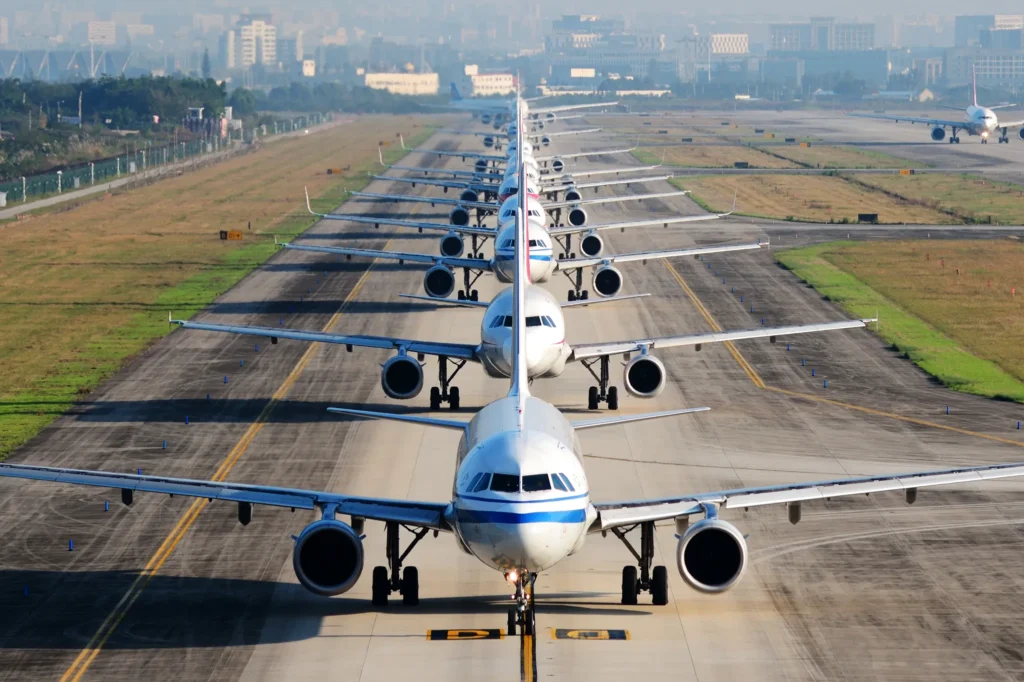
Despite efforts in recent years, both through government intervention and individual airlines to significantly increase their footprint on international routes, Nigerian airlines still face daunting challenges in achieving that, as foreign carriers continue to dominate the market.
The United Nigeria Airline, which recently marked its 5th anniversary, disclosed that it has embarked on a massive fleet expansion programme, acquiring new aircraft, with plans to launch direct international flights to Dubai, Jeddah, Rome, the United Kingdom, and New York by mid-2026.
The airline’s CEO, Prof. Obiora Okonkwo, who spoke during a press conference in Lagos, said the company’s ambition is to transform from a leading national carrier into a continental aviation powerhouse with strategic regional, continental, and intercontinental routes.
While these are noble dreams, there are concerns that the announcement may not go the way of others who have in the past announced plans to launch flight operations on some international routes, only to later fail to sustain them.
Despite the country’s large population, strong diaspora traffic, and strategic geographic location, Nigerian airlines face challenges that hinder their competitiveness on the global stage. They control less than 5 per cent of the international market share in the country. While expressing concern about the inability of Nigerian carriers to compete favourably with foreign carriers, the Minister of Aviation and Aerospace Development, Festus Keyamo, said sometime last year, that over 95 per cent of Nigerians travelling outside the shores of the country are airlifted by foreign airlines, leading him to approve three key routes – Italy, Canada, and Turkey – to Nigeria’s flag carrier airline, Air Peace.
Domestic Airlines’ Push for International Flights
While carriers like Air Peace have made bold entries into the global market (London and regional African hubs), they face a tough playing field.
The airline, which launched its London route in late March 2024 with flights to Gatwick International Airport, has expanded, commencing weekly scheduled direct flights to Heathrow Airport (also in London) from Lagos and Abuja. The airline’s entry is credited with “democratising” the Nigeria-UK route by forcing a price war that significantly lowered fares across the board. Achieving this feat, according to Air Peace Chairman, Dr. Allen Onyema, in one of his media interviews, took years of hard work and a series of attempts that met with regulatory bottlenecks. He acknowledged the support of the Federal Government, especially the Minister of Aviation, in making it happen.
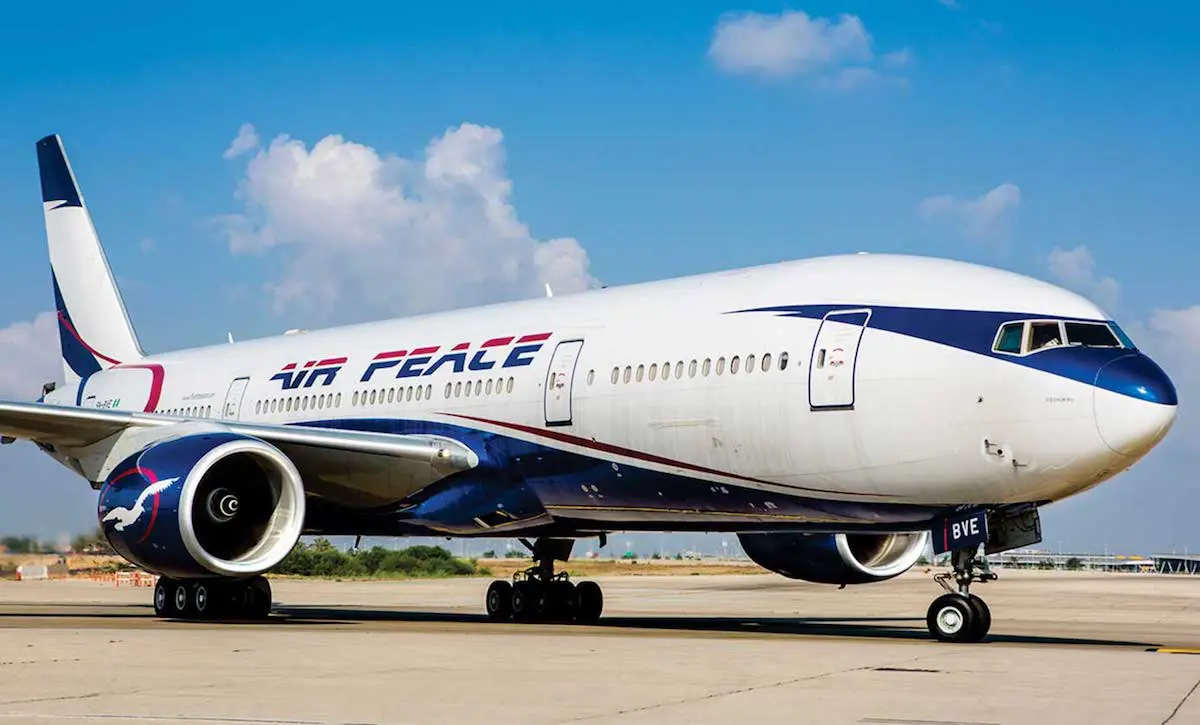
Aside from the London route, the airline has made efforts to launch flight operations into other international destinations such as China, Mumbai in India, Johannesburg in South Africa, Jeddah in Saudi Arabia, Tel-Aviv, and the Caribbean, among others.
While the airline has operated the China route in the past (specifically to Guangzhou), it suspended the service. After announcing plans in mid-2025 to relaunch the Nigeria–China route by October 2025, it still didn’t work as the airline currently does not fly to the destination. Current flight trackers and the airline’s booking system do not show active, regularly scheduled flights to the destination as of February 22, 2026.
READ ALSO:
How Nigerian Airlines lost N7.5trn to Overseas Maintenance in 5 Years
FAAN Bans Cash Transactions at Airports to Plug Revenue Leakages
Costly Flights Force Festive Travellers onto Dangerous Roads
Why NCAA Must Scrap $11.50 Security Levy Imposed on Int’l Travellers – Experts
Also, the airline launched a direct flight to Mumbai, India, in March 2023 with plans to commence operations to Delhi as well. During the launch of the Mumbai route, the airline said the direct flight would save time, money and avoid stopover stress. But today, the flight service is not active.
In a chat with a Pinnacle Daily correspondent, an Air Peace customer care representative confirmed that flights to those routes are currently not active. “Currently, we don’t fly to India,” he stated. The rep who didn’t give a reason for the suspension of flights to those routes said the public would be informed via the airline’s social media handles whenever they resume for those routes.
Similarly, Ibom Air has proposed to commence international flights this year. Keyamo had reportedly said in December 2025 that Ibom Air would begin international flight operations in April 2026. This followed the granting of full international status to the Victor Attah International Airport (VAIA) in Uyo by the Federal Government.
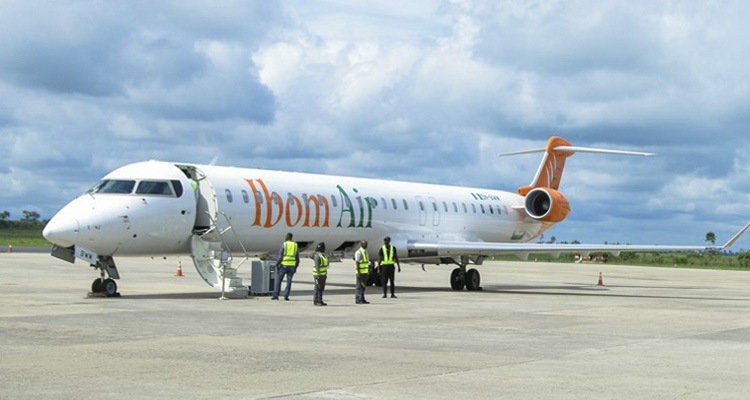
Minister Keyamo said that, ahead of schedule, the Victor Attah International Airport is being prepared to handle international flights. During an official inspection of the airport, Keyamo confirmed that the airport’s new international terminal and Maintenance, Repair, and Overhaul (MRO) facility are ready.
Ibom Air, which was launched in June 2019 as the first state-owned airline in Nigeria, currently has an international footprint that is primarily centered on its route to Accra, Ghana, which it serves from Lagos. Chairman of Ibom Air, Mfon Udom, reportedly revealed that the airline has already secured approvals for 13 international routes, which include Libreville (Gabon), Douala (Cameroon), Sao Tome, Kinshasa, Luanda, Monrovia, Conakry, Dakar, Banjul (The Gambia), Freetown (Sierra Leone), and Cairo, Egypt (via code-share agreements).
Persisting Challenges
Despite ambitious expansion plans, industry analysts have pointed out factors such as high operating costs, limited access to aircraft leasing, aero-politics, FX scarcity, inadequate airport infrastructure, and regulatory bottlenecks, among others, as challenges for domestic airlines seeking to operate international destinations.
High Operating Costs and Limited Access to Aircraft
One of the most pressing challenges for domestic airlines is the high cost of operations. Aviation fuel has remained significantly more expensive in Nigeria compared to many other countries (though recent domestic production has started to shift that dynamic).
Toni Ukachukwu, Founder/CEO of Aviators Africa, said Jet A1 fuel accounts for close to 60 per cent of the total operating cost for airlines.
Aviation analyst, Chris Aligbe, affirmed that domestic airline operators face a lot of challenges, including access to financing for the procurement of aircraft, foreign exchange, rising cost of fuel, and cost of operations.
Acquiring and maintaining modern aircraft is costly. Many Nigerian carriers rely on leased aircraft from foreign lessors, who often demand high insurance premiums and strict conditions due to perceived operational risks in the country.
Aligbe, who is the former General Manager, Public Affairs, defunct Nigeria Airways, observed that since 2017, the issue of wet lease (Aircraft Crew Maintenance and Insurance – ACMI) has been a major problem for domestic airlines. “Access to affordable financing remains limited, making fleet expansion or renewal a daunting task,” he stated in an interview on Channels Television.
He commended efforts by the Minister of Aviation to pave the way for Nigerian airlines to have access to dry lease after years of being blacklisted. The minister had stated that no airline in the world is able to afford buying all the aircraft they need for operations, stressing that they complement what they have with aircraft gotten through dry lease.
Foreign Exchange Constraints
Nigeria’s foreign exchange volatility has also played a key role in constraining international operations. Airlines earn a substantial portion of their revenue in naira, but most international expenses—such as aircraft leasing, maintenance, insurance, and training—are denominated in U.S. dollars. This mismatch exposes airlines to currency risks and financial instability.
In recent years, foreign carriers have publicly raised concerns over the repatriation of ticket sales revenue from Nigeria, highlighting broader systemic foreign exchange challenges that also affect local airlines.
Maintenance and Technical Limitations
There are indications that Nigeria still lacks a fully equipped Maintenance, Repair, and Overhaul (MRO) facility capable of handling heavy aircraft checks for large wide-body planes. As a result, airlines ferry aircraft abroad for routine and major maintenance, increasing downtime and operational costs. This logistical hurdle makes it difficult for Nigerian carriers to compete with established international airlines that have access to domestic or regional MRO facilities, but also makes them spend between an estimated $1.5 billion and $2 billion annually.
Intense Competition from Foreign Carriers
Major international airlines such as Emirates and British Airways dominate lucrative long-haul routes between Nigeria and destinations in Europe, the Middle East, and North America. These carriers benefit from extensive global networks and government support, among other factors.
Nigerian airlines often struggle to match their pricing power, service quality, and fleet capacity, leading to reduced market share on international routes.
The Way Forward
Industry experts argue that for Nigerian airlines to thrive internationally, reforms must address fuel pricing, foreign exchange stability, infrastructure development, and access to long-term financing. The establishment of a functional local MRO facility and a review of bilateral air service agreements could also help level the playing field. Air Peace and Ibom Air are reportedly making significant moves to build world-class MROs. Air Peac is constructing a ₦32 billion MRO facility at the Murtala Muhammed International Airport (MMIA) in Lagos, set for completion within 15 months from September 2025, when the project was inaugurated.
Ukachukwu stated that airlines need a favourable environment to be able to operate sustainably.
In a chat with Pinnacle Daily, General Secretary, Aviation Roundtable Initiative, Olumide Ohunayo, while noting that having access to dry lease helps to boost airlines’ operation, cautioned that it is not a permanent solution. Ohunayo advised that while using aircraft gotten through dry lease, airlines should work towards getting their own.
Commenting on competition with foreign airlines, on the international destinations, the aviation analyst said Nigerian airlines don’t have the favourable atmosphere yet to do so. He advised that domestic airlines should build internal structures and systems gradually to attract external investors and not be in a rush to be a mega airline without adequate capacity. “We must avoid that rush to get a mega carrier or else we fall into the same problems that we had in the past,” he stated.
With Africa’s air travel market projected to grow significantly in the coming decades, stakeholders believe Nigeria has the potential to become a major aviation hub—if structural bottlenecks are resolved.

Victor Ezeja is a passionate journalist, scholar and analyst of socioeconomic issues in Nigeria and Africa. He is skilled in energy reporting, business and economy, and holds a master's degree in mass communication.