
As Lagos transforms into the epicentre of Detty December in this Yuletide season, one event stands apart not just in spectacle but in spiritual resonance: the Eyo Festival, scheduled for Saturday, December 27, 2025, on Lagos Island.
In a city famed for its parties, music, fashion and nightlife, Eyo remains a cultural institution rooted in Lagos’s history, ancestral memory, and Yoruba cosmology. It is where ancient ritual meets modern identity in the heart of one of Africa’s busiest megacities.
Often described in tourist guides as a “cultural parade” or “street festival,” the Eyo Festival, traditionally called the Adamu Orisha Play, is a ritual procession that escorts the souls of departed leaders and commemorates their contributions. The masquerades, or Eyo, are believed to represent visitors between the living and ancestral realms, not mere entertainers.
Tracing its origins to secret society traditions in Lagos, Eyo historically accompanied the souls of Obas (kings) or significant chiefs at funerals while blessing the city for a peaceful transition of power. The first documented Eyo took place in 1854 to honour Oba Akintoye.
A Quick History You Probably Didn’t Know
The Eyo Festival didn’t actually start in Lagos? Its roots trace back to Iperu-Remo in Ogun State, where the earliest forms of the masquerade tradition were practised. Over time, the custom travelled to Lagos through migration, inter-family ties, and cultural exchanges between both communities.
The first documented Eyo procession in Lagos took place in 1854. It was organised to honour Oba Akintoye and to mark a significant transition in the kingdom. The original purpose of Eyo was far more solemn than the colourful spectacle we see today? In the past, Eyo masquerades appeared during key moments, to escort kings and chiefs to the afterlife, cleanse the city spiritually, and welcome important dignitaries.
READ ALSO:How Technology is Bringing Danger Into Nigerian Homes
As Lagos grew, so did Eyo’s identity? What started as a sacred rite gradually expanded into a vibrant cultural celebration, attracting thousands of visitors. Over the decades, the festival transformed into the global tourist attraction we now recognise, while still preserving its deep spiritual and historical essence.
This return sets the tone for a December filled with heritage, pageantry, and unity, signalling that Lagos is ready to celebrate tradition on the world’s stage once more.
Understanding the Eyo Masquerade (Things Many People Get Wrong)
Many people know the spectacle but not the story behind it. The word “Eyo” refers to the white-clad masquerades who parade through Lagos Island during the Adamu Orisa Play, a sacred cultural performance that predates Nigeria’s colonial era. The name “Adamu Orisa” itself means “to pay homage to the spirits”, though the Eyo Festival is not tied to deity worship.
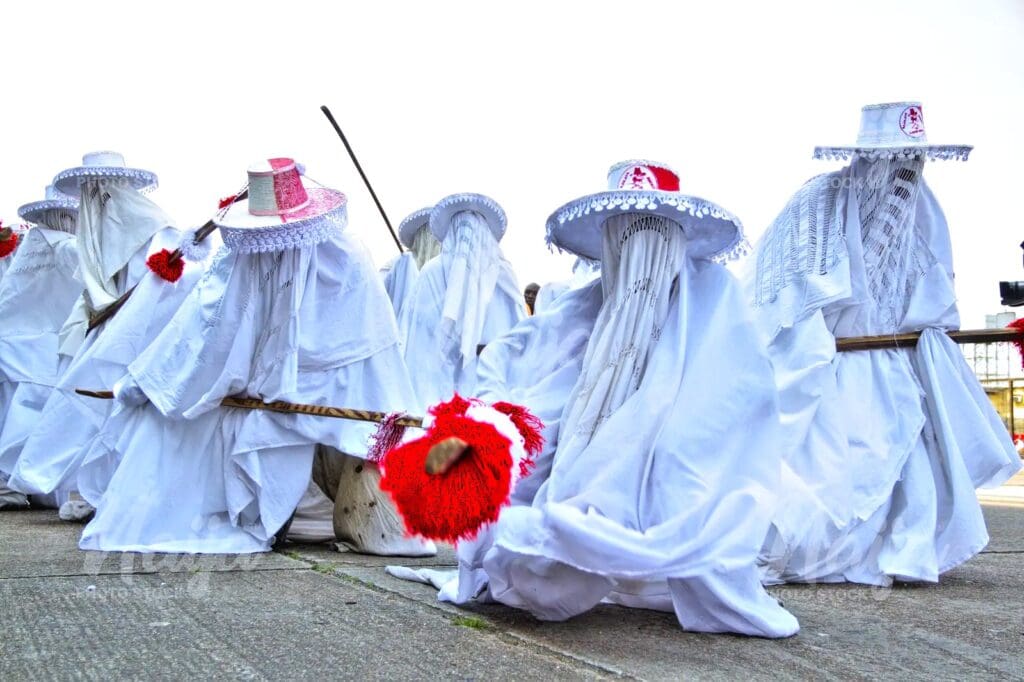
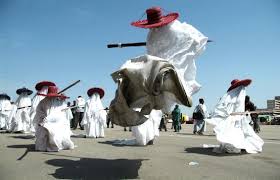
Each masquerade wears flowing white robes symbolising purity, peace, and ancestral presence. Their staff, called “Opá,” represents authority and is used to bless, not harm; a gesture of goodwill toward onlookers. Eyo masquerades do not speak like ordinary people; instead, they communicate in chants believed to carry spiritual resonance, bridging the seen and unseen worlds.
They are often called “agogoro Eyo”, the “tall Eyo”, because of their elegant, elongated form that mirrors ancestral spirits walking among the living. In essence, each Eyo represents a link between heritage and humanity, a symbol of Lagos’ collective identity.
This is why decorum is sacred: no beating, no rascality, no disrespect. The Eyo embodies dignity, a walking reminder that Lagos culture thrives best when honour and order walk side by side.
The Five Major Eyo Groups And What They Represent
The Eyo masquerades aren’t just a single group parading through Lagos Island. There are five major Eyo groups, each with its own colour, role, and story.
First up is the Adimu, the senior group distinguished by their black broad-rimmed hats. They are the trailblazers, announcing the festival a week in advance and leading the grand procession.
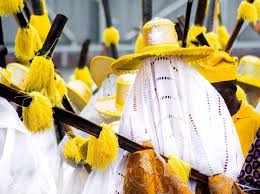
Next comes Laba, dressed in red, a vibrant reminder of courage and energy. Oniko follows in yellow, symbolising wealth and vitality, while Ologede strides in green, representing growth and harmony.
Finally, Agere, dressed in purple, rounds out the parade, a colour often associated with royalty and prestige. Each group moves in order, a choreography rooted in tradition, echoing the five family lineages of Iperu-Remo, the birthplace of the Eyo.
December 27, 2025 — Memory, Meaning & Honour
Unlike fixed annual carnivals, Eyo occurs on special occasions. For the 2025 edition, His Royal Majesty Oba Rilwan Babatunde Akiolu has declared that the festival will honour the late Chief Abibatu Mogaji, as well as former governors Lateef Jakande and Sir Michael Otedola.
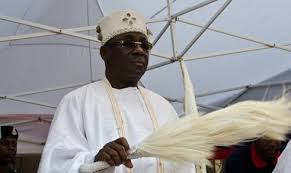
Oba Akiolu reiterated that Eyo is sacred heritage, not a commercial opportunity for personal gain, underscoring the importance of preserving its dignity while enabling broad participation. Tafawa Balewa Square (TBS) serves as the ceremonial hub, with buses and logistics connecting participants from across Lagos State.
Costume, Symbolism & Spiritual Cosmology
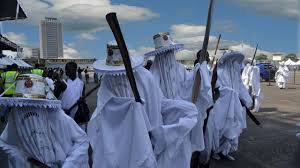
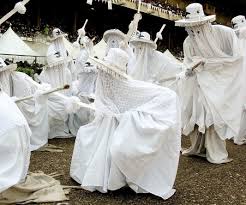
The Eyo procession is visually unforgettable, thousands of white-clad masquerades (Agogoro Eyo) move in deliberate rhythm through the streets. Each wears a flowing white robe, veiled face, and colour-coded hat (Aga) indicating their group (Iga), while holding an Opambata staff.
These elements are deeply symbolic:
- White attire: Purity, spiritual peace, and the presence of returning ancestors.
- Veil: Preserves anonymity; the individual dissolves into the communal spirit.
- Opambata staff: Blessing baton and ceremonial regulator, maintaining order and distributing ancestral energy.
The masquerade is a living cosmology, a visual and bodily expression of Yoruba metaphysics where ancient Lagos meets the modern city.
Ritual Law on the Streets
Eyo enforces ritual discipline:
- Footwear is removed in certain zones as a sign of humility.
- Certain hairstyles, smoking, motorcycles, and bicycles are prohibited along the route.
- Breaking ceremonial norms may result in a tap from an Opambata staff a cultural correction rather than punishment.
These rules mark the streets as transition spaces, where secular norms pause and ancestral order prevails.
Eyo as an Economic Engine
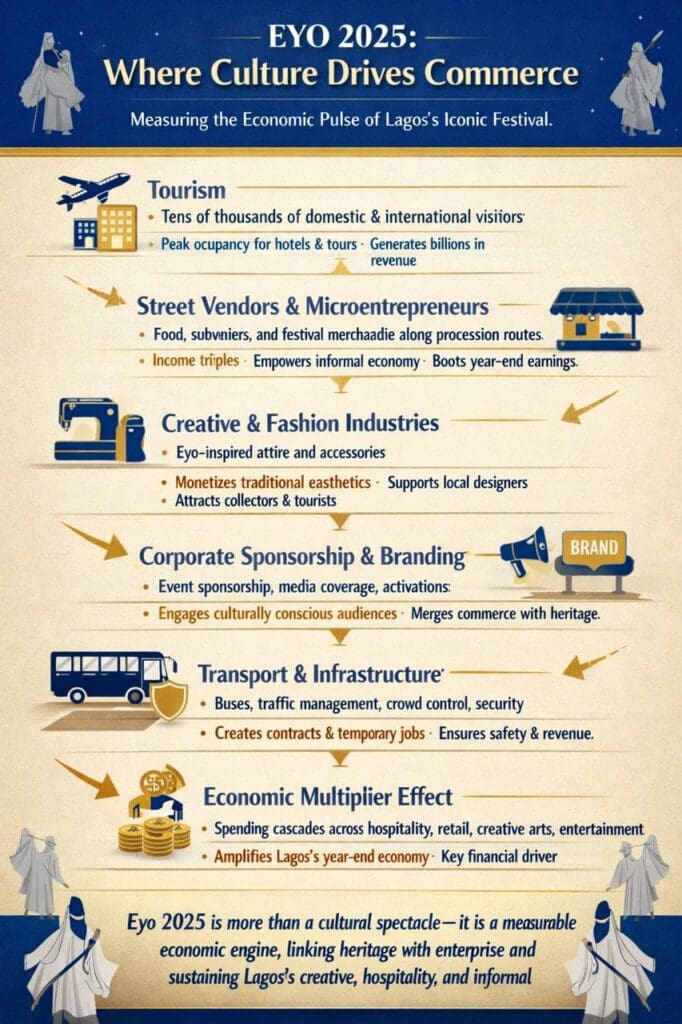
Beyond its spiritual and cultural significance, Eyo 2025 has become a major economic driver. The festival fuels activity across tourism, hospitality, creative industries, street commerce, corporate engagement, and urban infrastructure.
Key economic impacts:
| Dimension | Aspect | Description | Impact / Significance |
|---|---|---|---|
| Tourism | Domestic & International Visitors | Tens of thousands attend, filling hotels, tours, and flights. | Generates billions in revenue; strengthens Lagos as a cultural tourism hub. |
| Street Vendors & Microentrepreneurs | Food, souvenirs, festival merchandise | Income for small businesses triples during the festival; informal economy thrives. | Empowers local entrepreneurs; boosts year-end income. |
| Creative & Fashion Industries | Eyo-inspired attire and accessories | Limited-edition products attract tourists and collectors. | Monetizes cultural aesthetics; promotes Lagosian creativity. |
| Corporate Sponsorship & Branding | Event sponsorship and media activations | Brands reach culturally conscious audiences; leverage festival visibility. | Integrates commerce with heritage; strengthens corporate-community relations. |
| Transport & Infrastructure | Buses, traffic management, security | Contracts and temporary employment for operators and staff. | Ensures festival safety; generates operational revenue. |
| Economic Multiplier Effect | Spending cascades across hospitality, retail, arts, entertainment | Boosts end-of-year economic activity across sectors. | Positions Eyo as a key financial driver during Detty December. |
EYO 2025: CULTURE MEETS COMMERCE
Economic Highlights at a Glance
| Sector | Activity | Impact / Significance |
|---|---|---|
| Tourism | Tens of thousands of domestic and international visitors | Hotels, flights, and tours experience peak demand; billions in revenue; boosts Lagos as a cultural tourism hub |
| Street Vendors & Microentrepreneurs | Food, souvenirs, festival merchandise along procession routes | Income for small businesses triples during the festival; empowers informal economy participants |
| Creative & Fashion Industries | Designers produce Eyo-inspired attire and accessories | Monetizes traditional aesthetics; supports Lagosian creatives; attracts collectors and tourists |
| Corporate Sponsorship & Branding | Companies sponsor events, media coverage, activations | Brands engage culturally conscious audiences; merges commerce with heritage |
| Transport & Infrastructure | State buses, traffic management, crowd control, security | Contracts and temporary employment; ensures festival safety; generates operational revenue |
| Economic Multiplier Effect | Spending cascades into hospitality, retail, arts, and entertainment | Amplifies Lagos’s year-end economy; positions Eyo as a financial driver during Detty December |
Eyo 2025 is not just a cultural and spiritual spectacle, it is a measurable economic engine, linking heritage with enterprise and sustaining Lagos’s creative, hospitality, and informal sectors.
Eyo Within Detty December
Detty December has transformed Lagos into a festive metropolis, attracting concerts, parties, exhibitions, and tourists. Within this urban celebration, Eyo functions as both a cultural anchor and an economic catalyst, offering a moment of reflection amid the year-end festivities while stimulating commerce for vendors, hotels, creatives, and corporate sponsors.
By anchoring the season with a heritage-rich, revenue-generating event, Eyo demonstrates that culture and commerce can coexist in a rapidly modernising city.
Eyo’s imagery now resonates globally, appearing at diaspora celebrations like Notting Hill Carnival in London, showcasing Lagosian culture on the world stage. The Nigerian Tourism Development Authority (NTDA) works with Lagos’s Royal Institution to expand the festival’s international appeal while safeguarding its authenticity, positioning Eyo 2025 as a world-class cultural tourism attraction.
READ ALSO:Drums, Dance, Naira: The Power of Nigerian Festivals
Eyo is more than a display of costume and colour. It is a repository of collective memory, spiritual continuity, and social identity. On December 27, when the white-robed figures take to Lagos Island, they are not merely performing history they are living it. In that procession lies Lagos’s soul: ancient, vibrant, and enduring, where culture, spirituality, and commerce converge in a single living celebration.

Esther Ososanya is an investigative journalist with Pinnacle Daily, reporting across health, business, environment, metro, Fct and crime. Known for her bold, empathetic storytelling, she uncovers hidden truths, challenges broken systems, and gives voice to overlooked Nigerians. Her work drives national conversations and demands accountability one powerful story at a time.