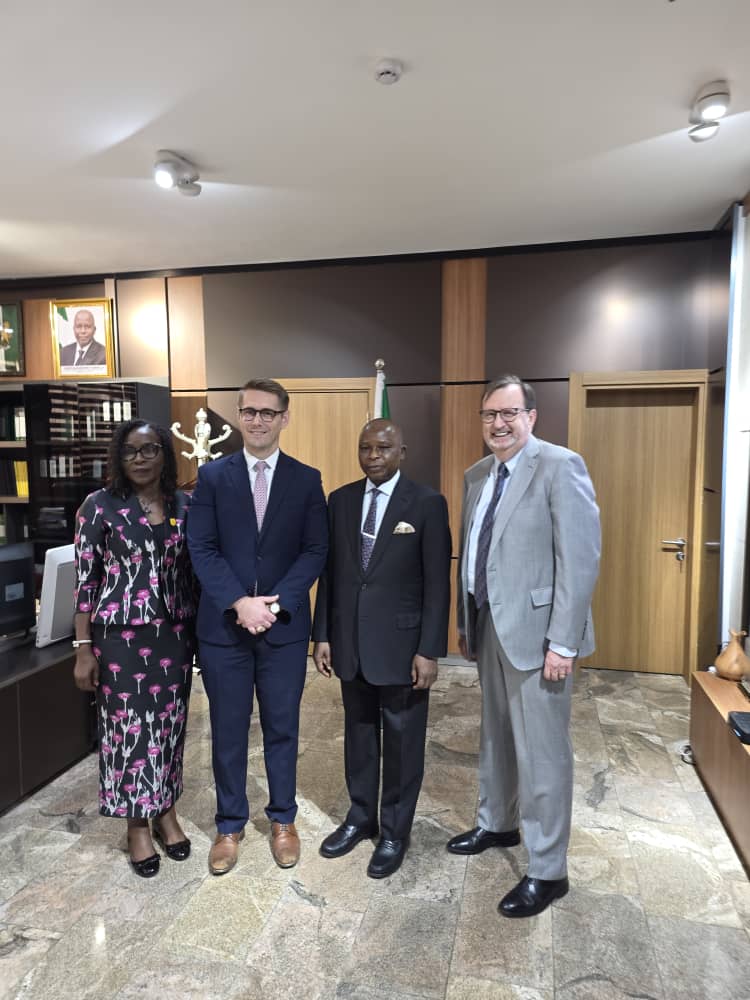
The Attorney-General of the Federation (AGF) and Minister of Justice, Lateef Fagbemi SAN, says insecurity in Nigeria is often misrepresented, insisting that the crisis is not driven by religion and that the government is addressing the situation through lawful procedures and ongoing prosecutions.
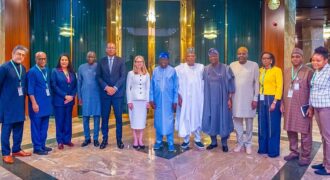
Fagbemi spoke in Abuja on Tuesday after a meeting with Richard Mills, a United States congressman and the country’s ambassador to Nigeria.
He said the engagement offered Nigeria a chance to present its own account of the security situation, adding that although challenges remain, the narrative is frequently distorted.
“This meeting is about the terrorism going on in the country and to afford us the opportunity to explain our own side of the story,” he said.
“I’m happy that they are also here to see things for themselves. And what is important is to also apprise them that even though we have challenges in Nigeria, it is not religious. We have security challenges, and the government is doing its utmost to ensure that these challenges are addressed.”
Fagbemi Recounts How Terrorism Cases Have Been Taken Seriously
The minister said the prosecution of terrorism cases has continued with “significant progress” recorded since trials began.
“For instance, today, as we speak, the terrorism trial is still going on. I have been there today, and I have taken one or two of the cases,” he said.
“And I want to seize this opportunity to let you know that as of today, that is from 2017 to 2025, we have secured 860 convictions and 891 acquittals.”
He explained that the acquittals confirm that Nigeria is not detaining suspects indiscriminately.
“What this speaks to, particularly the issue of discharges, is that we don’t just arrest people and clamp them into prison,” he said.
“We follow due process. They are profiled. Those who have nothing to do with it are left off the hook. Those who we believe we have cases against, we take them to court. It is for the court to decide. Whenever the court takes a decision, we comply.”
READ ALSO: Fagbemi Reaffirms Swift Justice as Key in Nigeria’s Anti-Terror Strategy
Fagbemi said the US delegation has been meeting several security and governance institutions.
“They have visited the office of the national security adviser, the chief of defence staff and a few other agencies. They have also met with some civil society organisations and religious forces,” he added.
“But I want to tell you that things are not as heinous as people are portraying. I can assure you of that. We have problems in Nigeria. It is not a problem of religion.”
BACKGROUND
On November 1, US President Donald Trump redesignated Nigeria as a “country of particular concern (CPC)” over alleged attacks on Christians.
Trump warned that if the Nigerian government failed to curb the killings, he would withdraw all US aid and assistance. He also threatened to deploy the US department of war to combat terrorists attacking Christians.
Before Trump’s remarks, a group of US lawmakers had urged Marco Rubio, secretary of state, to take diplomatic action against Nigeria over what they described as “systematic persecution and slaughter of Christians”.
In November, President Bola Tinubu approved Nigeria’s delegation to the US-Nigeria joint working group, part of agreements reached during a recent high-level visit to Washington led by Nuhu Ribadu, the national security adviser.

Rafiyat Sadiq is a political, justice, and human rights reporter with Pinnacle Daily, known for fearless reporting and impactful storytelling. At Pinnacle Daily, she brings clarity and depth to issues shaping governance, democracy, and the protection of citizens’ rights.