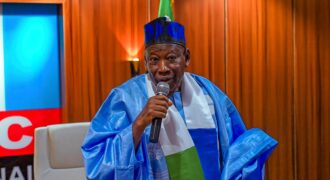
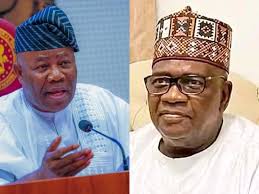
Tension began shortly after Akpabio entered the chamber and took over from Deputy Senate President Jibrin Barau, who had been presiding. Upon assuming his seat, Akpabio immediately invited Senate Leader Opeyemi Bamidele and a few other senators to approach the chair for a brief discussion.
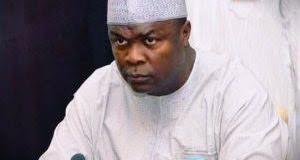
Goje, displeased with the development, rose swiftly to raise a point of order. Citing Order 55 (12)(a) of the Senate Standing Orders 2023 (as amended), he argued that such interaction was prohibited during plenary.
“Interaction is not allowed except to move the business we have been called upon to do,” Goje said. “Mr Senate President, what you are doing is unparliamentary. You cannot be holding a separate meeting when the Senate is in session.”
READ ALSO: Hardship: Akpabio Urges Patience, says Tinubu’s Reforms will yield Prosperity
Akpabio invited Goje to join the discussion, but the former Gombe governor refused, insisting he would not participate in an “illegal and unparliamentary” act.
Goje continued, “Everything is at a standstill now. This should have been done outside. When we come to Parliament, we do parliamentary business.”
Senator Akpabio and Senator Goje Trade Words
Efforts by Akpabio to calm the situation were unsuccessful, as Goje maintained that the senators gathered around the Senate President should “leave there so that the Senate will move on.”
Akpabio later explained that the brief meeting was to decide whether to proceed with the day’s business in view of an urgent assignment at the Presidential Villa by 1 p.m., including the Armed Forces Remembrance Emblem Launch.
Despite the explanation, Goje declined the invitation to join the discussion, reiterating his opposition.
“I don’t want to be part of it. I will not come. It’s wrong,” he said.
Plenary was stalled for more than 30 minutes before the chamber eventually settled back into session.

Rafiyat Sadiq is a political, justice, and human rights reporter with Pinnacle Daily, known for fearless reporting and impactful storytelling. At Pinnacle Daily, she brings clarity and depth to issues shaping governance, democracy, and the protection of citizens’ rights.