
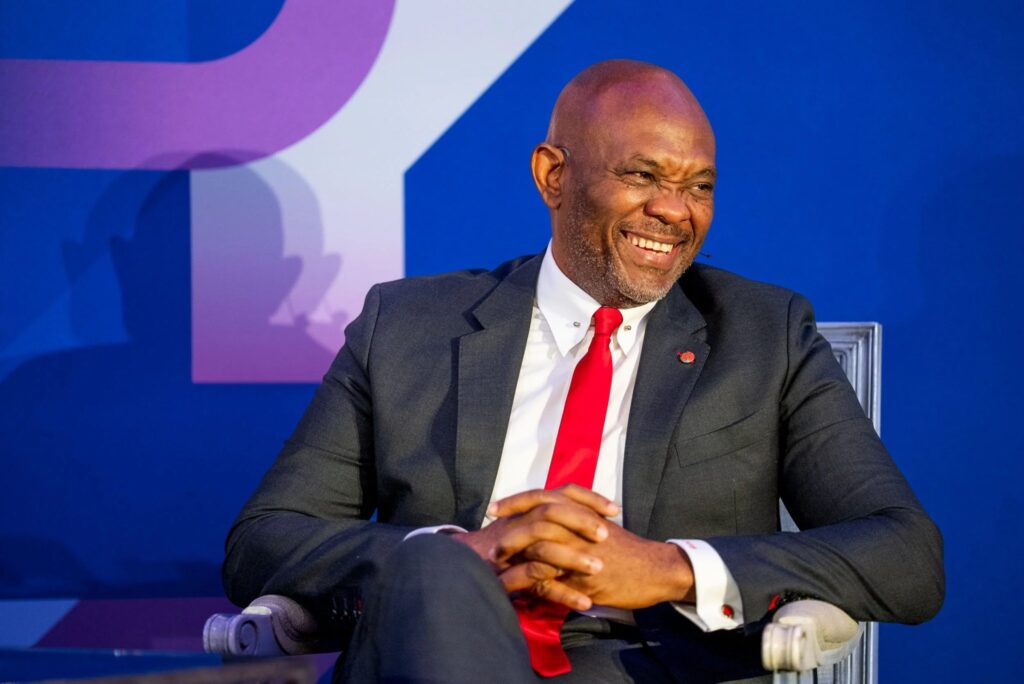
Chairman of Heirs Holdings, Transcorp, and United Bank for Africa, Tony Elumelu in this interview with select journalist attending the International Monetary Fund/World Bank Annual meetings in Washington DC, spoke on a number issues including taking more risk with the pension funds
You spoke on digital transformation and its benefits for Africa. What was your key message?
My message is simple — Africa must be included. The world must be deliberate about including Africa in the digital revolution. Africa must have a seat at the table where governance, practices, and protocols for artificial intelligence (AI) are being developed.
We must be intentional about it and recognise that, in the 21st century, digital inclusion is economic inclusion. Digital transformation should not only lead to productivity and efficiency — it should also lead to the democratisation of prosperity.
For us Africans, there’s a lot to do to take advantage of this moment. We’ve had revolutions before — like the mobile money revolution — and we did well. Now, there’s another opportunity before us with the digital and AI revolution.
But for this to happen, access to electricity must improve. Electricity is critical to power data and the AI revolution. Yet, over 50% of our people do not have access to electricity. This is unacceptable.
READ ALSO: Elumelu Calls for $4 Trn in Domestic Capital, AI Investment to Drive Africa’s Prosperity
I use this opportunity to call on all African governments that are genuinely interested in solving youth unemployment, driving transformation, and democratising prosperity on the continent — fix the electricity challenge.
Our youths are not asking for sympathy. They are asking for systems that work — an enabling environment that allows them to put their talents to productive use. If this happens, Africa will develop. If it doesn’t, we are doomed.
You spoke about mobilising financial capital within Africa. Could you elaborate on that?
Yes. The African Finance Corporation (AFC) — which we helped to establish — recently published research showing that Africa has over $4 trillion in untapped economic resources.
We need to work together to unlock this potential. That’s why the United Bank for Africa (UBA) released a white paper focused on mobilising domestic capital.
The event was held at the World Bank headquarters during the IMF/World Bank Annual Meetings 2025, bringing together government policymakers, global development institutions, leading commercial banks, and academics — including a Harvard Business School professor who presented the paper.
The goal is clear: to think and act collectively on how to mobilise Africa’s capital. Nations that have developed did so primarily through internal capital mobilisation.
If we can effectively mobilise this $4 trillion, we can then attract even more foreign investment. When investors see that Africans are serious about investing in their own continent, they will be encouraged to join us.
After this initiative, what are the next steps?
Talking is less than 1% of the work. What matters is execution — getting things done.
As the Harvard professor noted, we’ve been saying “Africa is rising” for over 25 years, yet the same issues persist. Now is the time to act — starting with improving access to electricity. It remains the single most critical factor holding back our continent’s development.
One key revelation from the UBA White Paper is that 85% of Africa’s $4 trillion is held in safe sovereign instruments. Do you see this as a challenge?
Sovereign wealth funds are important, but the bigger issue is pension funds. Are we investing pension funds properly?
No one will develop Africa for us. We must do it ourselves. Look at the Dangote Refinery — it became a reality because local banks and African institutions financed it, not foreign lenders.
READ ALSO: Tony Elumelu to Receive Appeal of Conscience Award
At Heirs Holdings and UBA Group, we believe in doing what we can from within. Pension funds have played a critical role in developing many countries — including the United States. Nigeria’s pension reform under President Obasanjo was a great initiative and has been managed well.
But now, it’s time for those funds to go to work. Investing pension funds only in treasury bills will not develop Nigeria. We must channel them into critical sectors — infrastructure, energy, and manufacturing — even if there’s a 5–10% loss initially. We will learn and improve over time.
What matters is that our funds work for Africa’s development.

Sunday Michael Ogwu is a Nigerian journalist and editor of Pinnacle Daily. He is known for his work in business and economic reporting. He has held editorial roles in prominent Nigerian media outlets, where he has focused on economic policy, financial markets, and developmental issues affecting Nigeria and Africa more broadly.