

The Corporate Accountability and Public Participation Africa (CAPPA) has called on the President Bola Tinubu-led administration to ensure that Nigeria feels the gains of self-rule through programmes and policies that will lift the citizens out of poverty, hunger, and insecurity.
The organisation made the call in a statement by its Media and Communication Officer, Robert Egbe, to commemorate Nigeria’s 65th Independence Day.
It stated that beyond parades and speeches, the government should use the anniversary to reflect on how the country has fared, challenges faced, and the actions required to ensure Nigerians enjoy the true promise of freedom.
According to CAPPA, independence should not be defined by political sovereignty alone but by social and economic well-being for all citizens.
It acknowledged that the Tinubu administration has introduced some critical reforms, but maintained that such recovery programmes must be seen to positively impact households across the country.
The group said it has observed that whatever gains have been recorded are being overshadowed by hardship, pointing to high costs of food supplies, soaring rents and electricity tariffs, and healthcare that remains out of reach for many families.
“Nigeria’s independence was built on the hope that freedom would guarantee dignity and empower citizens as masters of their own destiny.
“Sixty-five years after the Union Jack was lowered, Nigeria cannot afford reforms that stabilise the books while destabilising households,” CAPPA’s Executive Director, Akinbode Oluwafemi, said.
READ ALSO: Nigeria at 65: IPAC Demands Credible Anambra Governorship Election
He noted that although Nigerians have often been told the economy is on the path of transformation, the gap between official claims and daily reality remains wide.
He noted that the poor cannot spend “economic recovery” in the market, stressing that the true test of policy is whether it improves life for people at the grassroots.
Oluwafemi believes the promise of independence will only be fulfilled when citizens can afford decent meals, live in safe housing within their means, access quality health care and public water services, and send their children to school without fear of exorbitant fees.
He urged the government to focus on closing existing gaps through people-centred policies.
Critical areas of concern
– Food security
CAPPA noted that food inflation is still high, and many households are struggling to eat three meals a day.
It urged the government to invest in local food production by supporting farmers with inputs, storage, and access to markets.
It noted that Nigeria has fertile land and abundant labour, but farmers are held back by a lack of infrastructure and the spread of insecurity in food-producing regions.
Strengthening agriculture will cut import dependence, lower prices, and make affordable, healthy food more available to Nigerians, CAPPA stated.
It stressed that food security is not just about availability but also about quality and health.
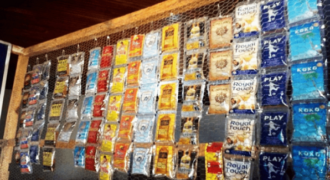
It pointed out that while hunger is rising, ultra-processed and sugary products are flooding the market, fuelling obesity, diabetes, and other non-communicable diseases.
CAPPA warned that without deliberate policies, Nigerians risk being trapped in a cycle where cheap but unhealthy foods dominate diets.
READ ALSO: Nigeria @ 65: Areas Govt Should Focus on for Next Decade – Economist
It reiterated its call for stronger healthy food policies, including an increase in the current sugar-sweetened beverage tax, clear front-of-pack warning labelling for food products, and salt reduction targets, to ensure that citizens not only eat but eat well.
– Growing debt profile
The organisation also warned against piling up debts through excessive borrowing, stating that loans used to service recurrent spending rather than productive investments only deepen hardship.
It advised the government to cut down on frivolous expenditures, close leakages, prioritise transparent spending, and channel resources into critical sectors as a way of boosting the economy and improving the lives of ordinary Nigerians.
– Worsening security situation
CAPPA further identified security as a major concern, noting that independence cannot be meaningful if citizens live in fear of violence, kidnapping, or displacement.
The group urged the government to invest in community policing and modern security infrastructure and to address the root causes of insecurity, such as poverty, unemployment, and inequality.
– Declining quality of education
CAPPA emphasised that the future of Nigeria rests on an educated population.
“Rising school fees, underfunded public universities, and poor facilities continue to deny many children and young people the opportunity to learn,” it stated.
READ ALSO: Nigeria May Exit Anti-money Laundering Watchlist in October
The organisation encouraged the government to increase budgetary allocations to education, provide incentives for teachers, and ensure that schools at all levels are properly equipped.
– Lack of public accountability, increasing corruption
CAPPA noted that corruption remains one of the greatest obstacles to Nigeria’s development.
It called for stronger accountability measures to ensure that public resources are not wasted or diverted into a few private pockets.
“Public office must be treated as a trust. Nigerians deserve leaders who live modestly, account for every naira spent, and put the nation’s welfare above personal gain,” the organisation said.
It urged the President Tinubu administration to use the anniversary as an opportunity to renew its commitment to improving welfare at the grassroots.
CAPPA also called on Nigerians to play their part by holding leaders accountable and participating actively in civic life.
It added that the spirit of independence was not only about what the government does, but also about how citizens work together to build a better society.

Alex is a business journalist cum data enthusiast with the Pinnacle Daily. He can be reached via ealex@thepinnacleng.com, @ehime_alex on X