
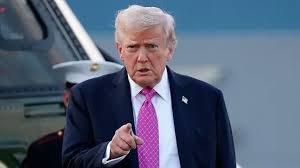
President Donald Trump on Thursday unveiled a sweeping round of new tariffs targeting key imports, including branded pharmaceuticals, heavy-duty trucks, and furniture, in what he described as a move to safeguard U.S. manufacturing and national security.
The measures, announced on Trump’s Truth Social handle, include a 100% duty on branded drugs, 25% on heavy-duty trucks, and tariffs ranging from 30% to 50% on imported furniture such as kitchen cabinets, bathroom vanities, and upholstered products.
The tariffs are set to take effect from October 1.
READ ALSO: Trump Confirms Arrest in Killing of Conservative Activist Charlie Kirk
Trump defended the action as necessary to counter the “large-scale flooding” of foreign goods into the U.S., promising the levies would “bring back” industries that have suffered steep job losses, particularly in states like North Carolina, South Carolina, and Michigan.
The announcement rattled global markets, with pharmaceutical stocks across Asia tumbling. Shares in Australia’s CSL hit a six-year low, Japan’s Sumitomo Pharma fell more than 3%, and indices in Hong Kong and India slipped over 1%. Chinese-listed furniture makers also dropped by about 1%.
While the White House insists tariffs will strengthen domestic industries, critics warn they could drive up consumer costs and strain trade relations. Australia’s government called the move “unfair and unjustified,” while Japan said it was assessing the potential fallout given its existing trade agreements with Washington.
The Pharmaceutical Research and Manufacturers of America, an industry body, cautioned that tariffs could undermine billions of dollars in new U.S. investments by global drug makers. Similarly, the U.S. Chamber of Commerce urged against truck tariffs, noting that most U.S. imports come from close allies like Mexico, Canada, Germany, and Japan.
READ ALSO: Trump Proposes Putin-Zelenskyy Summit to End Ukraine War
The new tariffs come as Trump leans heavily on trade barriers as both a foreign policy tool and a domestic economic strategy. His administration has launched probes into a wide array of imports including semiconductors, timber, wind turbines, and medical items—raising the prospect of further duties in the months ahead.
Despite concerns over inflationary pressure, Trump maintains that tariffs are a necessary step to restore industrial strength and generate government revenue, with Treasury officials projecting collections could reach $300 billion by year-end.

Esther Ososanya is an investigative journalist with Pinnacle Daily, reporting across health, business, environment, metro, Fct and crime. Known for her bold, empathetic storytelling, she uncovers hidden truths, challenges broken systems, and gives voice to overlooked Nigerians. Her work drives national conversations and demands accountability one powerful story at a time.