
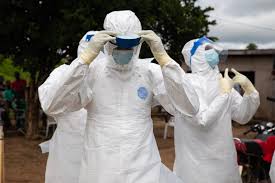
The Democratic Republic of Congo (DRC) is battling a fresh Ebola outbreak after health officials confirmed 11 new cases in the Bulape Health Zone of Kasai Province.
The outbreak remains concentrated in six health areas: Bambalaie, Bulape, Bulape Communautaire, Dikolo, Ingongo, and Mpianga. As of September 21, 2025, the total number of reported cases has risen to 57, comprising 47 confirmed and 10 probable cases.
At least 35 people have died, including 25 confirmed and 10 probable cases, putting the overall case fatality ratio at 61.4%. Among the victims are five health workers.
READ ALSO: 7 African Countries Where Cryptocurrency is Outlawed
Health authorities say the outbreak has cut across all ages, from infants to older people, with children aged 0–9 accounting for 23% of cases. Women represent 61% of the total, with a fatality rate of 56% compared to 73% in men. Vulnerable groups include children, housekeepers, and farmers.
The Africa Centres for Disease Control and Prevention (Africa CDC) reported last week that the outbreak had already led to at least 16 deaths and 68 suspected cases since it was declared earlier this month.
In response, only 400 initial doses of the Ervebo vaccine have been deployed, with additional doses expected. The World Health Organisation (WHO) acknowledged difficulties in scaling up vaccination due to limited access and funding. However, the International Coordinating Group on Vaccine Provision has approved the release of 45,000 more doses, adding to the country’s 2,000-dose stockpile.
READ ALSO: Namibia, Botswana Set to Build $4Bn Joint Oil Refinery
This marks the 16th Ebola outbreak in the DRC since the virus was first identified in 1976, with the current crisis linked to the Zaire strain. The challenge is compounded by ongoing armed conflicts, particularly in the east, which continue to undermine the nation’s fragile health system.

Esther Ososanya is an investigative journalist with Pinnacle Daily, reporting across health, business, environment, metro, Fct and crime. Known for her bold, empathetic storytelling, she uncovers hidden truths, challenges broken systems, and gives voice to overlooked Nigerians. Her work drives national conversations and demands accountability one powerful story at a time.