

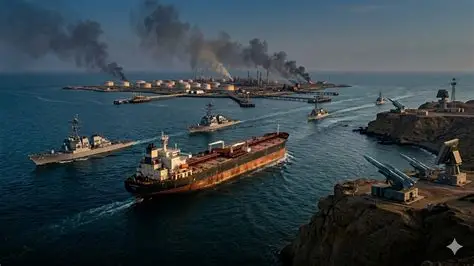
Following the announcement of a 10-day ceasefire between Israel and Lebanon, Iran has officially declared the Strait of Hormuz “completely open” for all commercial vessels.
The reopening, announced on Friday, April 17, 2026, by Iranian Foreign Minister Abbas Araghchi, marks a significant shift in the process towards resolving the Middle East conflict.
This development comes on the heels of a U.S.-brokered truce between Israel and the Lebanese government, which went into effect on April 16.
The foreign minister stated that commercial ships are required to follow specific “coordinated routes” established by the Iranian Ports and Maritime Organization.
Iran also gave the condition that only commercial vessels are permitted, as military vessels are prohibited from passing through.
“In line with the ceasefire in Lebanon, the passage for all commercial vessels through the Strait of Hormuz is declared completely open for the remaining period of the ceasefire, on the coordinated route as already announced by Ports and Maritime Organisation of the Islamic Rep. of Iran,” the Iranian Foreign Minister stated in a post on X on Friday.
The waterway, which was closed in early March 2026 after the United States and Israel launched an attack on Iran in late February, had caused severe disruption of the global supply chain, especially energy products. Analysts say about 20 per cent of global shipping of crude oil and liquefied natural gas passes through the Strait.
The closure blocked vessels transporting energy products to different parts of the world, causing a four-year high of crude oil in the international market, and significantly pushing up fuel prices in domestic markets.
READ ALSO:
- Oil Prices Surge Further as Middle East War Sustains Supply Disruption
- U.S./Israel-Iran War: Oil Prices Could Hit $150/barrel, Qatari Energy Minister Warns
- Failed U.S.-Iran Talks Raise Fear of Further Fuel Price Surge in Nigeria
- Iran–US–Israel War: CPPE Flags Inflation Threat to Nigeria
Three Iranian oil tankers carrying five million barrels of crude were the first loaded vessels to leave the Gulf since the U.S. blockade began, according to the tracking firm Kpler.
The reopening received a positive but cautious response from U.S. President Donald Trump, who thanked Iran for the move. However, he also made it clear that the U.S. naval blockade on Iranian ships and ports will remain in full force until a final agreement is reached with Tehran.
Tehran had maintained that a cessation of hostilities in Lebanon was a non-negotiable condition for reopening the waterway.
The announcement has reportedly triggered a sharp 10 per cent drop in global oil prices, providing relief to energy markets that were strained during the month-long closure. Brent Crude dropped to $90.54 per barrel, while WTI is $84.15 on Friday, April 17, reflecting a significant decline from almost $100 previously.
While the truce in Lebanon is a significant step, it remains fragile. Israeli Defense Minister Israel Katz stated that the campaign against Hezbollah is “still not complete,” and Hezbollah has said it is keeping its “finger on the trigger” in case of any Israeli violations.

Victor Ezeja is a Nigerian journalist skilled in producing insightful news analyses, feature stories, and interviews that simplify complex issues and drive informed public discourse. His work combines rigorous research, balanced reporting, and compelling storytelling to highlight developments shaping industries and society. Victor, who holds a Master's Degree in Mass Communication, specializes in energy, aviation, business, and economic reporting. He can be reached via @VICTOREZEJA on X