

By Esther Ososanya
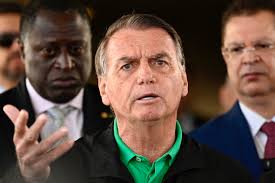
Brazil’s former President Jair Bolsonaro has been placed under house arrest following a Supreme Court order on Monday, intensifying political turmoil in South America and drawing sharp international rebuke, especially from the United States, where President Donald Trump has thrown his weight behind Bolsonaro’s defence.
The dramatic ruling came from Supreme Court Justice Alexandre de Moraes, who accused the former far-right leader of defying existing restraining orders and allegedly seeking support from Trump to derail his ongoing trial.
Bolsonaro is facing charges of conspiring with allies to violently overturn the results of Brazil’s 2022 presidential election, which saw leftist Luiz Inácio Lula da Silva return to power.
In a further twist, the arrest comes just days after the U.S. Treasury slapped sanctions on Justice Moraes, a move that observers say is part of a broader pressure campaign from Trump, who has called Bolsonaro’s prosecution “a witch hunt”.
Trump has since announced a 50% tariff on Brazilian imports, set to take effect this Wednesday, a move widely viewed as retaliation for the arrest and a show of solidarity with Bolsonaro.
Court Moves Despite U.S. Pressure
Justice Moraes, unfazed by escalating tensions, also imposed strict conditions on Bolsonaro’s confinement. He is now banned from using a mobile phone and restricted to visits only from lawyers or individuals pre-approved by the court. Federal police reportedly enforced the order at Bolsonaro’s residence in Brasília on Monday evening, seizing his phone during the operation.
Bolsonaro’s legal team immediately vowed to appeal, claiming their client had not violated any previous court directives. In a statement, they accused Moraes of overreach and politically motivated judicial activism.
Just last month, Bolsonaro lashed out at the judiciary during a public interview, branding Moraes a “dictator” and describing the restrictions placed on him as acts of “cowardice”.
U.S. Weighs In: Democracy or Division?
The U.S. State Department swiftly condemned Moraes’ arrest order, accusing Brazil’s judicial system of being weaponised against opposition figures. “We will hold accountable all those aiding and abetting sanctioned conduct,” the department warned, suggesting further economic reprisals may follow.
President Trump has not ruled out raising tariffs even further. Analysts say the episode is inflaming an already tense relationship between Brazil and the United States, pitting the Lula administration against Washington’s increasingly hardline posture.
READ ALSO: BRICS Summit Draws Trump’s Tariff Threat
While the legal and diplomatic storm continues, Bolsonaro’s supporters remain defiant. Sunday witnessed the largest street demonstrations in months, with far-right groups rallying in major cities to denounce what they call judicial tyranny and express loyalty to their embattled ex-president.
Critics, however, warn that Trump’s aggressive rhetoric could be doing more harm than good. “This external interference risks backfiring,” said a senior Brazilian political analyst, “galvanising support for Lula’s government and undermining Brazil’s democratic institutions.”
As Bolsonaro awaits his next court date, and with Lula’s administration maintaining a cautious stance, Brazil now finds itself at the centre of a geopolitical tug-of-war where justice, power, and international alliances hang precariously in the balance.

Esther Ososanya is an investigative journalist with Pinnacle Daily, reporting across health, business, environment, metro, Fct and crime. Known for her bold, empathetic storytelling, she uncovers hidden truths, challenges broken systems, and gives voice to overlooked Nigerians. Her work drives national conversations and demands accountability one powerful story at a time.