


By Esther Ososanya
As BRICS leaders gathered for a high-stakes summit in Rio de Janeiro on Sunday, U.S. President Donald Trump escalated tensions by announcing a proposed 10% tariff on countries aligning with what he called the group’s “anti-American policies”.
The threat, posted on his Truth Social account, comes as the bloc which now includes Brazil, Russia, India, China, South Africa, Egypt, Iran, Ethiopia, Indonesia, and the UAE continues to position itself as a counterweight to U.S.-led global systems. Trump did not define which specific BRICS policies he considered anti-American.
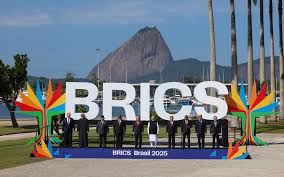
BRICS Defends Multilateralism Amid Rising Tensions
In their opening joint statement, BRICS leaders warned that rising tariffs could further destabilise global trade. Brazil’s President Luiz Inacio Lula da Silva described BRICS as the “heir to the Non-Aligned Movement” during his address, stressing the bloc’s mission to uphold multilateralism amid a fragmented global order.
“With multilateralism under attack, our autonomy is in check once again,” Lula said, highlighting BRICS’ collective strength representing over half the world’s population and 40% of global economic output.
Bloc’s Expansion Adds Weight But Also Complexity
The summit’s growing influence was visible with several heads of state attending, including India’s Prime Minister Narendra Modi and South Africa’s President Cyril Ramaphosa. However, the absence of Chinese President Xi Jinping, who sent his premier instead, and Russian President Vladimir Putin, attending virtually due to an ICC arrest warrant, underscored geopolitical complexities.
The BRICS bloc has grown more diverse, with nearly 30 countries expressing interest in joining. Yet, critics note the inclusion of regional rivals could challenge its cohesion and long-term strategy.
ALSO READ: Trump Adviser Urges Strategic U.S.-Africa Trade Reset
Strong Statements on Global Flashpoints and Trade Reform
The leaders condemned Israeli strikes on Gaza and voiced concern over Iran’s nuclear facilities. They also backed WTO membership bids for Iran and Ethiopia and called for the restoration of the WTO’s dispute resolution functions.
The group also announced a new BRICS Multilateral Guarantees initiative under its New Development Bank to ease financing costs and increase investment across member states.
On technology, they advocated protections against the misuse of artificial intelligence, urging fair compensation and data privacy safeguards.
As host of the upcoming UN climate summit, Brazil used the occasion to spotlight the environmental commitments of developing nations. Meanwhile, Trump, seeking a return to power, has publicly rolled back support for U.S. climate policies.
China and the UAE also signalled fresh investment into a proposed Tropical Forests Forever Facility aimed at conserving endangered forests globally, further positioning BRICS as a voice for the Global South.

Esther Ososanya is an investigative journalist with Pinnacle Daily, reporting across health, business, environment, metro, Fct and crime. Known for her bold, empathetic storytelling, she uncovers hidden truths, challenges broken systems, and gives voice to overlooked Nigerians. Her work drives national conversations and demands accountability one powerful story at a time.