


Analysts have argued in the recent past that Nigeria’s food crisis is not just a product of violence; it is the consequence of policy incoherence, poor governance, and institutional fragmentation.
In July, militants believed to be members of the Lakurawa group launched a raid on Kwallajiya, Sokoto State, resulting in 15–17 fatalities. This attack highlights the ongoing security challenges in northern Nigeria
A 2024 study revealed that over 52% of farmers in Niger State experienced food insecurity due to blocked routes, market disruptions, and fear of attack.
Even worse, 84% of livestock farmers in North Central Nigeria reported production losses directly linked to insecurity. Yet the federal government continues to treat agriculture and security as separate silos.
According to the Food Security Information Network, the closure of northern borders severed vital trade routes, crippling markets and leading to shortages of essential goods. This disruption was particularly felt in areas dependent on cross-border commerce
The food security question has lingered for so long. The questions still remain: where is the national task force on rural food protection? Where is the rapid response strategy to defend displaced farmers during planting season? Why does Nigeria still lack a food and human security coordination mechanism capable of linking military operations, local peace actors, market access agencies, and agricultural innovators?
When the Nigerian government shut its northern borders during the Buhari administration, the stated objective was clear: to protect local agriculture, curb smuggling, and advance the policy of “Eat What You Grow”.
Years later, the policy continues to cast a long shadow across border communities, farmers, traders, and even national revenue generation.

In exclusive interviews with Hamisu Kabir Matazu, Bureau Chief of Daily Trust in Maiduguri, and Hon. Faruk Adamu Aliyu, a founding member of the All Progressives Congress (APC) and one of the country’s largest farmers, Pinnacle Daily unpacks the human, economic, and political costs of the closure.
Meanwhile, the House of Representatives Committee on Customs and Excise adds its institutional voice to a growing debate.
“The people are recording losses”: Hamisu Kabir Matazu
Speaking to Pinnacle Daily, Matazu offered a perspective grounded in the lived reality of border communities. “We look at it from two different angles. One, from the people that live around the border. Two, from the lens of people that are feeling the impact of the closure, especially regarding maize and rice.”
According to him, farmers and traders along the northern stretch of Nigeria’s borders from Borno to Yobe, Jigawa, Katsina, and Sokoto have borne the heaviest brunt.
“Based on what people are saying, they were so much affected by the lifting of the ban on rice. A bag of maize that sold for 200,000 last year is now selling for just 15,000 naira. Even fertiliser now costs 50,000 Naira. Farmers are recording heavy losses.”
Matazu emphasised that the initial motive behind the closure to boost local farming has not materialised as intended.
“After so many years of the border closure, Nigeria is still importing from other countries. Farmers are trying their best, but what they produce has no value in the market. For me, I don’t see any progress. I can say it’s a total retrogression.”
There is no planting season without safety. And there is no harvest without peace. That is the simple truth buried beneath the complexity of Nigeria’s deepening food crisis.
For over a decade, policymakers have touted agricultural development as the path to economic renewal.
Beyond economics, Matazu warned of worsening insecurity: “These areas are being exploited by Boko Haram and other criminal groups who use the same routes for weapons smuggling. So security-wise, the closure is actually fuelling insecurity in the northern part of the country.”
Culturally, too, he observed that ties across borders have frayed: “For families straddling Nigeria and Niger, Chad, or Cameroon, it is now difficult to visit or trade. That social bond has been badly affected.”
For Matazu, the disadvantages of the closure outweigh the intended gains.

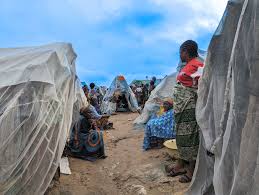
Across Nigeria’s Middle Belt and northern regions, once the breadbasket of the nation, the fields are falling silent. Not from drought, but from fear.
The problem is no longer theoretical. In Benue, Kaduna, Niger, Zamfara, and Plateau, key food-producing states, armed violence has turned farming into a fatal gamble.
In June 2025, coordinated attacks in Benue displaced entire communities and claimed dozens of lives. The state, once proud to be called the “Food Basket of the Nation”, now struggles to feed itself.
According to the Internal Displacement Monitoring Centre, over 295,000 people were forcibly displaced by conflict in 2024 alone. These are not abstract numbers; they represent the crumbling spine of Nigeria’s food economy.
Farmers who flee do not plant. Livestock that cannot move do not breed. And markets that fear violence do not open.
“Eat What You Grow must be protected”: Hon. Faruk Adamu Aliyu
From the perspective of a politician and large-scale farmer, Hon. Faruk Adamu Aliyu viewed the closures differently.
“I don’t believe the borders are still officially closed, but yes, they were closed in the past, particularly during President Buhari’s administration. The main reason then was to promote the policy of ‘Eat What You Grow’. And to be fair, that policy led to a significant boost in local rice production.”
Aliyu argued that open borders expose Nigerian farmers to unfair competition.
“When borders are porous, foreign goods flood the market, and our local products can’t compete because our cost of production is higher. Naturally, people will go for cheaper imports. That discourages local farming.”
READ ALSO: Edun Declares Nigeria ‘Open for Business’
He warned of a dangerous cycle caused by inconsistent policies:
“This year, the government imported rice in large quantities. Many farmers saw no incentive to cultivate. Next year, we may face a shortage because they didn’t plant, and the government will again be forced to import. That cycle undermines agriculture.”
Aliyu also pointed to smuggling as a direct threat to food security.
“Even now, fertiliser is being smuggled across borders because it fetches higher prices outside. That raises local costs and reduces productivity here. So partial closures are about protecting local industries and ensuring food security.”
For him, while acknowledging the hardship for border traders, the bigger picture remains the survival of Nigeria’s domestic agriculture.
Customs and the Revenue Dilemma
On Monday, August 11, 2025, the House of Representatives Committee on Customs and Excise visited Kaduna on an oversight mission and highlighted yet another consequence of the border closures.
Committee Chairman, Rep. Leke Abejide, explained: “Unlike other zones, Zone B is grappling with serious security challenges and multiple border closures, which are affecting their ability to generate revenue. Most of the commands in Zone B — Katsina, Sokoto/Zamfara, and Kebbi — are border-based. With many approved borders closed, revenue collection has dropped significantly.”
While Kano and Kaduna commands have managed to stay afloat, others are struggling.
“It is not due to inefficiency but circumstances beyond their control,” Abejide clarified.
The committee pledged to table a motion that would involve Customs, Defence, Army, Police, and Interior in finding a “holistic solution” to the combined challenges of security and revenue loss tied to border closures.
READ ALSO: Wanted General Overseer Arrested in Lagos for Cross-Border Drug Trafficking
From the farmer counting losses in Borno to the lawmaker defending agricultural protectionism in Jigawa to Customs officers struggling with revenue shortfalls in Katsina, the story of Nigeria’s northern border closure is one of competing truths.
For some, like Hamisu Kabir Matazu, the closure has yielded insecurity, economic collapse for border communities, and cultural disconnection. For others, like Hon. Faruk Adamu Aliyu, it remains an imperfect but necessary shield for Nigeria’s struggling agricultural sector.
Meanwhile, customs officials warn of shrinking government revenue as security challenges intensify.
In June 2025, Nigeria’s Defence Chief proposed fencing the country’s borders with its four neighbouring nations—Cameroon, Niger, Benin, and Chad—to curb the infiltration of armed groups and combat escalating insecurity.
The central question remains unresolved: has Nigeria’s border policy secured the country, or has it deepened its vulnerabilities?

Esther Ososanya is an investigative journalist with Pinnacle Daily, reporting across health, business, environment, metro, Fct and crime. Known for her bold, empathetic storytelling, she uncovers hidden truths, challenges broken systems, and gives voice to overlooked Nigerians. Her work drives national conversations and demands accountability one powerful story at a time.