

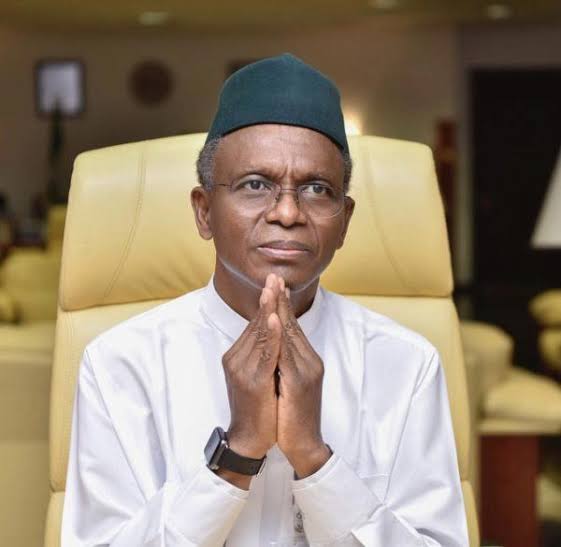
By PJ Usanga
Former Kaduna State Governor, Mallam Nasir El-Rufai, has sparked a firestorm after alleging during a live television interview that the Office of the National Security Adviser (ONSA) is operating a covert policy of appeasement—offering monthly payments and food supplies to bandits, which he described as a “kiss-the-bandits policy.”
He claims this amounts to empowering criminal gangs under the guise of counterinsurgency.
ONSA, in a prompt response signed by spokesperson Zakari Mijinyawa, dismissed the allegations as “baseless,” insisting that no arm of the current administration pays ransoms or incentivizes criminality. Former National Security Adviser Nuhu Ribadu reinforced this stance, labelling El-Rufai’s comments as false and misleading.
The Man, El-Rufai: Reformist or Opportunist?
El-Rufai’s security policies in Kaduna—a hotspot of ethno-religious violence and banditry—have also drawn fire. While he condemned negotiations with bandits, several accusations allege his government covertly engaged with criminal actors, particularly during negotiated ceasefires or re-election campaigns. Thus, his current role as a whistleblower is complicated by his own controversial history regarding security and alleged dealings with armed groups.
Despite his public tough stance (“The only repentant bandit is a dead one”), there were multiple reports during his tenure as Kaduna governor suggesting quiet negotiations with bandit groups, particularly in Birnin Gwari and Southern Kaduna. Local sources, and even leaked intelligence memos, hinted at indirect backchannel arrangements—allegedly with the goal of political stability or electoral advantage.
Particularly in the aftermath of violent crises in Southern Kaduna, critics accused El-Rufai of biased rhetoric and selective empathy. In a controversial 2016 interview, he admitted to compensating Fulani herdsmen as part of a peace effort, raising fears that government funds went to groups with blood on their hands.
“We traced them and we paid some of them to stop the killings,” El-Rufai said in 2016 on Southern Kaduna attacks.
This admission drew sharp condemnation and accusations of appeasement disguised as conflict resolution, not dissimilar to the allegations he’s now making against the federal government.
The Credibility Debate: Why His Claims Can’t Be Brushed Aside
After failing ministerial confirmation in 2023 under President Tinubu’s administration, El-Rufai reportedly fell out with powerful elements in the presidency and security circles. Some insiders see his recent outburst as payback, but also as a potential leak of mutual secrets once shared within the corridors of power. Hence, El-Rufai is an insider still worth listening to. Despite his own baggage, he knows how the system works, and his testimony, even if politically motivated, may still reveal partial truths.
How Should His Claims Be Judged?
El-Rufai’s insider access gives him knowledge of state security practices.
He has a history of controversial—and possibly similar—policies himself.
Informal coercion economies in conflict zones suggest compromises do happen, even though no hard evidence—documents, whistleblowers, or leaked budgets—supports his specific claim.
Also, political rivalry and personal bitterness may be his primary motivations due to his fallout with the federal government. This may have freed him to speak frankly and could now be exposing a broader pattern.
READ ALSO: El-Rufai Employs Desperate Tactics to Get What He Wants – APC Chieftain
Nasir El-Rufai is certainly not a saint, definitely not a liar, and advisedly should not be ignored. He is no stranger to controversy—and certainly no saint when it comes to Nigeria’s troubling security realities. His past governance actions show a willingness to engage, directly or indirectly, with violent actors—a fact that casts a shadow over his current claims, but also lends them a troubling plausibility.
While the federal government’s denials are noted, so too is its history of concealment in matters of national security. El-Rufai’s allegations may be politically charged, but they reflect deeper, unresolved tensions in Nigeria’s approach to banditry, counterterrorism, and governance in fragile regions.
In this light, his claims deserve investigation, not dismissal. Transparency, not silence, is what the public deserves—and not the usual burial in the tomb of politics and propaganda.
