

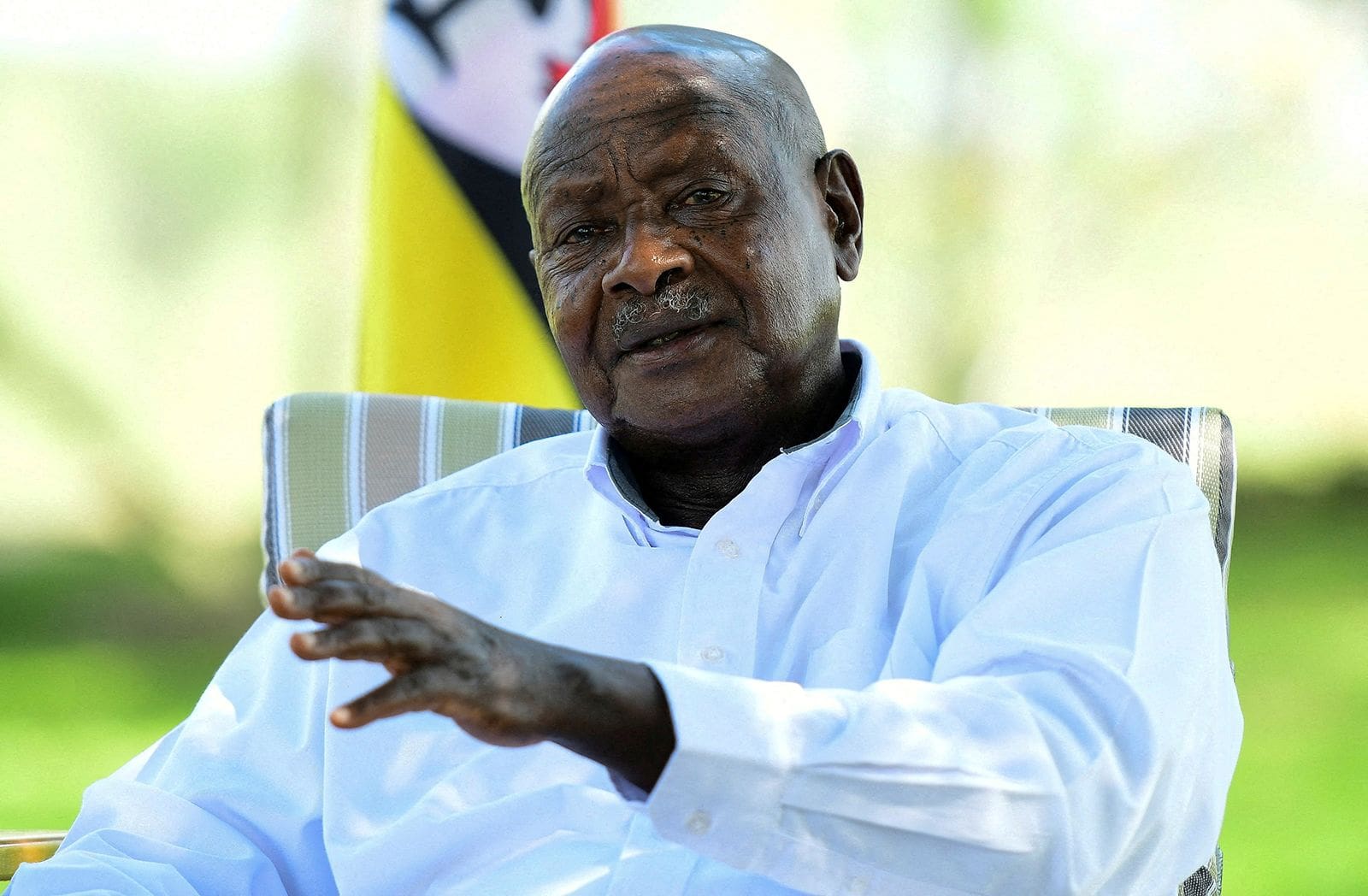
As Ugandans prepare to vote for their preferred leader on January 15, 2026, one thing is certain: whether he wins or not. The 81-year-old Yoweri Museveni, who is seeking a seventh term, will for now remain Uganda’s longest-serving leader and one of Africa’s longest-serving heads of state.
He has been in power since 1986, giving him a tenure of over 40 years, which surpasses all other Ugandan presidents since the country gained independence in 1962.
In fact, his tenure is far longer than the combined terms of his two predecessors: Milton Obote (first term: 1962–1971; second term: 1980–1985), who served about 14 years, and Idi Amin (1971–1979), who ruled for eight years.
In Uganda, citizens under the age of 40 – and that is more than three-quarters of the population – have only known one president, according to the BBC.
READ ALSO: Top 10 World’s Longest-serving Leaders Who Turned Power into a Lifetime Trophy
His time at the helm has been accompanied by a long period of peace and significant development, for which many are grateful.
But his critics say he has maintained his grip on power through a mixture of sidelining opponents and compromising independent institutions.
Before 2005, the Ugandan constitution had a two-term limit of five years each for presidents.
However, the 2005 constitutional amendment eliminated this restriction, allowing Yoweri Museveni to run for additional terms beyond the previous two-term cap.
Later, in 2017, the age limit for presidential candidates was also removed, further clearing the path for him to continue seeking office despite being over 75.
Critics argue that over the years, key state institutions, including the judiciary and security agencies, have become increasingly aligned with the executive.
Media houses have also faced raids, closures, and arrests of journalists, despite Uganda maintaining a visibly vibrant press environment.
From Rebel Leader to Longest-Serving President
Born in 1944 in Ankole, western Uganda, Museveni grew up in a cattle-keeping family and came of age during Uganda’s struggle for independence from British rule.
He studied economics and political science at the University of Dar es Salaam in Tanzania, where he was influenced by pan-African and revolutionary ideas that later shaped his political path.
Museveni rose to prominence during the turbulent years following the overthrow of President Milton Obote and the brutal dictatorship of Idi Amin.
READ ALSO: Tanzanians Mourn As President Samia Takes Oath for Second Term
After disputing the outcome of the 1980 general election that returned Obote to power, Museveni launched a guerrilla war in 1981.
His National Resistance Movement (NRM) captured Kampala in 1986, ushering him into power.
His early years in office were marked by relative stability after decades of violence, steady economic growth, expansion of primary education, and a widely praised HIV/AIDS awareness campaign.
Uganda recorded average annual growth of over six per cent during the 1990s, earning Museveni support both locally and internationally.
Opposition Under Pressure
Museveni’s long rule has been accompanied by sustained pressure on opposition figures. One of his earliest challengers, Dr Kizza Besigye, a former ally and personal physician, contested multiple elections against him.
Besigye has been repeatedly arrested and charged over the years and is currently facing treason charges, which he denies.
The most prominent contemporary challenger is Bobi Wine, a former pop star turned politician whose appeal among young Ugandans has reshaped the opposition landscape.
Wine, 43, has drawn massive support from urban youth frustrated by unemployment, corruption and the rising cost of living.
READ ALSO: Cameroon’s Biya Declared Winner For the 8th Time in 43 Years, Remains World’s Oldest President
However, his political rise has been met with arrests, detention, alleged abductions of supporters and violent dispersal of rallies.
Rights groups and the United Nations have accused Ugandan security forces of using live ammunition and excessive force against opposition gatherings, allegations the government disputes.
Support, Stability and Security Narrative
Museveni’s supporters continue to credit him with keeping Uganda relatively stable in a volatile region. Uganda currently hosts over 1.7 million refugees, the largest number in Africa, fleeing conflicts in neighbouring countries.
The government has also pursued foreign investment partnerships with countries including China, the United Kingdom and the United Arab Emirates, while setting a target of transforming Uganda into a middle-income economy by 2040.
Museveni frequently presents himself as a father figure to the nation’s youth, calling them Bazukulu (grandchildren), and has made public displays of fitness to counter concerns about his age and health.
Succession Questions and Family Influence
As Museveni advances in age, questions over succession have intensified. His wife, Janet Museveni, serves as education minister, while his son, Gen Muhoozi Kainerugaba, is the army chief.
The growing prominence of his family in key state positions has raised fears of dynastic rule.
Speculation persists that Muhoozi, 51, could eventually succeed his father, though his controversial social media statements and unpredictable public conduct have drawn concern both within Uganda and across the region.
The Road to January 2026
With elections expected in January 2026, Museveni is positioning himself as the guarantor of peace and continuity, while the opposition frames the vote as a generational struggle for democracy and change.
As campaigning intensifies, Uganda faces another high-stakes election that will test the resilience of its democratic institutions and determine whether the country will extend the rule of a leader who has shaped its modern history more than any other.

Rafiyat Sadiq is a political, justice, and human rights reporter with Pinnacle Daily, known for fearless reporting and impactful storytelling. At Pinnacle Daily, she brings clarity and depth to issues shaping governance, democracy, and the protection of citizens’ rights.