

Abuja routine visa services moved to regional hubs as Washington restructures operations across Africa, citing national security, screening standards and efficient use of resources.
Nigerians seeking to travel to the United States for tourism, business or other temporary purposes are facing a significant challenge in how some routine visa applications are processed, following a restructuring of US visa operations across Africa.
The US Department of State has realigned routine visa services in Abuja and several other African cities to designated regional visa hubs, in a move it says is designed to strengthen security screening, improve efficiency and create greater consistency in visa adjudication.
The change took effect on August 1, 2026, meaning applicants now need to pay closer attention to where and how their applications will be processed before booking appointments or paying visa fees. Read the full U.S. Mission Nigeria visa services update here: Click U.S. Mission Nigeria — Visa Services FAQ
Three visa categories at the centre of the change
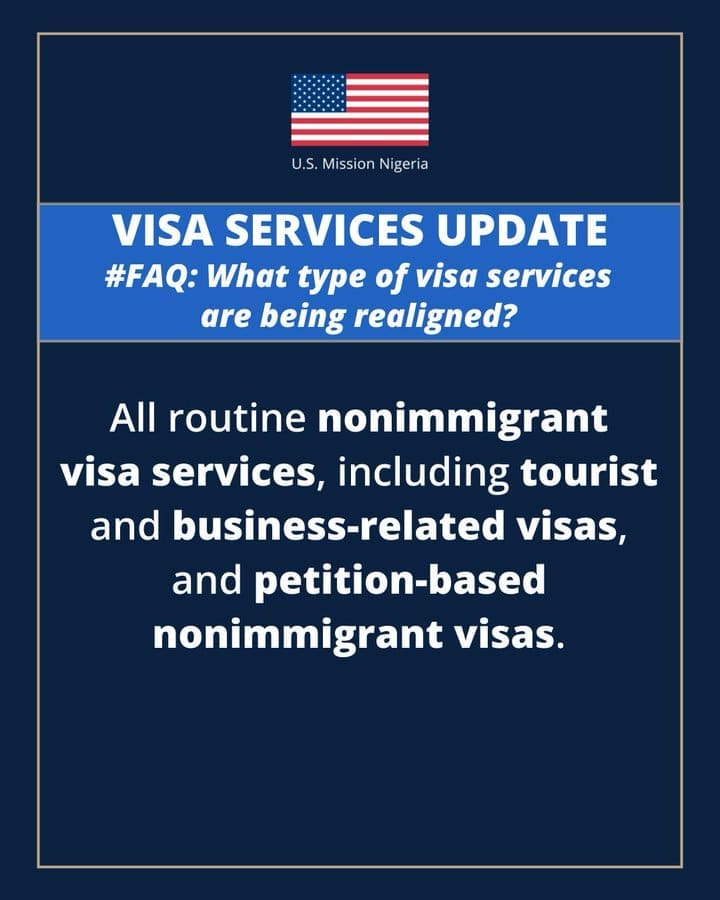
The realignment affects three broad categories of routine visa services.
They include tourist visa applications, business-related visa applications and petition-based nonimmigrant visas.
These categories cover a wide range of temporary travel to the US, including tourism, business activities, study, employment and other approved purposes, depending on the specific visa classification.
The significance for Nigerian applicants is that a change in processing location can affect the practical cost and logistics of obtaining a visa, particularly for applicants who may have to travel outside Nigeria for appointments or other stages of the process.
Abuja among cities affected
The US Mission in Nigeria confirmed the development in a visa services update, noting that routine visa operations in Abuja are among those being realigned.
Abuja is part of a wider list of African locations affected by the restructuring.
Other locations listed by the US Department of State include Antananarivo, Asmara, Bamako, Banjul, Brazzaville, Bujumbura, Conakry, Cotonou, Durban, Freetown, Gaborone, Harare, Juba, Libreville, Lilongwe, Lusaka, Maputo, Maseru, Mbabane, N’Djamena, Niamey, Nouakchott, Ouagadougou and Windhoek.
For applicants, the key issue is no longer simply securing an appointment, but identifying the appropriate designated visa hub before beginning the process.
Why Washington is changing the system
The US Department of State says the restructuring is part of a broader effort to strengthen national security and make more efficient use of government resources.
According to the State Department, it routinely reviews its overseas operations to ensure they support US priorities while maintaining rigorous standards for security screening and vetting.
The department says moving visa operations into regional hubs allows it to promote more consistent screening, vetting and adjudication standards.
It also described the arrangement as a long-standing operational practice that has already been implemented successfully in parts of Africa and Europe.
The hidden cost for applicants
For Nigerian travellers, the most immediate concern could be convenience.
When routine visa processing is concentrated in regional hubs, applicants may face additional travel, accommodation and logistical expenses, depending on the designated location applicable to their case.
This could be particularly significant for applicants who previously expected to complete routine processing in Abuja.
It also introduces another layer of planning into an already costly international travel process, where visa fees are only one component of the overall expense.
What Nigerian applicants should do
Nigerians planning to apply for a US visa are advised to confirm the latest processing instructions before scheduling an appointment or paying a visa fee.
Applicants should determine the appropriate designated visa location for their visa category and circumstances and follow the instructions provided by the US Mission and Department of State.
The change also means applicants should avoid relying on older appointment information or assumptions that Abuja will continue to handle every routine visa service.
READ ALSO:
- U.S. Revokes More Than 175,000 Visas Under Trump Administration
- US Visa Expiry Date Does Not Determine How Long Visitors Can Stay — CBP
- US Tightens Visa Waiver Rules, Bars Travellers linked to high-risk Countries
- ‘Nigerians Deserve Answers, Not Insults’, Atiku Replies Presidency over Tinubu’s US Records
The development forms part of a broader reorganisation of US visa operations across Africa rather than an isolated change affecting Abuja alone.
Washington says the objective is to maintain stringent security and vetting procedures while improving the efficiency and consistency of visa processing.
For Nigerians, however, the practical impact will be measured by how easily applicants can navigate the new system, how far they may have to travel and whether regional processing can deliver faster and more predictable visa decisions.
The real test of the new arrangement, therefore, will not only be whether it strengthens US screening standards, but whether Nigerian applicants can access the system without facing unnecessary additional barriers and costs.

Esther Ososanya is an investigative journalist with Pinnacle Daily, reporting across health, business, environment, metro, Fct and crime. Known for her bold, empathetic storytelling, she uncovers hidden truths, challenges broken systems, and gives voice to overlooked Nigerians. Her work drives national conversations and demands accountability one powerful story at a time.