

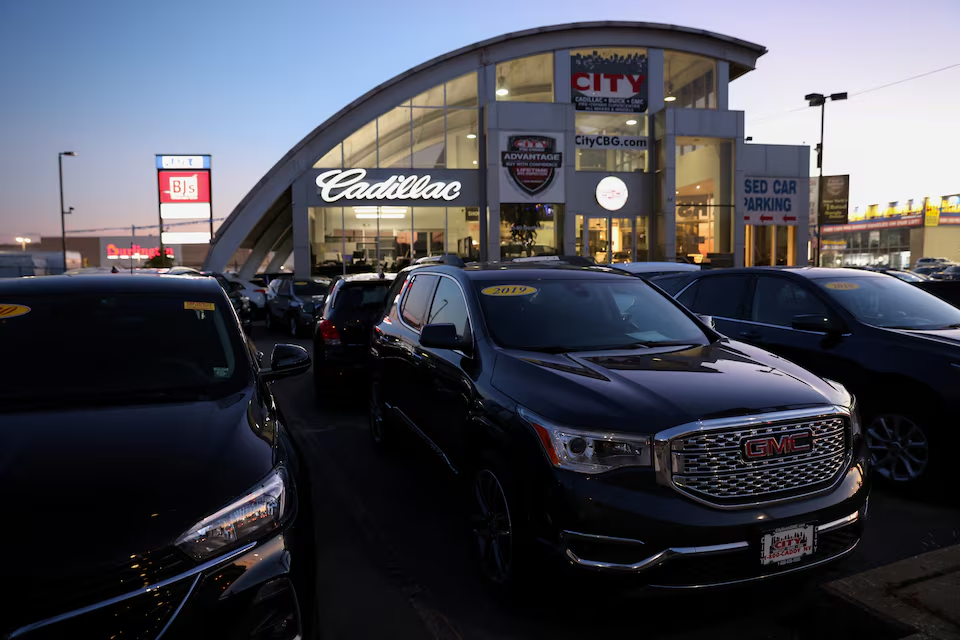
Sales of new vehicles in the United States rose about 2% in 2025, defying a year marked by regulatory uncertainty, supply-chain disruptions, and shifting electric-vehicle incentives.
Automakers sold 16.2 million cars and trucks last year, a 2.4% increase from 2024, according to research firm Omdia.
Several companies reported strong December results. Toyota Motor posted an 8% rise, driven by popular affordable models, while Hyundai Motor also saw an 8% increase, boosted by demand for hybrid vehicles.
General Motors’ U.S. sales grew 5.5%, helped by pickups, SUVs, and electric vehicles. Stellantis’ sales slipped 3% year-on-year, though the company gained momentum in the second half under new CEO Antonio Filosa.
The industry navigated supply-chain challenges, unpredictable tariffs, and the removal of a $7,500 electric-vehicle (EV) tax credit, prompting some buyers to rush purchases before price hikes.
“To say it’s been a sales roller coaster of a year would be an understatement,” said Thomas King, president of OEM solutions at J.D. Power.
READ ALSO: Toyota Recalls Over 126,000 U.S. Vehicles Over Engine Stall Risk
Despite growth, affordability remains a key barrier. Detroit automakers are set to testify at a Senate Commerce Committee hearing on January 14.
Randy Parker, CEO of Hyundai Motor North America, warned that 2026 would be “very challenging”, while Toyota executives expect vehicle prices to rise further due to tariffs.
EV sales were particularly volatile. Changes to tax incentives and regulatory shifts caused demand to drop, with EVs accounting for 6.6% of December sales, down from 11.2% the prior year.
Both Toyota and Hyundai plan to continue investing in EVs, even as much of the market pulls back.
Looking ahead, analysts are divided. Cox Automotive predicts a 2.4% decline in 2026, citing slower economic growth and reduced EV incentives.
READ ALSO: Samsung to Double AI-Enabled Mobile Devices to 800 Million Units in 2026
Edmunds expects steady or slightly lower sales, while J.D. Power notes that lower interest rates and maturing leases could stabilise demand as the year progresses.

Esther Ososanya is an investigative journalist with Pinnacle Daily, reporting across health, business, environment, metro, Fct and crime. Known for her bold, empathetic storytelling, she uncovers hidden truths, challenges broken systems, and gives voice to overlooked Nigerians. Her work drives national conversations and demands accountability one powerful story at a time.