

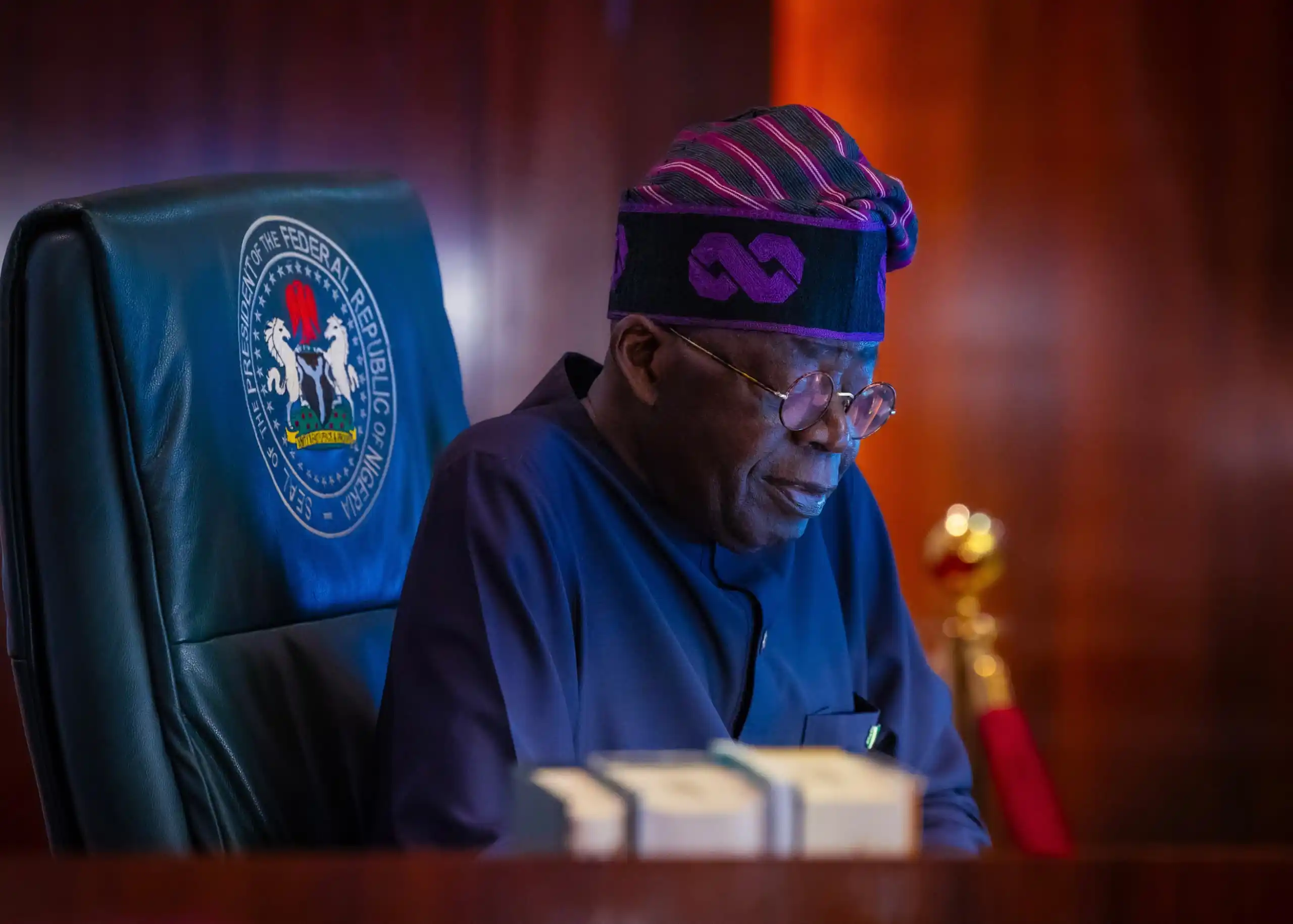
President Bola Ahmed Tinubu’s fresh request to the House of Representatives for the approval of a $2.847 billion (approximately ₦4.19 trillion) external loan has stirred widespread unease among Nigerians, sparking an outpouring of reactions across social media platforms.
Many citizens expressed concern that the country’s rising debt profile could burden future generations and cripple the economy long after the current administration.
The external loan is meant to fund part of the 2025 budget deficit and key infrastructure projects.
Tinubu’s Loan Request and Fiscal Justification
In a letter read by Speaker Tajudeen Abbas on the floor of the House of Representatives, President Tinubu sought legislative approval to raise $2.347 billion through Eurobonds, syndicated loans, or bridge financing, and to issue an additional $500 million sovereign Sukuk in the international capital market.
The request, transmitted in accordance with Sections 21(1) and 27(1) of the Debt Management Office (DMO) Establishment Act, 2003, forms part of Nigeria’s 2025–2027 external borrowing plan.
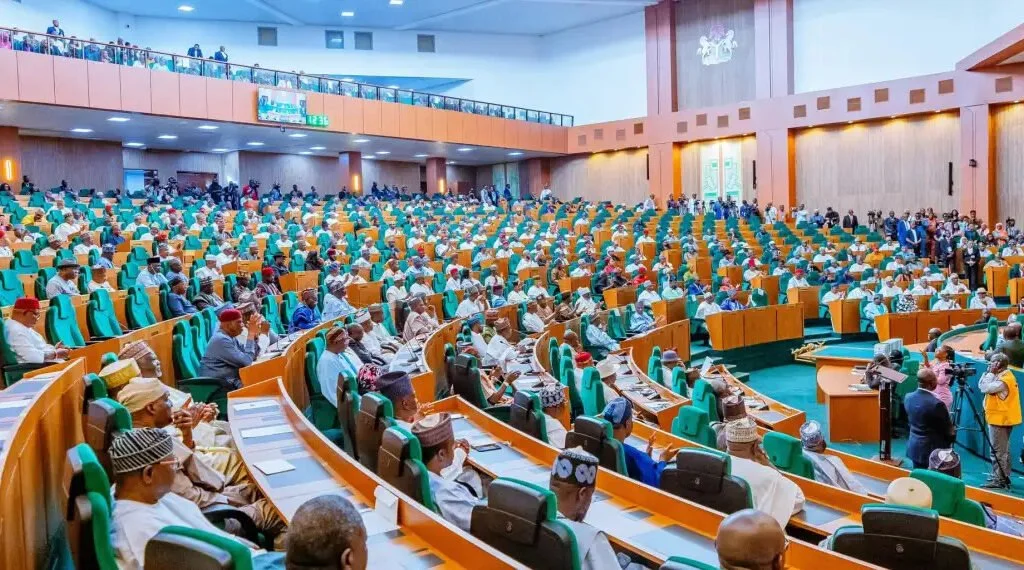
Tinubu explained that the facility would bridge fiscal gaps, refinance maturing obligations, and accelerate the delivery of key projects in power, transport, water resources, health, and education sectors.
He noted that the borrowing would come from multilateral and bilateral partners and that the funds would support fiscal reforms, stabilise the economy, and advance the Renewed Hope Agenda.
Sukuk Expansion and Refinancing Strategy
The president also called for approval to issue a $500 million international Sukuk, with or without a credit-enhancement guarantee from the Islamic Corporation for the Insurance of Investment and Export Credit (ICIEC), a member of the Islamic Development Bank Group.
RELATED STORIES:
- Nigeria’s Economy Gains Momentum as GDP Hits ₦372.8 Trn
- Nigeria’s Debt to Worsen as Tinubu Seeks $2.3bn External Borrowing
- Stop Tinubu’s Reckless Borrowing, LP Tells National Assembly
According to him, the move builds on the “considerable success” of domestic Sukuk issuances, which have raised ₦1.39 trillion since 2017 for road and infrastructure development.
Tinubu revealed that if the ICIEC guarantee is utilised, 25 per cent of the proceeds would go toward repaying high-interest debts, while the rest would fund priority infrastructure.
He further explained that Nigeria’s $1.118 billion Eurobond, issued in 2018 at 7.625% and maturing in November 2025, would be refinanced to prevent default, describing the move as “standard practice in debt capital markets”.
Budget Context and Legislative Process
Tinubu’s letter also referenced the 2025 Appropriation Act, which provides for $9.27 billion in total new borrowings to finance the fiscal deficit. Of this, $1.84 billion (₦1.23 trillion) is designated for external loans.
He assured lawmakers that the Federal Ministry of Finance and the DMO would work with transaction advisers to secure the best possible terms and pricing, emphasising that the administration remains committed to prudent debt management.
The House has referred the letter to the Committee on Aids, Loans and Debt Management for further consideration.
Public Outrage: Nigerians Voice Alarm on X
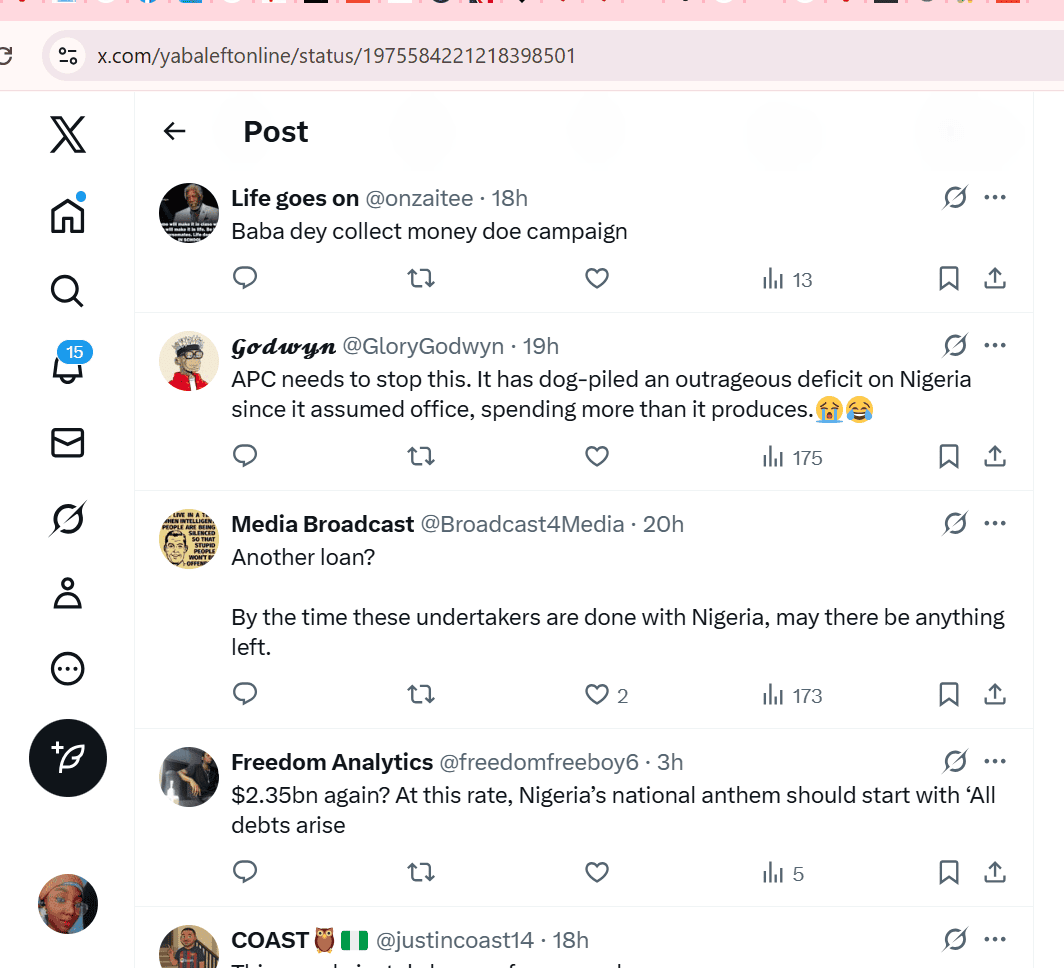
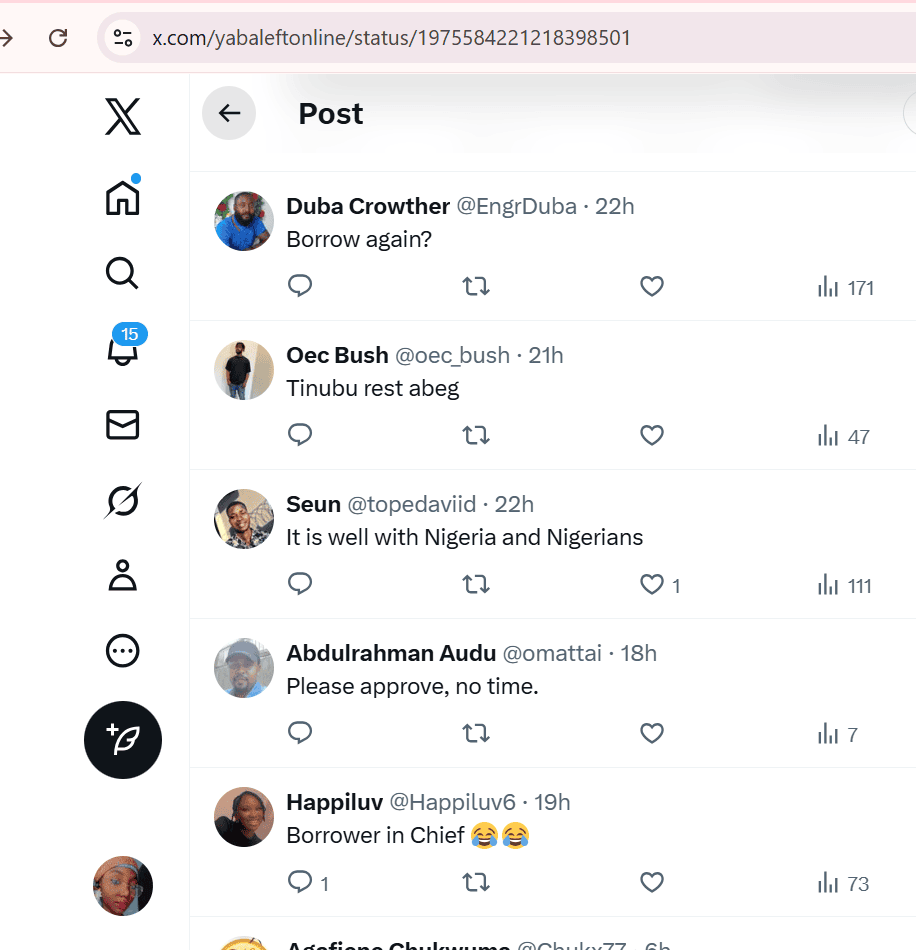
Following the announcement, Nigerians took to X (formerly Twitter) to express frustration and disbelief over what many describe as excessive borrowing without visible impact.
@manbleedsblue (Fola) wrote: “E go reach one stage China go just buy this country if gbese don too much, change everybody name… By then maybe my name will be Chen Fu.”
@ogu_emmanu8156 (Emmanuel Ogu) wrote: “Abeg, have mercy on the country. All this borrowing is too much. I thought they said you’re Jagaban; you have money. Then why go borrowing?”
@centjeff204 (Innocent Jeff) lamented, “Why is PBAT always borrowing money? What’s his plan for this country? All the money they keep borrowing – we don’t see what it’s used for, yet bandits and Boko Haram still waste people’s lives.”
@makbayero333 (Mohammad Amin Kabir Bayero) argued, “This man is making the country ungovernable for the next president. He’s taking loans from whoever is willing to give him.”
@Ife_naira (Emmanuel) wrote: “Very soon China will control one of the key federal institutions because of the loans we’ve taken from them.”
@Johnnywest98 (Johnny West) wrote: “Are they truly borrowing all this money, or are they hiding something? I just hope Nigeria’s resources aren’t used as collateral.”
@Gmyk_official (Myk) criticised the government’s fiscal approach and said, “You can’t keep preaching sacrifice to citizens while refusing to cut your own excesses. Reckless borrowing after subsidy removal shows no economic foresight. It’s not reform; it’s recycling failure under a new name.”
@king_merlin01 (Issues) suggested political motives, “I feel like this man knows he won’t be re-elected in 2027. That’s probably why he’s borrowing anyhow.”
@GloryGodwyn (Godwyn) wrote: “APC needs to stop this. It’s piled outrageous deficits on Nigeria since taking office, spending far more than it produces.”

Analyst Weighs In
Economists have long warned that Nigeria’s growing dependence on external borrowing could threaten long-term fiscal sustainability.
Dr Felix Adetunji, a Lagos-based financial analyst, noted that while concessional loans can fund infrastructure, “the lack of transparency in project execution makes it difficult to justify additional borrowing.”
As debate over the ₦4.19 trillion external borrowing request intensifies, Nigerians remain anxious about the implications for their economy and future generations.
While President Tinubu insists the loans are vital for national growth and fiscal stability, citizens continue to question how much more debt the country can endure before the burden becomes unsustainable.

Rafiyat Sadiq is a political, justice, and human rights reporter with Pinnacle Daily, known for fearless reporting and impactful storytelling. At Pinnacle Daily, she brings clarity and depth to issues shaping governance, democracy, and the protection of citizens’ rights.