The Joint Health Sector Unions (JOHESU) has suspended its 84-day nationwide strike following a conciliation meeting with the Federal Government, directing all its members across the country to resume work with immediate effect. The suspension was announced in a communiqué issued at the end of an expanded National Executive Council (NEC) emergency hybrid meeting held …
The Joint Health Sector Unions (JOHESU) has suspended its 84-day nationwide strike following a conciliation meeting with the Federal Government, directing all its members across the country to resume work with immediate effect.
The suspension was announced in a communiqué issued at the end of an expanded National Executive Council (NEC) emergency hybrid meeting held on Friday in Abuja.
JOHESU said the decision was taken to allow four months of consultation on the High-Level Committee report on the adjustment of the Consolidated Health Salary Structure (CONHESS), as well as deliberations by the Collective Bargaining Agreement (CBA) committee on allowances.
The communiqué, signed by the National Chairman, Kabiru Minjibir, and the National Secretary, Martin Egbanubi, stated that after reviewing the terms of settlement reached during the conciliation meeting, the expanded NEC unanimously voted to suspend the strike to allow for the implementation of the Federal Government–JOHESU agreement.
The union also directed all its members in federal and state health institutions to resume work immediately.
Hospitals Record Gradual Resumption of Services
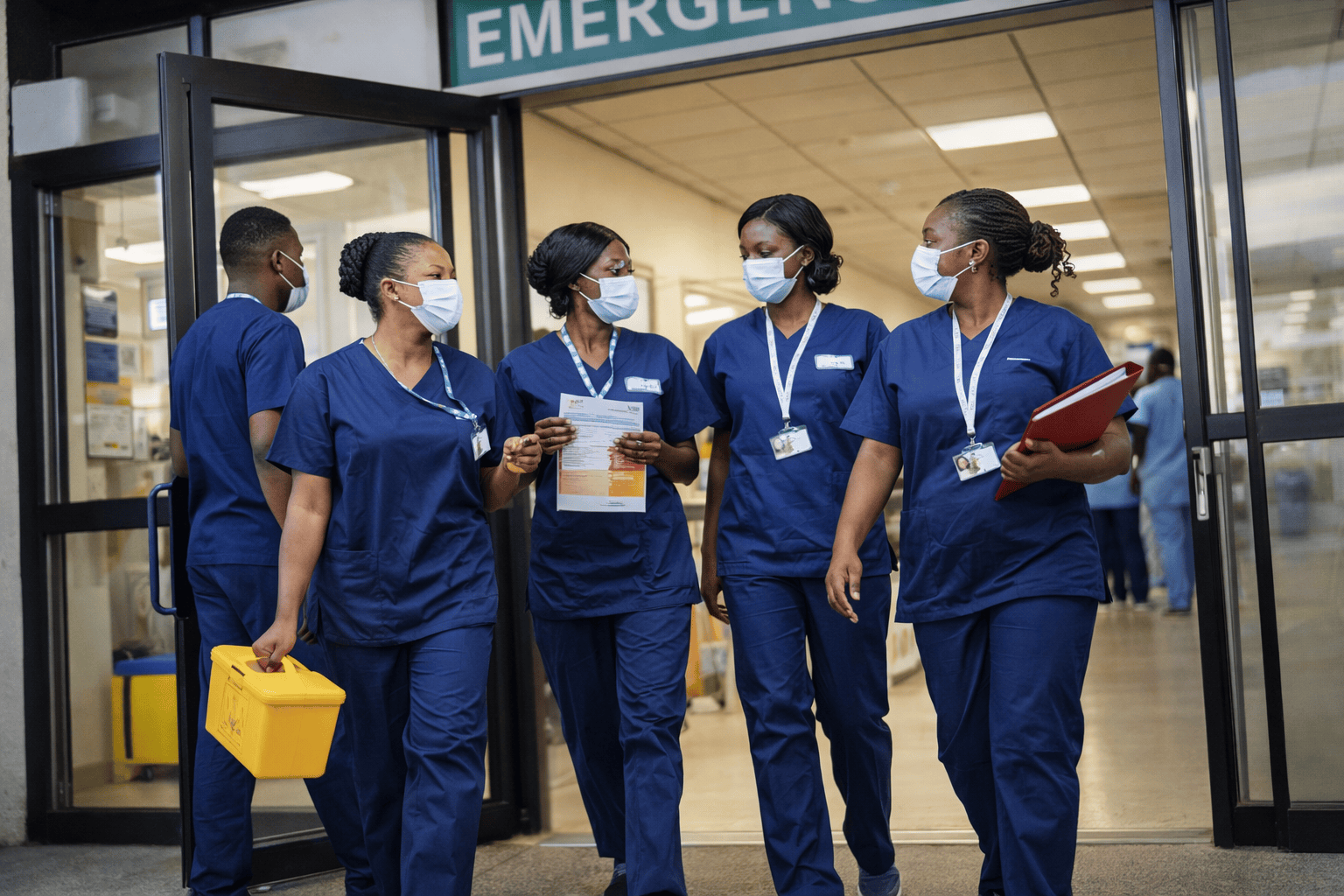
Following the suspension of the health workers’ strike, public hospitals are beginning to record a gradual resumption of services, although full normalcy is yet to be restored.
An observation at Kubwa General Hospital shows that medical personnel are now available to attend to patients, while key support units, including the laboratory and pharmacy, are functioning.
Patients seeking non-emergency care are being attended to through routine consultation processes, marking a shift from the period of the strike when most hospital activities were halted.
READ ALSO:
- FCT Strike: Patients Suffer as Health Workers Demand Justice
- Indefinite Strike Cripples FCT Offices as FCTA, FCDA Workers Down Tools
- The Healthcare Rights Most Nigerians Don’t Know They Have
- How Nigeria Lost 11,000 Physicians in One Year
Background to the Strike
JOHESU, which represents non-physician health workers including laboratory scientists, pharmacists and other allied health professionals, commenced its indefinite nationwide strike on November 15, 2025.
The industrial action was triggered by the Federal Government’s failure to implement the adjusted Consolidated Health Salary Structure (CONHESS) and other outstanding welfare agreements reached since 2021.
According to the communiqué, resolutions from the conciliation meeting include the commencement of negotiations on the Collective Bargaining Agreement, prioritisation of unresolved CONHESS adjustment issues and provision for budgetary allocation for the salary adjustment in the 2026 Appropriation Act.
The union also said the Federal Government agreed to withdraw the “No Work, No Pay” directive issued against its members during the strike, pay outstanding January 2026 salaries and ensure that no member would be victimised or sanctioned for participating in the industrial action.
Public Hospitals Grounded During the Strike
While the strike lasted, public hospitals across Abuja and other parts of the country were largely brought to a standstill, leaving patients stranded and healthcare delivery severely disrupted.
A visit to Kubwa General Hospital during the strike revealed a largely deserted facility, with general wards, pharmacy and laboratory units shut and no visible clinical activity outside emergency care.
The usually busy hospital corridors were quiet, underscoring the impact of the prolonged industrial action by JOHESU members.
A security personnel at the hospital described the situation as frustrating, saying the strike brought hospital activities to a complete halt.
“The hospital was deserted. Patients came and left in anger,” he said. “The laboratory was not functioning, the pharmacy was not functioning, and the records department was not functioning. Without these departments, nothing was moving.”
He added that the absence of key support services made it impossible for doctors to effectively attend to patients, rendering the hospital largely inactive throughout the period.
Gwarinpa Hospital Mirrors Situation
A similar situation was observed at Gwarinpa General Hospital, where wards were locked and routine medical services suspended during the strike.
A staff member at the hospital said patients were not attended to because health workers were participating in the industrial action, noting that only emergency cases were managed.
During the visit, a woman who brought her child for a follow-up appointment expressed frustration after discovering that the wards were empty.
With no medical personnel available to attend to them, she said she had no choice but to leave the hospital, uncertain of when her child would receive the needed care.
Patients Bear the Impact
As a result of the prolonged strike, many patients were forced to abandon public hospitals, delay medical treatment or seek care in private facilities at significantly higher costs.
JOHESU acknowledged that the strike adversely affected healthcare delivery nationwide, resulting in increased maternal and infant mortality, while the Federal Government reportedly lost close to one trillion naira in revenue during the period.
The union commended the intervention of the National Assembly leadership, traditional rulers and professional bodies in resolving the dispute and urged the Federal and State Governments to fully implement the agreements reached to prevent a recurrence of industrial action.