

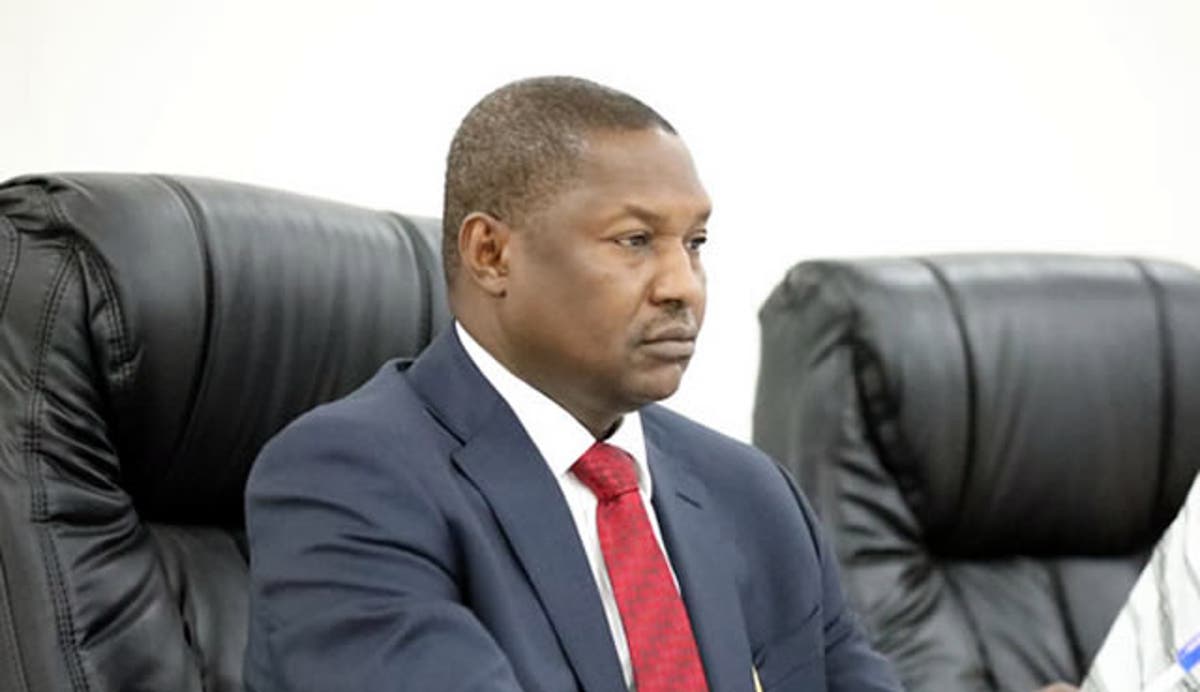
A Federal High Court in Abuja has fixed January 7, 2026, to rule on the bail applications filed by a former Attorney-General of the Federation and Minister of Justice, Abubakar Malami (SAN), his wife, Bashir Asabe, and their son, Abubakar Abdulaziz.
Justice Emeka Nwite adjourned the matter on Friday after counsel to the defendants, Joseph Daudu (SAN), and counsel to the Economic and Financial Crimes Commission (EFCC), Ekele Iheanacho (SAN), adopted their written addresses and advanced oral arguments before the court.
The EFCC had arraigned Malami, his wife, and son as the first, second, and third defendants, respectively, in a money laundering charge marked FHC/ABJ/CR/700/2025.
According to the anti-graft agency, the defendants allegedly carried out several suspicious financial transactions aimed at concealing the unlawful origin of funds amounting to billions of naira.
READ ALSO: Court Backs Ex-AGF Malami’s Detention, Rejects Bail Application
The EFCC further alleged that the funds were laundered through multiple bank accounts and used to acquire properties in Abuja, Kano, and Kebbi states.
The alleged offences were said to have been committed between 2015 and 2025, a period which includes Malami’s tenure as Attorney-General of the Federation under the administration of former President Muhammadu Buhari.
The Commission accused the defendants of conspiring to disguise the source of funds, indirectly acquiring properties, and retaining proceeds they allegedly knew were derived from unlawful activities, contrary to provisions of the Money Laundering (Prohibition and Prevention) Acts of 2011 (as amended) and 2022.
Justice Nwite adjourned the case till January 7 for ruling on the bail applications.

Rafiyat Sadiq is a political, justice, and human rights reporter with Pinnacle Daily, known for fearless reporting and impactful storytelling. At Pinnacle Daily, she brings clarity and depth to issues shaping governance, democracy, and the protection of citizens’ rights.