


As floods ravage different parts of Lagos following torrential rainfall in recent weeks, residents are grappling with another growing menace—heaps of refuse littering streets, roadsides, markets, clogged drainage channels, and waterlogged communities, raising fears of a public health and environmental crisis.
For over two decades, Lagos was regarded as one of Africa’s cleanest cities, as the waste management system was structured in a way that allowed private sector participants (PSPs) to handle it with government oversight. However, that system, as noted by observers, seems to be failing as heaps of refuse are resurfacing in major roads, streets and residential neighbourhoods.
In different parts of the state, including Oshodi, Mushin, Isolo, Ojodu, Ikorodu Road, Surulere, Ajegunle, and parts of Lagos Island, heaps of waste ranging from household garbage to plastic bottles, food remnants, discarded furniture and damaged household items have become a common sight.
At Oshodi, opposite the train station, Pinnacle Daily observed a heap of refuse. The big LAWMA metal bin filled with waste and more, even larger than what is contained in the container, littered the ground, blocking a significant part of the motorway. As commuters struggle to pass through the narrow walkway between the refuse dump and the remaining part of the road, one feels the pungent smell hanging heavily in the humid air, especially after rainfall. This is as roadside traders defy the horrible stench and display their goods while constantly beckoning to customers for patronage, being unmindful of the health hazards.
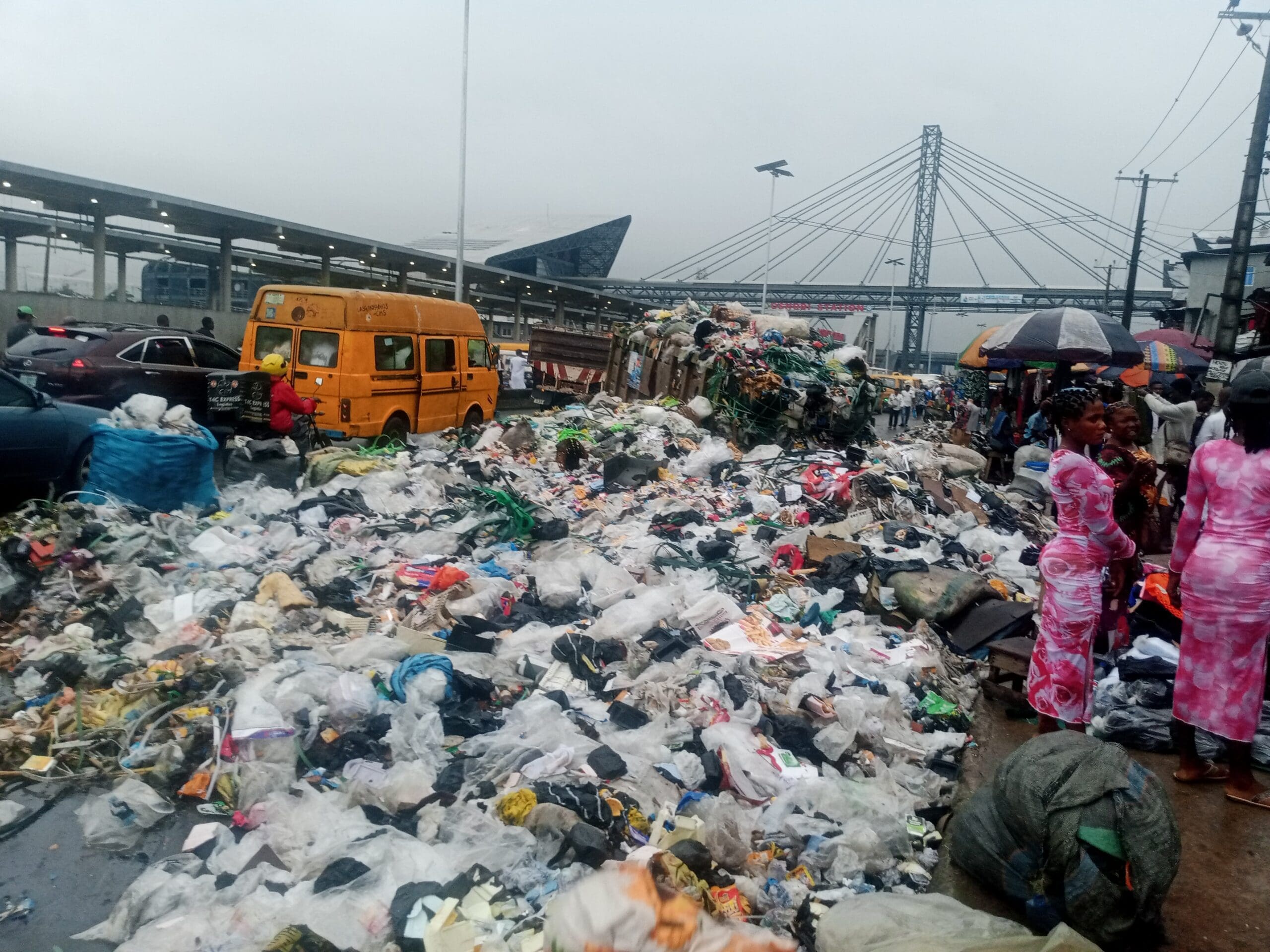
In an interview with Pinnacle Daily, one of the traders who sells insecticide close to the dumpsite said the bucket has been overfilled for weeks and got worse recently as people now dump refuse on the ground, littering the walkway and a part of the motorway.
“LAWMA people have not been coming regularly to pack the refuse as they used to do,” the trader, who declined to be named, said.
Also, Oshodi-Apapa Motorway and Mile Two-Badagry Road are now littered with disposable bags of waste. A similar scene was also observed at the Tejuosho Market in Yaba, where bags of refuse emitting a horrible stench were packed at the road median.
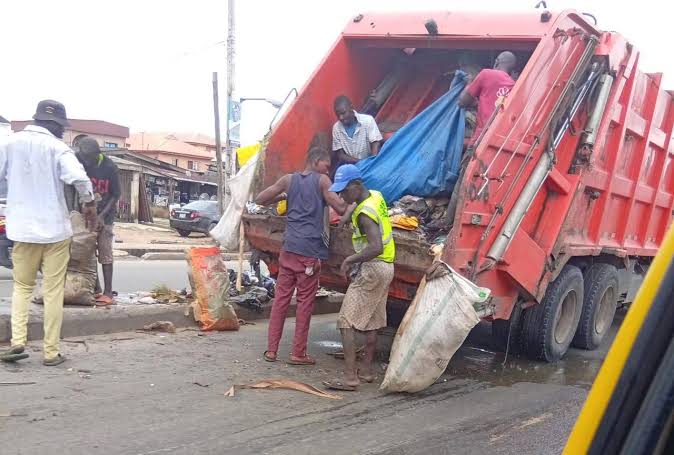
Aside from the refuse heaps on highways and streets, many residents across the city are forced to keep refuse within their homes for weeks and sometimes months before they are evacuated by PSP operators.
Some residents of Isolo, who spoke with Pinnacle Daily, lamented that for over a year now, waste collection has been very poor, forcing people to resort to dumping waste on roadsides.
“Since last year, LAWMA people have not been coming regularly as they used to do,” said Mrs Rasheedat Mujeed. “Before now, they used to come every week and collect refuse, but now they don’t come for many weeks and even up to one month and more. When they stay long before coming, they usually don’t carry everything. Their truck gets filled up before they move round the streets, forcing them to go, leaving many with dirty things in the house that smell and pollute the environment,” she lamented.
Another resident, Joe Ufoh, said: “I don’t know what LAWMA is becoming these days. Our refuse now stays for so long before they collect it.”
He called on the authorities to resolve whatever problem hindering them from coming regularly to evacuate refuse, noting that continuing with such a trend could worsen the waste crisis in the state.
Some residents affected by the recent floods attributed it to improper refuse disposal, noting that while they were still counting losses from the disaster that submerged homes, roads and businesses, they are now facing deteriorating sanitary conditions that threaten their health.
Miss Chinwe Okorie, whose apartment on Palm Avenue, Mushin, was inundated during the June 28 downpour, said the flood swept refuse into residential houses, leaving piles of waste after the water receded.
“The flood has gone, but what it left behind is frightening. Everywhere smells bad. Plastic waste, rotten food and other rubbish are lying around,” she stated.
At Odo-Iya Alaro, commuters and traders complained that refuse washed from nearby canals has formed large heaps along the roads, worsening traffic and exposing pedestrians to health risks.
Videos shared on social media showed piles of refuse floating on water flowing in drainage channels and canals and flooded residential home areas after water had receded.
Recently, the Lagos State government, through the Ministry of Environment and Water Resources, arrested a 56-year-old man, identified as Mr John Ehidreme, for illegally dumping refuse into a drainage channel in Ikorodu. A video shared by the Commissioner for Environment and Water Resources, Tokunbo Wahab, on X showed the man, who is a security officer in a school, offloading waste, mostly plastic materials, from a black dustbin inside the drainage.
The commissioner stated that indiscriminate waste disposal violates environmental laws, as it obstructs drainage channels, contributes to flooding, and poses significant public health and environmental risks. He urged residents to dispose of waste responsibly by using only approved waste management facilities.
Environmental experts argue that the flooding and the refuse crisis are two sides of the same coin. The city’s drainage network, designed to channel stormwater into the lagoon, is chronically clogged by improperly disposed waste. When heavy downpours hit, the water has nowhere to go, backing up into residential areas and dragging tonnes of uncollected garbage with it.
READ ALSO:
- Lagos Flooding: Stop Dumping Refuse in Drainage Channels, Umahi Tells Lagos Residents
- Lagos Residents Count Losses as Flood Disrupts Businesses, Submerges Homes
- When the Rain Falls, Fear Spreads: Inside Lagos Flood Crisis
- Why Dropping Global Oil Prices Haven’t Triggered Cheaper Petrol at Nigerian Pumps
- Nestlé Nigeria Unveils Scheme to Tackle Plastic Waste, Drive Circular Economy
Lasisi Adedoyin, Deputy Director, Environmental Assessment, Lagos State Ministry of Environment and Water Resources, highlighted the implications of improper waste disposal on flooding in Lagos.
“When we throw plastic bottles, bags, food packs, and other waste into drains, gutters, canals, or open spaces, we do more than litter—we block the pathways that carry rainwater away,” Adedoyin stated in a post on his X handle.
Continuing, he said, “Once drains are clogged, even moderate rainfall can lead to flooded homes and businesses, gridlocked roads and stranded vehicles, damage to property and livelihoods, increased risk of waterborne diseases and mosquito breeding, and pollution of rivers, lagoons, and coastal waters.”
He urged residents to help protect the state by disposing of waste in designated bins, instead of gutters or waterways.
The environment expert also emphasised the need for separating recyclable waste from general waste and residents participating in community clean-up activities and encouraging family, friends, and neighbours to keep drainage channels clear.
“Every piece of waste disposed of responsibly helps keep our drains flowing and our communities safer. Don’t let your waste become tomorrow’s flood. Together, we can keep Lagos clean, resilient, and flood-ready,” he added.
Reacting to the commissioner for environment’s post about dumping refuse on drainage channels, an analyst, Abdullah, stated that while illegal dumping of refuse is a condemnable act and perpetrators should face sanctions, the Lagos State Government needs to work towards improving waste collection and disposal across the state.
“The current system is clearly under strain and, in many areas, is no longer sustainable,” he stated.
According to him, many households across the state struggle with waste disposal because PSP operators are not consistent with waste collection, forcing some people to resort to dumping waste into drainage channels.
He called on the state government to consider further decentralising waste management by empowering each local government and LCDA to oversee waste collection within their jurisdictions.
He argued that since the local councils are closest to the grassroots, they are better positioned to monitor service delivery and respond to the needs of their people. “Residents could also make payments directly to their respective councils, ensuring greater accountability and transparency.”
At the state level, he called for increased investment in waste management infrastructure, such as acquiring more compactors and waste bins to be strategically located at clearly designated collection points while encouraging waste segregation by separating recyclable materials from organic and other waste.
He also urged the state government to approve more dump sites and landfills, stressing that with a population of over 20 million people, “relying primarily on facilities such as Olusosun, Solous, and Epe is unlikely to be sufficient to meet the state’s growing waste management needs.”
He also called on the government to address other issues raised by PSP operators, such as the poor condition of roads leading to the dump sites, as well as the multiple fees allegedly collected by touts at these locations. He called for rehabilitation of access roads to all approved dumpsites, standardised charges and transparency in the process.
While acknowledging that achieving a cleaner Lagos requires shared responsibility, he insisted that the government must provide efficient waste management services, while residents must dispose of their waste responsibly.
Industry stakeholders have identified inadequate disposal infrastructure as the weakest link in Lagos’ waste management chain. With major dumpsites in Badagry, Ikorodu and Igando operating below capacity or facing accessibility challenges, much of the burden has shifted to the Olusosun landfill in Ojota. The consequence is long queues that leave waste trucks stranded for several days before they can discharge their loads.
Some PSP operators have reportedly expressed concerns about the challenges they face waiting for days to dump the content of their trucks before going for another round of waste collection.
This, they said, affects turnaround time in waste collection from their routes.
Speaking in an interview on Lagos Traffic Radio 96.1 FM on Friday, MD/CEO of the Lagos Waste Management Authority (LAWMA), Dr Muyiwa Gbadegesin, said the agency is overwhelmed by the increasing waste generation experienced in the last few years due to the rising population. According to him, Lagos generates between 13,000 and 15,000 metric tonnes of waste daily.
The LAWMA MD said disposal sites are overwhelmed, which affects the turnaround time for refuse collection and disposal. He said there are currently about five landfills in Lagos. According to him, the two major ones at Ojota (Olusosun) and Igando (Solous 3) have “practically expired”, meaning they can no longer receive waste, hence the focus on winding down usage of those landfills. He said there is ongoing construction of transfer loading stations at both locations.
Aside from rising population and increasing waste generation, Dr Gbadegesin said one of the main challenges is people’s attitudes towards waste management regulations. He said there is a significant number of residents who have over time failed to abide by the regulations that prescribe having a waste bin where they keep refuse and paying PSP operators assigned to their area. Particularly on payment, he said a significant number of people owe PSP operators, which affects their ability to provide services.
Addressing the issue of delay in collection of waste by PSP operators, the LAWMA MD said residents must not resort to disposing of their waste on roadsides, adding that the agency has the capacity to intervene when called upon in such a situation.
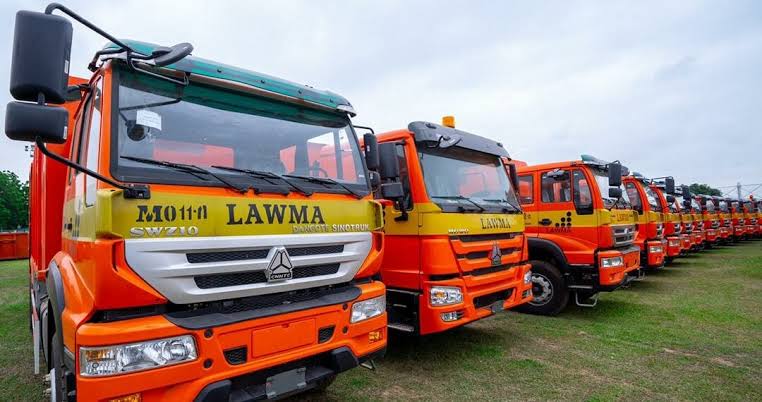
He also revealed that while at least about 2,000 compactor trucks were needed to service the state, only 700 are currently available, further highlighting the challenge with effective waste evacuation in the state.
He said they are transitioning to modern waste management practices of recycling waste for other uses.
In an interview recently, the Commissioner for Environment said the traditional pick-and-dump model is no longer sustainable, revealing that they are adopting the circular economy model by transitioning to a system that converts waste to wealth.
This, according to him, involves building an infrastructure that would transform the waste into other uses, such as the production of plastic products and gas for cooking and electricity from the recovered plastics and biowaste, respectively.
The LAWMA MD assured that the transfer loading stations and material recovery facilities will be completed at the latest by the first quarter of next year.
Speaking on actions to check violation of waste management regulations, Gbadegesin said they have set up what he called a waste investigation and surveillance enforcement team who go around with digital devices to apprehend those that do such, take them to court and try them.
He described dumping refuse on roadsides and other inappropriate places as an act of sabotage, which affects traffic, leads to flooding and generally damages public infrastructure. He urged residents to report those who do so for them to face sanctions.
Meanwhile, waste service operators have called for a review of the tariff structure, stating that the current rates are no longer realistic.
Olugbenga Adesola, National President of the Association of Waste Managers of Nigeria, said the authorities need to review the current rates charged by PSP operators, stressing that they are poor and affect the investment level in waste management.
Environmental groups have urged the Lagos State government to intensify public awareness campaigns while deploying additional waste evacuation vehicles to flood-affected communities.
They also called for stricter enforcement against illegal dumping, regular desilting of drainage channels before the rainy season, improved recycling initiatives and greater community participation in environmental sanitation.
Although emergency response teams have commenced clearing debris from some major roads and drainage channels, many residents insist that sustained waste management reforms, rather than seasonal clean-up operations, are needed to prevent recurring environmental disasters.
With meteorological agencies predicting more rainfall in the coming weeks, public health experts warn that failure to promptly evacuate refuse and restore proper sanitation could compound the impact of flooding, exposing millions of Lagos residents to avoidable disease outbreaks and further environmental degradation.

Victor Ezeja is a Nigerian journalist skilled in producing insightful news analyses, feature stories, and interviews that simplify complex issues and drive informed public discourse. His work combines rigorous research, balanced reporting, and compelling storytelling to highlight developments shaping industries and society. Victor, who holds a Master's Degree in Mass Communication, specializes in energy, aviation, business, and economic reporting. He can be reached via @VICTOREZEJA on X