


From highways and gas pipelines to student loans, digital skills and agricultural reforms, a look at how the Renewed Hope Agenda is attempting to transform governance into measurable outcomes.
As Nigerians commemorate Democracy Day, a fundamental question dominates conversations across homes, markets, campuses and workplaces: Are government reforms making a difference in the lives of ordinary citizens?
For many families struggling with rising living costs, inflation and economic uncertainty, democratic governance is no longer judged solely by elections and political promises. It is increasingly measured by roads that reduce travel time, jobs that put food on the table, affordable education, reliable energy and opportunities that create a pathway out of poverty.
This is the backdrop against which President Bola Ahmed Tinubu’s administration continues to defend its sweeping economic reforms under the Renewed Hope Agenda.
Since assuming office, the administration has embarked on some of the most ambitious infrastructure, education, energy, agricultural and digital economy initiatives in recent Nigerian history. While critics argue that many Nigerians are yet to fully feel the benefits of these reforms, government officials maintain that the foundation for long-term economic recovery is steadily being laid.
Among hundreds of ongoing interventions nationwide, ten flagship projects stand out for their scale, strategic importance and potential impact on national development.
Together, they offer insight into how the administration hopes to convert policy decisions into economic growth, job creation and democratic dividends.
The Lagos-Calabar Coastal Highway: Building an Economic Super Corridor
Perhaps no project better illustrates the administration’s infrastructure ambitions than the Lagos-Calabar Coastal Highway.
Stretching approximately 700 kilometres across Nigeria’s southern coastline, the highway will connect Lagos, Ogun, Ondo, Delta, Bayelsa, Rivers, Akwa Ibom and Cross River States, creating one of Africa’s largest coastal transport corridors.
But beyond asphalt and concrete, the project is designed as an economic artery capable of transforming trade, tourism, logistics and industrial development.
The highway will provide high-speed access to the Lekki Economic Corridor and integrate with the proposed Fourth Mainland Bridge, strengthening connectivity across Nigeria’s commercial capital.
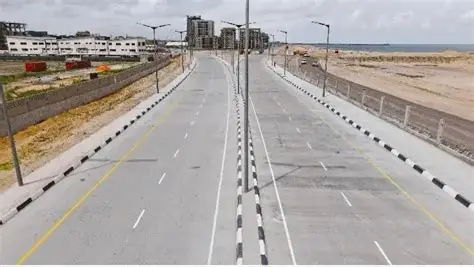
Analysts project that the corridor could contribute between $10 billion and $12 billion annually to Nigeria’s Gross Domestic Product within its first decade of operation.
The economic impact could be profound.
Travel time between Lagos and Calabar is expected to drop from about 14 hours to seven hours, significantly reducing transportation costs, vehicle maintenance expenses and logistics delays.
The project is also projected to create between 50,000 and 100,000 direct jobs during construction, while industrial clusters, tourism facilities and logistics hubs emerging along the route could generate more than 100,000 permanent jobs after completion.
Government officials say the highway forms part of over 800 federal road and bridge projects spanning more than 13,000 kilometres nationwide.
NELFUND: Opening University Doors for the Poor
For decades, financial hardship has prevented countless young Nigerians from pursuing higher education.
The Nigerian Education Loan Fund (NELFUND) was established to tackle this challenge.
The initiative represents one of the most significant education financing reforms in Nigeria’s history.
Unlike previous intervention programmes, NELFUND operates through a technology-driven platform that integrates National Identification Numbers, Bank Verification Numbers and JAMB records, reducing opportunities for manipulation and political interference.
Since its launch, more than N206 billion has reportedly been disbursed to approximately 1.6 million students across 270 public tertiary institutions nationwide.
Beyond tuition support, beneficiaries receive monthly upkeep allowances of N20,000 paid directly into their accounts.
The loans are interest-free and repayment only begins two years after completion of the National Youth Service Corps and only when beneficiaries secure employment.
Education experts say the programme has the potential to significantly reduce tertiary school dropout rates while strengthening Nigeria’s human capital base.
CNG Revolution: Turning Fuel Subsidy Pain into Opportunity
The removal of fuel subsidy remains one of the most controversial decisions of the Tinubu administration.
However, government officials argue that the Presidential Compressed Natural Gas Initiative was created to cushion the impact while reducing dependence on imported fuel.
The programme seeks to leverage Nigeria’s vast natural gas reserves to power transportation at lower costs.

Already, more than 93,000 CNG conversion kits have been deployed, while over 379 certified conversion centres are operational across 22 states.
More than 11,500 CNG-enabled vehicles, including buses and tricycles, have entered public transportation systems.
Government projections indicate that nationwide implementation could save Nigeria approximately $4.4 billion annually in fuel imports.
The initiative has also attracted over $2 billion in public and private investments and generated more than 10,000 direct and indirect jobs.
Equally important are environmental benefits, with CNG-powered vehicles producing significantly lower emissions than conventional petrol and diesel engines.
AKK Pipeline: Taking Gas Wealth to Northern Nigeria
For decades, Nigeria’s vast gas resources have remained largely concentrated in the South, while many northern states struggled with energy shortages.
The Ajaokuta-Kaduna-Kano Gas Pipeline seeks to change that narrative.
Spanning 614 kilometres from Kogi State through Abuja and Kaduna to Kano, the pipeline is expected to transport up to 2.2 billion standard cubic feet of gas daily.
Construction has surpassed 94 per cent completion, with first gas delivery to Abuja expected by July 2026.

The project is designed to supply gas to power plants, fertiliser producers, industrial parks and manufacturing clusters across Northern Nigeria.
Economic projections suggest the pipeline could unlock over $30 billion in industrial investments by 2030 while creating more than 50,000 permanent jobs.
The project is also expected to lower factory energy costs by as much as 40 per cent, improving the competitiveness of locally manufactured products.
Fighting Hunger Through Agricultural Reform
Food inflation remains one of the biggest concerns for Nigerian households.
To address this challenge, the Federal Government launched the National Agricultural Growth Scheme and Agro-Pocket Project (NAGS-AP).
The programme focuses on increasing production of six strategic crops: rice, maize, wheat, sorghum, cassava and soybean.
Through a digital platform linking farmers’ identities to specific farmlands, the initiative seeks to eliminate diversion and ensure direct delivery of subsidies.
More than 2.8 million farmers have benefited from subsidised inputs, while over 1.6 million farmers have been digitally verified nationwide.
Government figures indicate that the programme has produced more than 2.5 million metric tonnes of staple crops valued at approximately N2.31 trillion.
Women account for more than 840,000 beneficiaries, reflecting efforts to improve gender inclusion in agricultural development.
Exchange Rate Reform: The Most Difficult Economic Surgery
Among the administration’s most consequential reforms was the decision to unify Nigeria’s multiple exchange rate windows.
For years, different exchange rates created opportunities for arbitrage, speculation and corruption.
The new market-driven foreign exchange framework seeks to eliminate these distortions.
Supporters argue that the policy has improved transparency, encouraged foreign investment and strengthened confidence in Nigeria’s financial system.
The reform also enables exporters to receive more realistic value for foreign earnings, potentially boosting non-oil exports and reducing dependence on crude oil revenue.
While the transition has contributed to inflationary pressures, economists say long-term benefits may include greater stability and improved investor confidence.
3MTT: Preparing Three Million Nigerians for the Digital Economy
As artificial intelligence and digital technologies reshape global labour markets, Nigeria is betting heavily on digital skills.
The Three Million Technical Talent Programme aims to train three million Nigerians in high-demand technology fields.
The programme operates through technology hubs and learning centres across all 774 local government areas.
Participants receive training in software development, cybersecurity, data analytics and other digital disciplines.
Officials say the initiative is designed to transform Nigeria from a consumer of technology into a global supplier of digital talent.
Thousands of graduates have reportedly secured internships, local technology jobs and international freelance opportunities following certification.
The Badagry-Sokoto Highway: Connecting Two Nigerias
The proposed Badagry-Sokoto Highway represents more than a transportation project.
Stretching over 1,000 kilometres, the corridor seeks to bridge economic divides between northern and southern Nigeria.
The highway will facilitate the movement of agricultural produce from northern farming communities to southern markets while improving access to neighbouring West African countries.
Government projections suggest the corridor could reduce food transportation costs by up to 30 per cent and create more than 40,000 permanent jobs through truck hubs, roadside markets and support services.
For policymakers, the project is as much about national integration as it is about transportation.
Reviving Nigeria’s Textile Industry
Once among the largest employers in West Africa, Nigeria’s textile industry suffered decades of decline due to smuggling, poor infrastructure and high production costs.
The Cotton, Textile and Garment Industrial Clusters Revitalisation Programme aims to restore the sector’s lost glory.
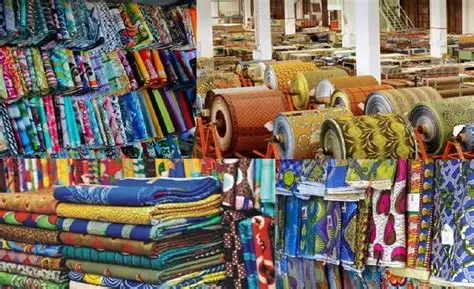
The initiative focuses on reviving textile mills, strengthening cotton production and creating modern industrial clusters powered by natural gas and renewable energy.
Officials believe the programme can reduce dependence on imported clothing, create thousands of manufacturing jobs and increase non-oil export earnings.
The policy also includes stricter anti-smuggling measures designed to protect local manufacturers from unfair competition.
Building a Maritime Powerhouse
The Modernisation and Deep-Sea Port Integration Programme seeks to position Nigeria as West Africa’s leading maritime hub.
Investments are being directed toward the expansion of Lekki Deep Sea Port and upgrades of eastern ports in Rivers and Delta states.
The initiative includes digital cargo tracking systems, automated customs processes and direct rail connectivity to major ports.
Government projections indicate that the programme could significantly increase customs revenue, attract foreign investment and enable Nigeria to capture a larger share of regional transit trade.
The project is also expected to generate thousands of jobs in shipping, logistics, engineering and maritime services.
READ ALSO:
- Tinubu’s Capital Spending Puzzle: Why ₦3.85trn in Project Funds Failed to Reach Projects
- Nigeria’s Democracy at 27: How Security Landscape Fractured Over the Years
- 27 Years of Democracy: Higher Earnings Fail to Keep Pace with Living Costs
- Tinubu Marks Eid-el-Kabir in Lagos, Seeks National Unity, End to Banditry
Taken individually, each of these projects addresses a specific challenge: transportation, education, energy, agriculture, industrialisation or technology.
Taken together, they reveal the administration’s broader vision of economic transformation.
Yet the ultimate verdict will not come from policy documents or government projections.
It will come from whether the trader in Onitsha can move goods faster and cheaper, whether the student in Maiduguri can complete a degree without financial hardship, whether the farmer in Plateau can earn more from harvests, whether the graduate in Calabar can secure meaningful employment, and whether families across Nigeria experience a measurable improvement in their quality of life.
As Nigeria marks another Democracy Day, these ten flagship interventions offer perhaps the clearest indication of the administration’s development priorities.
Whether they become enduring symbols of economic recovery or unfinished ambitions will depend on execution, accountability and sustained commitment.
For now, they represent the government’s strongest argument that its reforms are beginning to move from policy to impact—and from promises to results.

Esther Ososanya is an investigative journalist with Pinnacle Daily, reporting across health, business, environment, metro, Fct and crime. Known for her bold, empathetic storytelling, she uncovers hidden truths, challenges broken systems, and gives voice to overlooked Nigerians. Her work drives national conversations and demands accountability one powerful story at a time.