

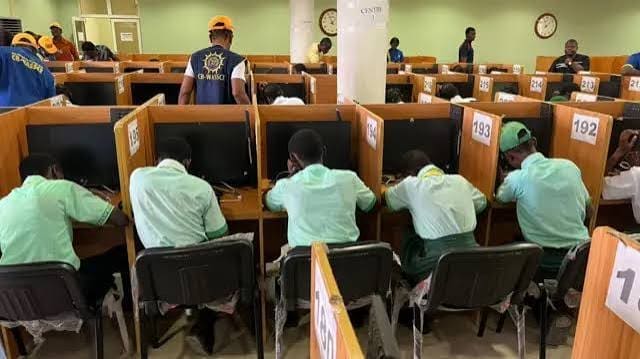
The education ministry withdraws the circular and begins nationwide consultations after widespread outrage over planned 82% increase
The federal government has suspended its controversial proposal to increase the registration fee for the West African Senior School Certificate Examination (WASSCE) and the National Examinations Council (NECO) Senior School Certificate Examination (SSCE) to ₦50,000 per candidate from 2027, following widespread public backlash.
The Federal Ministry of Education announced on Monday that it had withdrawn the June 18 circular conveying the proposed fee adjustment, saying the decision was necessary to allow for broader consultations with key stakeholders before any final decision is taken.
The move marks a significant policy reversal after the proposed fee hike generated intense criticism from parents, education stakeholders, labour groups and opposition figures, who warned that the increase would make secondary school examinations unaffordable for many Nigerian families.
The proposed fee would have raised the cost of registering for WAEC and NECO examinations from about ₦27,500 to ₦50,000, an increase of more than 80 per cent.
Explaining the rationale behind the now-suspended proposal, the ministry said the review was informed by the rising cost of conducting public examinations across the country.
In a statement signed by the Director of Press and Public Relations, Mrs Folasade Boriowo, the ministry noted that examination fees had remained largely unchanged for several years despite mounting operational expenses.
According to the ministry, increasing costs associated with logistics, security, printing of examination materials, technology deployment and quality assurance made a review necessary to sustain the integrity and efficient conduct of public examinations.
Minister Orders Suspension
The ministry disclosed that the minister of education, Dr Maruf Tunji Alausa, directed that implementation of the proposed increase be placed on hold in line with the federal government’s commitment to inclusive, transparent and evidence-based policymaking.
It said the minister’s directive reflects the government’s determination to ensure that policies affecting millions of students and their families are carefully evaluated before implementation.
“The Honourable Minister of Education, Dr Maruf Tunji Alausa, CON, has directed that the proposal be placed on hold in line with the Federal Government’s commitment to inclusive, transparent and evidence-based policymaking,” the ministry stated.
It added that the decision underscores the ministry’s resolve to ensure that education policies remain socially responsive and reflect the collective interest of Nigerians.
The ministry said consultations would now be held with examination bodies, state ministries of education, school proprietors, parents’ associations, organised labour and other critical stakeholders before any decision is reached on a possible review of examination fees.
Consequently, the proposed increase will no longer take effect as earlier announced, pending the outcome of the consultation process.
“The proposed review of examination registration fees will not take effect, as earlier communicated, pending the conclusion of the consultation process,” the statement said.
READ ALSO:
- FG Reforms Bring 90,000 Children Back to School, Targets Wider Education Access
- FG Postpones Evacuation of 270 Nigerians from South Africa Over Aircraft Fault
- FG Denies ₦8trn ‘Shadow Budget’, Says Spending Has NASS Backing
- WAEC Releases 2026 WASSCE Timetable, Sets April 21 Start Date
The ministry reaffirmed the federal government’s commitment to protecting students’ welfare and ensuring equitable access to quality education.
It stressed that responsible policymaking remains central to President Bola Ahmed Tinubu’s Renewed Hope Agenda for the education sector while assuring Nigerians that the public would be kept informed throughout the consultation process.
The ministry also thanked parents, education stakeholders and members of the public for their understanding, patience and continued engagement, saying their contributions would help shape a more balanced and widely accepted policy on examination financing.
This version provides stronger context by highlighting the government’s policy reversal, explaining the economic rationale behind the proposal, and organising the report into clear thematic sections suitable for a front-page or education-page print story.

Esther Ososanya is an investigative journalist with Pinnacle Daily, reporting across health, business, environment, metro, Fct and crime. Known for her bold, empathetic storytelling, she uncovers hidden truths, challenges broken systems, and gives voice to overlooked Nigerians. Her work drives national conversations and demands accountability one powerful story at a time.