

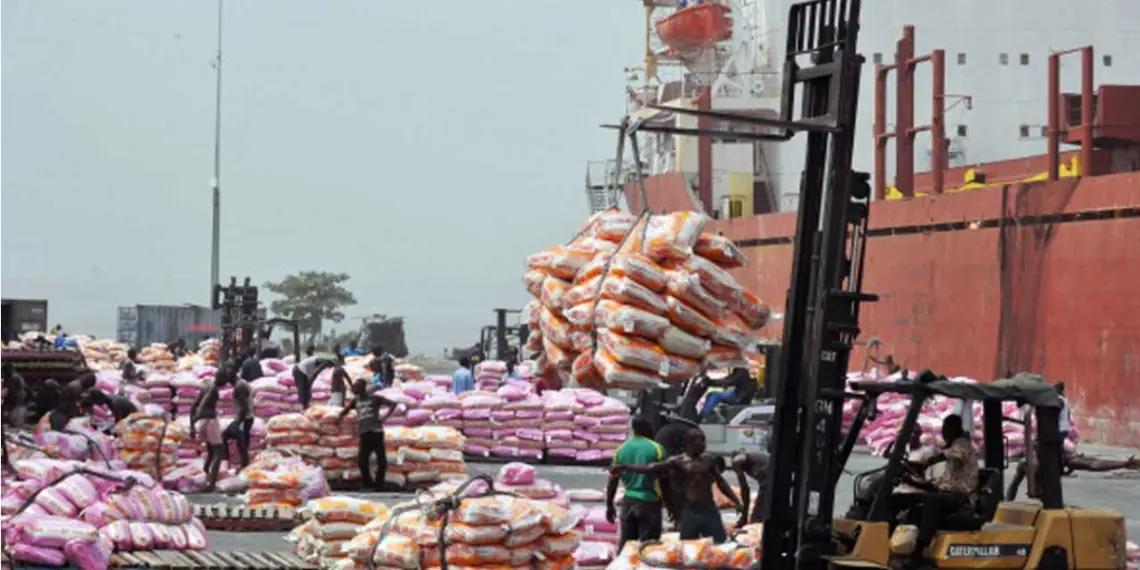
Nigeria’s non-oil export sector achieved a historic milestone in 2025, reaching a record $6.1 billion in earnings.
This represents an 11.5 per cent increase from the $5.46 billion recorded in 2024, marking the highest value since the Nigerian Export Promotion Council (NEPC) was established nearly 50 years ago.
This was revealed on Monday in Abuja during the council’s annual success report and 2026 non-oil export outlook briefing by Nonye Ayeni, Executive Director and Chief Executive Officer of the NEPC.
According to Ayeni, the data were obtained from pre-shipment inspection agencies.
“The non-oil export sector rose to approximately $6.1bn, representing a year-on-year growth of about 11.5 per cent over and above the $5.4bn recorded in 2024,” Ayeni said.
“This marks the highest non-oil export value achieved in the country for formally documented trade and also from the inception of the council, almost 50 years ago,” she added.
She noted that apart from this figure recorded from formal exports, a lot of non-oil goods still go out informally through various borders. She assured that the NEPC is working closely with the National Bureau of Statistics (NBS), the Central Bank of Nigeria (CBN), and other stakeholders to integrate informal trade into official records.
She attributed this growth to the “Double Your Export” mantra and sustained economic diversification efforts. The growth was driven by both an increase in the variety of products and the volume of shipments.
The total export volume rose to 8.02 million metric tonnes, with 281 products shipped to 120 countries. This export volume represents a 10 per cent increase year-on-year when compared with 7.29 million metric tonnes recorded in 2024.
The products range from raw agricultural commodities to semi-processed industrial inputs.
Top Export Products by Value
Agriculture and chemicals continue to lead the non-oil sector.
Analysis of the data on Nigeria’s top non-oil export products in 2025 shows that Cocoa Beans emerged as the top performer, generating $1.99 billion (about 32.76 per cent of total value).
This was followed by urea/fertilizer Valued at $1.29 billion, with a massive volume of 3.25 million metric tonnes. It accounts for 21.19 per cent of the total export value.
Cashew nuts emerged third top performer with $456.93 million, while sesame seeds brought in $300.37 million.
Other key products include: Gold dore and cocoa butter with export values of $228.82 million and $209.00 million, respectively. Aluminum ingots recorded $182.72 million, cigarettes had $98.23 million, copper ingots ($96.81 million), and rubber ($83.63 million).
Major Trading Partners
The NEPC boss revealed that the Netherlands emerged as Nigeria’s largest non-oil trading partner in 2025. The European country’s imports from Nigeria are worth $1.07 billion, reflecting a 32.46 per cent growth, with its share of the total exports amounting to 17.53 per cent. Key products exported to the country included cocoa beans, butter, and sesame seeds.
Brazil’s imports were worth $630.29 million, a 19.07 per cent surge. Its share of total exports amounted to 10.35 per cent. India, with imports valued at $464.20 million, accounted for 7.63 per cent, dealing mainly in cashews and industrial raw materials.
READ ALSO:
- Nigeria Records 21% Surge in Non-Oil Trade Exports
- Nigeria’s Fiscal Reforms Drive Non-Oil Revenue Up by 57.5%- FG
- NEC Pushes for Non-oil Revenue Expansion, Cut Dependence on Crude Earnings
Other countries in the top 10 destinations of Nigeria’s non-oil exports in 2025 include Belgium ($463.86 million), the United States ($344.83 million), Vietnam, Germany, China (each accounted for over $330 million), Switzerland ($228.47 million), and Japan ($208.73 million).
Other countries among the top 20 list included Malaysia, Turkey, Ghana, Indonesia, Canada, Spain, Italy, the United Kingdom, Côte d’Ivoire, and Argentina.
Top Exporters
The NEPC boss revealed that Indorama Eleme Fertiliser & Chemical Limited, Dangote Fertiliser Limited, and Starlink Global and Ideal Ltd were the top three exporters in 2025, accounting for 13.13 per cent, 8.41 per cent, and 8.06 per cent of total exports, respectively.
Regional Trade Dynamics
While global exports soared, intra-African trade faced some challenges. Exports to the ECOWAS region totaled $272 million (roughly 4.6% of the total), reflecting a slight decline. This was largely attributed to the exit of Burkina Faso, Mali, and Niger from the regional bloc, which disrupted established trade corridors.
Outlook for 2026
Apart from mainstreaming informal trade through partnership with the CBN and NBS, the NEPC also plans to leverage trade deals such as the recently signed Nigeria–UAE Comprehensive Economic Partnership Agreement (CEPA), which removes tariffs on over 7,000 Nigerian products.
The Council also emphasises shifting focus from raw materials to exporting processed goods (value addition) to increase profit margins and create local jobs.

Victor Ezeja is a Nigerian journalist skilled in producing insightful news analyses, feature stories, and interviews that simplify complex issues and drive informed public discourse. His work combines rigorous research, balanced reporting, and compelling storytelling to highlight developments shaping industries and society. Victor, who holds a Master's Degree in Mass Communication, specializes in energy, aviation, business, and economic reporting. He can be reached via @VICTOREZEJA on X