

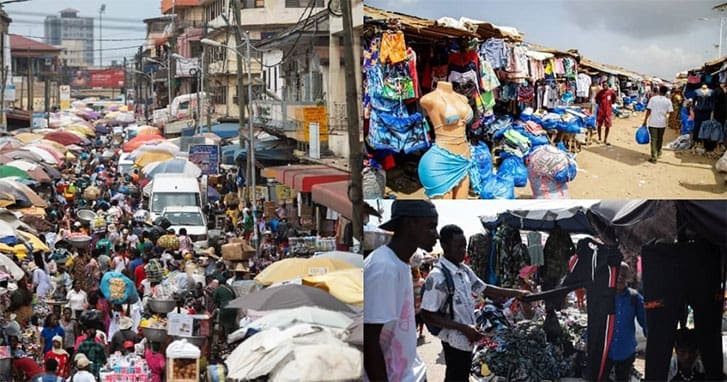
From Okrika clothes and fairly used phones to second-hand furniture, appliances, and cars, rising prices and shrinking purchasing power are reshaping how Nigerians consume.
For years, buying second-hand goods in Nigeria carried a social stigma. Used clothes, electronics, fairly used phones, furniture, and appliances were dismissed as “okrika”, often associated with people who could not afford brand-new products.
But Nigeria’s economic reality is changing the meaning of second-hand.
Today, a used iPhone does not necessarily signal financial hardship. A consumer may simply be looking for a particular model at a more affordable price. A thrifted outfit can be a deliberate fashion choice, while second-hand furniture and appliances offer households a way to meet their needs without exhausting their income.
For an increasing number of Nigerians, the decision to buy a used item is being shaped less by preference than by affordability.
Across homes, markets, and online platforms, the second-hand economy is expanding as consumers adjust to higher prices, weakened purchasing power, and the rising cost of new products.
The shift is particularly visible in the markets for smartphones, laptops, clothing, shoes, furniture, household appliances, electronics, and vehicles.
Recent market data reinforces the trend. Searches for used items on Jiji rose by 97 per cent year-on-year in the first quarter of 2026, with more than 40 million visits recorded during the period. Searches for used phones with discount filters also rose sharply, pointing to a growing preference for cheaper alternatives as consumers become more deliberate about spending.
The development reflects a broader transformation in consumer behaviour.
The old culture of “tear rubber”, the excitement associated with buying brand-new products, is increasingly giving way to a culture of thrift, resale, and value hunting.
For many Nigerians, the key question is no longer whether a product is new, but whether it is affordable, functional, and worth the price.
That calculation has become increasingly important as households contend with rising food prices, transportation costs, rent, electricity bills, and school fees, alongside the higher cost of imported goods.
But beneath the growing popularity of the second-hand market lies a deeper economic question: is Nigeria simply adapting to a difficult economy, or is it gradually becoming dependent on products manufactured elsewhere?
As used goods become mainstream, local manufacturers face a new challenge: how to win back consumers who increasingly believe imported second-hand products offer better value than locally made alternatives.
When “New” Became Too Expensive
Peace Nember, a data analyst, told Pinnacle Daily that the growing popularity of second-hand goods is closely connected to the economic pressures facing Nigerian households.
According to her, inflation, exchange-rate pressures, and rising import costs have significantly increased the prices of brand-new products.
However, incomes have not risen at the same pace for many Nigerians.
“Prices of brand-new products have increased a lot because of inflation, the exchange rate and import costs. While many people’s incomes have not increased at the same pace, some people’s incomes are still the same. So, people are trying to stretch their money,” Nember said.
That single reality has changed the way millions of Nigerians approach consumption.
A consumer may still want the latest phone, but may no longer be able to justify paying the price of a new one.
A family may still want new furniture, but the cost may now be too high. A young person may still want quality clothes, but thrift markets may offer more attractive choices at lower prices.
In this environment, the second-hand market provides an alternative.
Nember said she had observed increasing demand for second-hand clothing, shoes, phones, electronics, and even vehicles.
Although some people enjoy vintage or thrift shopping as a matter of personal preference, she believes economic pressure remains a significant factor for many Nigerians.
“For most Nigerians, it’s more about necessity than preference,” she said.
This distinction is important.
Nigeria’s second-hand market is not growing because Nigerians have suddenly lost interest in new products. In most cases, consumers still want new products.
The problem is that new products have become increasingly expensive. As a result, consumers are adjusting their expectations.
The question is no longer simply, “What do I want to buy?” It is increasingly “What can I buy with the money I have?”

The New Face Of Okrika
The social meaning of second-hand goods is changing.
For years, “okrika” was largely associated with used clothing bought by people seeking cheaper alternatives. Today, however, the term “thrift” has become more widely accepted, attracting consumers across different income groups.
According to Gabriel Nwokolo, a technology and electronics professional who deals in products including electronics and men’s suits, the stigma previously attached to used goods is gradually disappearing.
“Things have changed. It’s no longer seen as something associated with financial hardship. It’s just seen as a way to survive in the general spirit of Nigeria,” he said.
Nwokolo said the growing popularity of thrift clothing was partly driven by the fact that consumers across different income groups now shop for pre-owned clothes, including items imported from the United Kingdom and other Western countries.
Some of the clothing, he noted, includes designer brands and high-quality pieces that are sold at significantly lower prices simply because they have had previous owners.
The same shift is evident in the mobile phone market, where second-hand flagship devices have become increasingly popular.
Nwokolo said many Nigerians now turn to used iPhones and high-end Samsung devices to access premium technology at a lower price.
The price difference can be substantial. A flagship phone that costs hundreds of thousands of naira more when purchased new may be available at a significantly lower price when pre-owned, allowing consumers to access high-end devices without paying the full retail price.
“When you see things like this, it’s a way to bridge the gap between high-income and low-income Nigerians, allowing more people to afford good products at discounted prices,” he said.
The constant release of new smartphone models also keeps the resale market active. When consumers upgrade to newer devices, their previous phones often enter the second-hand market, even when they remain in good working condition.
“Sometimes it’s just because people sell their things because they want to get a new one, not because it’s bad,” Nwokolo said.
He said the same principle applied to his own consumption habits.
“I also use second-hand products—phones, laptops, everything I use. I can’t remember when last I used a new phone,” he said.
His experience reflects a broader change in consumer attitudes. A pre-owned product is no longer automatically considered inferior. For many buyers, the real considerations are its condition, quality, reliability, and price.
In an economy where the cost of new technology continues to rise, the second-hand market has become an increasingly important route to ownership.
Phone repairers see the shift firsthand
The change in consumer behaviour is also visible among phone dealers and repairers.
Jerry Eze, a phone repairer who also sells new and used devices, said customers increasingly approach him to buy second-hand phones or sell their old devices.
Although he sells new phones, he said the used-phone market moves faster because many Nigerians can no longer afford the cost of brand-new devices.
“People don’t have money to purchase new things because things are expensive,” he said.
For him, the growth of the second-hand market is not difficult to understand. Nigerians still want quality products, but their purchasing power has declined.
The used market therefore provides a bridge between what people want and what they can afford.
Quality over novelty
The growing demand for used goods is not driven by price alone. For some consumers, quality is just as important.
Mayeloye Esther, a lecturer, said she buys second-hand clothes, shoes, and cooking utensils, but her decision is primarily based on quality.
“Quality comes first,” she said.
Esther said some second-hand clothing could be of better quality than new products available in the Nigerian market. She also noted that some used goods are fairly priced compared with brand-new alternatives.
However, she draws a line when it comes to certain products.
For electronics, she prefers to buy new because of concerns about hidden faults and the possibility that a product may be damaged during transportation without the seller disclosing the problem.
The distinction reflects an increasingly sophisticated second-hand consumer market. Nigerians are not necessarily buying used goods blindly. They are making calculations based on durability, price, reliability and the reputation of the product.
In some cases, a used imported product is considered a safer investment than a cheaper new product of uncertain quality.
The trust crisis facing local products
The rise of second-hand goods is also exposing a deeper problem: the crisis of consumer confidence in locally produced goods.
Esther said many Nigerians had become sceptical of locally manufactured products because of concerns about quality and durability.
She argued that consumers often prefer to buy a product that will last longer, even if it is more expensive, rather than repeatedly replace a cheaper item that breaks down.
“Majority of the things that we produce are like fakes. You buy stuff here or decide to get a service to be rendered to you here in Nigeria, and it is fake or it is not quality,” she said.
She said Nigerian manufacturers needed to prioritise quality and ensure that locally produced goods could compete with imported alternatives.
“If the local market in Nigeria is making quality products, regardless of how costly it is, there are people that will be able to afford it,” she said.
This is one of the central contradictions in Nigeria’s second-hand economy.
Consumers want to buy Nigerian-made products. But many say they will only do so when local products offer the quality, durability, and value they expect.
The problem is that manufacturers themselves are operating under enormous pressure.
Power costs are high. Infrastructure is inadequate. Access to affordable credit remains limited. Production costs have risen sharply, while consumers have less money to spend.
The result is a vicious cycle: local manufacturers struggle to produce affordable quality goods, while consumers increasingly turn to imported used goods that offer better value within their limited budgets.
The Pantaker Economy
For Mary Oluwalonimi, a resident of Abuja, buying second-hand products is a practical way to manage household expenses. She said she prefers used goods because they are affordable and can still offer good quality.
Oluwalonimi told Pinnacle Daily that she had used a second-hand microwave for more than four years. She also bought a used phone and regularly visits Pantaker markets in Kubwa, where she purchases second-hand furniture and other items.
At one point, she bought used zinc to repair a leaking roof in her apartment. The cost, she said, was significantly lower than buying new materials.
According to her, many people visit the market because they can find usable products at affordable prices.
Some items come from people who are relocating and need to sell their belongings quickly.
Others sell because they need money. This creates a market in which one person’s unwanted possession becomes another person’s affordable solution.
A piece of furniture can move from one household to another.
A microwave can serve multiple owners.
A phone can remain useful long after its original owner has upgraded.
The second-hand market therefore extends the life of products.
It also creates income for traders, transporters, repairers, and other businesses connected to the resale economy.
The Jobs Created By The Second-Hand Market
The second-hand economy extends beyond consumers, supporting a wider network of economic activities. Traders buy and sell used goods; transporters move them between locations, while repairers and technicians restore and maintain phones, appliances, and electronics. Market operators provide spaces for transactions, while online platforms connect buyers and sellers.
The growth of the market has therefore created economic opportunities and jobs for people involved in the trade. Nember acknowledged this benefit but warned that heavy dependence on imported second-hand goods could create challenges for local manufacturers.
Nigeria’s growing second-hand market offers consumers cheaper alternatives but also creates stronger competition for local manufacturers.
Peace Nember, a data analyst, warned that heavy dependence on imported used goods could make it harder for local producers to compete, with possible consequences for investment, production, and job creation.
Mayeloye Esther, a lecturer, said local manufacturers must also address concerns about quality and durability if they want to win consumers.
“Quality comes first,” she said, arguing that Nigerians would support local products when they are reliable, durable, and reasonably priced.
Her position highlights the central challenge facing Nigerian manufacturers: consumers cannot be expected to choose local products simply because they are made in Nigeria. They must see clear value in them.
The interviewees did not support an outright ban on second-hand goods.
Nember said the government should instead focus on improving electricity, infrastructure, and access to affordable funding to make local production more competitive.
Esther also argued that consumers should be allowed to choose products that fit their budgets, saying the government should prioritise broader challenges such as roads, electricity, education, and healthcare.
“People should be allowed to buy whatever they prefer,” she said.
The broader argument is that the solution is not to force Nigerians to abandon used goods but to create local products that can compete on quality, durability, and price.
The Cost Of Producing In Nigeria
The strength of the second-hand market is closely linked to the high cost of producing and buying new goods.
Expensive electricity, poor infrastructure, high transportation costs, costly credit, and rising raw material prices all increase the final price of locally made products.
When new goods become too expensive, consumers naturally look for alternatives.
Nember called for better infrastructure, affordable loans, lower interest rates, and skills development, while Esther urged businesses to invest in quality materials and skilled workers.
Without reducing the cost of production and improving quality, locally made products will continue to struggle against cheaper alternatives.
READ ALSO:
- FG Targets 500,000 Consumer Credit Beneficiaries by December
- UK Envoy Backs Tinubu’s Reforms, says Nigeria can Hit 7% Growth
- Türkiye, Nigeria Launch Maritime Forum to Deepen Shipbuilding, Investment Ties
- Naira Devaluation Added Over ₦40 tn to Nigeria’s Debt, Not Fresh Borrowing — FG
The growth of second-hand goods reflects a combination of affordability, quality, personal choice, and changing consumer behaviour.
Some Nigerians buy used products because new ones are too expensive. Others deliberately choose them because they offer better value.
What is clear is that the market is no longer a marginal part of the economy.
Used phones, thrift clothing, second-hand furniture, appliances, and vehicles have become increasingly common, while physical markets and online platforms have made buying and selling pre-owned goods easier.
Nigeria may not have deliberately chosen to become a second-hand market country, but rising prices and shrinking purchasing power are pushing more consumers in that direction.
The second-hand economy is therefore more than a shopping trend. It is an economic mirror, reflecting the pressure on households and the challenges facing local production.
The question is no longer simply why Nigerians are buying used goods.
It is why so many can no longer afford to buy new. Until that question is addressed, the second-hand market will continue to grow.

Esther Ososanya is an investigative journalist with Pinnacle Daily, reporting across health, business, environment, metro, Fct and crime. Known for her bold, empathetic storytelling, she uncovers hidden truths, challenges broken systems, and gives voice to overlooked Nigerians. Her work drives national conversations and demands accountability one powerful story at a time.