

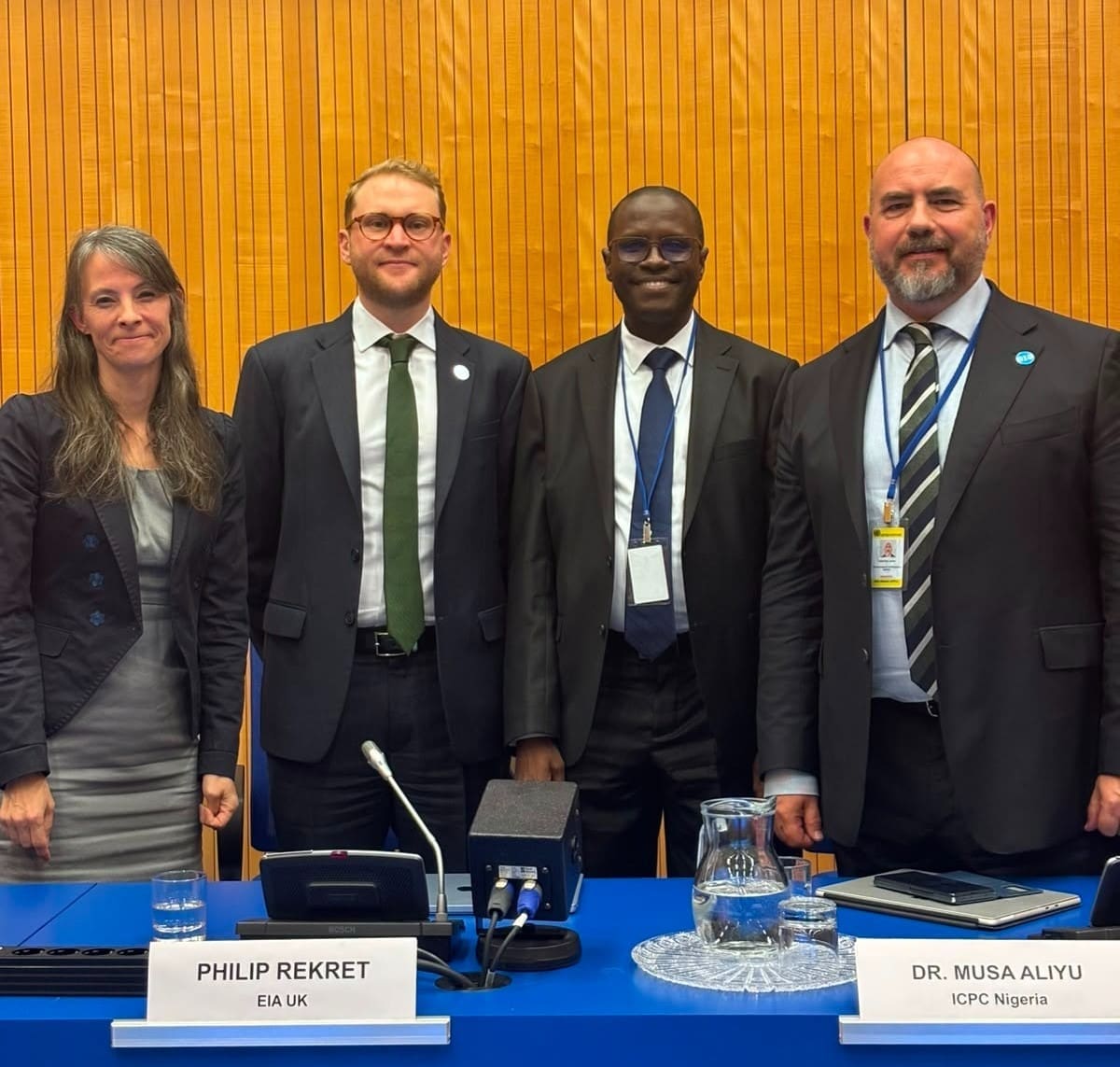
The Chairman of the Independent Corrupt Practices and Other Related Offences Commission (ICPC), Musa Adamu Aliyu, has called for wildlife trafficking to be treated as a form of organised financial crime, arguing that corruption remains the main force enabling the illegal trade to thrive.
Aliyu made the call while speaking at the 35th Session of the Commission on Crime Prevention and Criminal Justice (CCPCJ) in Vienna, according to a statement issued on Thursday by the ICPC’s Head of Media and Public Communications, Okor Odey.
The ICPC chairman said the global response to wildlife trafficking must move beyond viewing it solely as a conservation challenge and instead focus on dismantling the corruption networks that support it.
“Wildlife trafficking survives not simply because criminal networks are sophisticated, but because corruption creates the enabling environment through which illicit actors move products, money, documents, and influence,” Aliyu stated.
READ ALSO:
- ICPC Files Multiple Charges Against El-Rufai, Set to be Arraigned in Kaduna Tuesday
- ICPC Releases El-Rufai After Mother’s Death
- Obi Vows Crackdown on Criminality, Labels Fuel Subsidy ‘Organised Crime’
- Tinubu Appoints new PTDF Executive Secretary, Renews Tenure of TCN MD/CEO
He explained that traffickers exploit bribery at ports, manipulate customs documentation and abuse export permits to move illegal wildlife products across borders.
According to him, the problem is sustained by a wider “ecosystem of vulnerabilities” involving transportation systems, financial structures and enforcement agencies.
To strengthen Nigeria’s response, Aliyu announced that the ICPC has established a dedicated unit for environmental crime investigations, a move that places environmental crimes on the same priority level as money laundering and terrorism financing.
He said effective investigations must simultaneously focus on illicit products, the movement of money linked to the trade, and the officials and systems that enable the crimes.
The ICPC chairman also advocated the use of advanced investigative tools, including link analysis, digital evidence exploitation and financial profiling, to expose and dismantle criminal networks behind wildlife trafficking.
Aliyu further highlighted the importance of international collaboration, commending the Environmental Investigation Agency (EIA) UK for its partnership with the commission in strengthening institutional responses to environmental crimes.
He urged governments and enforcement agencies to strengthen corruption-risk prevention measures within customs, licensing and border institutions, stressing that tackling corruption remains critical to ending wildlife trafficking.
“If corruption is the lubricant of wildlife trafficking networks, then integrity, intelligence, and interagency cooperation must become the tools through which those networks are dismantled,” he added.

Alex is a business journalist cum data enthusiast with the Pinnacle Daily. He can be reached via ealex@thepinnacleng.com, @ehime_alex on X