

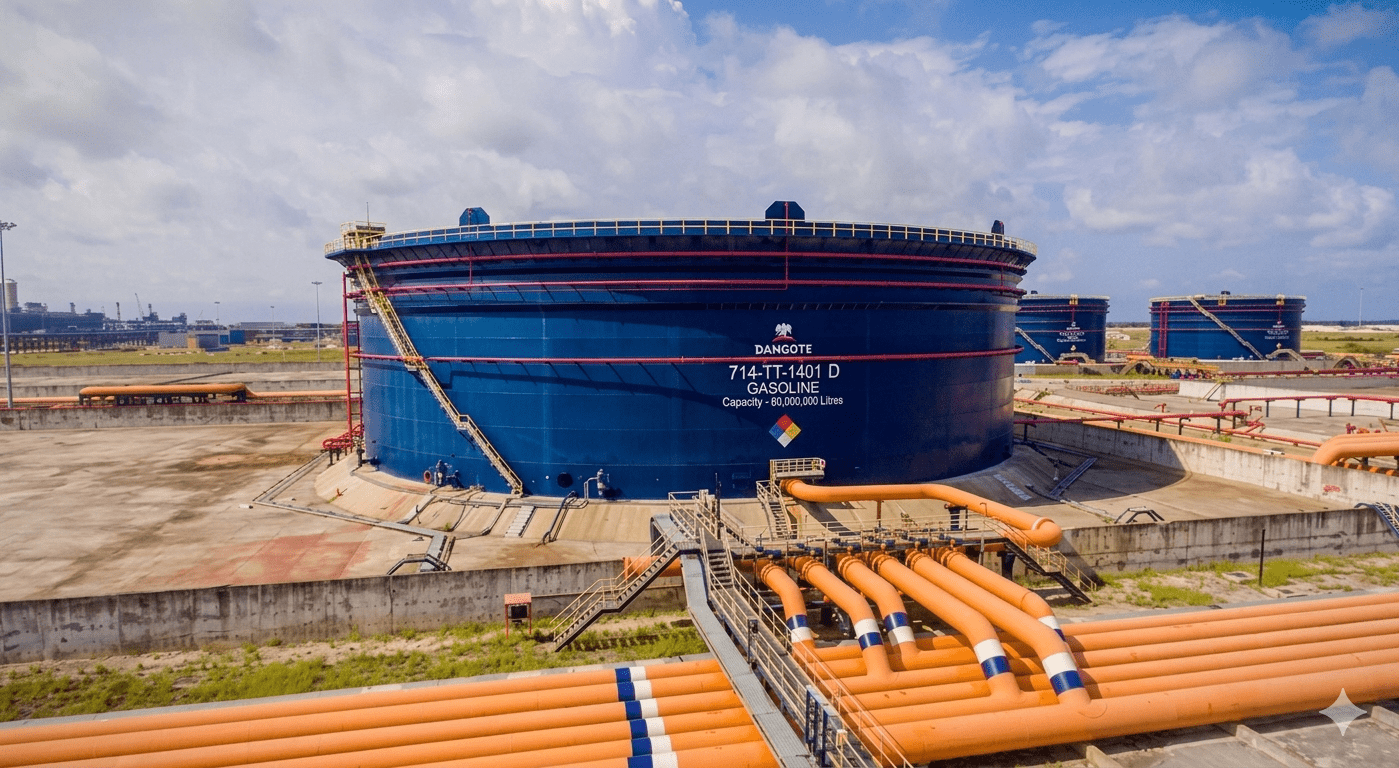
The planned listing of Dangote Petroleum Refinery on the Nigerian Exchange Limited (NGX) has been touted as one of the most significant developments in the history of Nigeria’s capital market.
The refinery, valued at between $39 billion and $50 billion by various estimates, is expected to add tens of trillions of naira to the market capitalisation of the NGX and potentially transform the exchange into one of the largest investment destinations in Africa.
However, beneath the excitement surrounding the proposed offer lies a fundamental question: how many ordinary Nigerians will actually be able to participate?
Emerging details of the refinery’s proposed private placement suggest that the investment may be beyond the reach of most retail investors.
According to a Reuters report, investors seeking to participate in the offer must subscribe to a minimum of one million shares at $0.35 per share, translating to a minimum investment of $350,000.
At current exchange rates, that requirement amounts to hundreds of millions of naira, placing the investment firmly within the reach of institutional investors, pension funds, asset managers and high-net-worth individuals rather than the average Nigerian investor.
The development is fuelling concerns that one of the country’s most anticipated investment opportunities could become largely inaccessible to the very retail investors who have long awaited the refinery’s listing.
A Landmark Listing With a High Cost of Entry
The excitement surrounding the refinery’s planned market debut is understandable.
Since commencing operations in 2024, the 700,000-barrels-per-day refinery has expanded production across petrol, diesel, aviation fuel and naphtha, helping to reduce Nigeria’s dependence on imported refined petroleum products.
Investors see the company as one of the country’s most strategic industrial assets and a potentially lucrative long-term investment.
Patrick Ajudua, president of the New Dimension Shareholders Association, said shareholders welcomed the decision by Aliko Dangote to bring the refinery to the market.
“To me, as a shareholder, the fact that Dangote itself has offered to bring the refinery to the market is something we commend Dangote for. It means the company is bringing the cake for everybody to participate in,” he said.
READ ALSO:
- Foreign Investors Retreat as Domestic Capital Powers NGX Rally
- Dangote Refinery Listing Ignites Demand, Raises Tough Questions
- August 2025 FGN Savings Bonds Offer N1.43bn Returns to Investors
- Cross River Residents Spend More on Petrol in January – Report
The enthusiasm is understandable as very few private companies of such scale and national importance have opened their doors to public ownership in Nigeria.
However, the reported minimum investment threshold has introduced a reality check.
Unlike most public offers that allow small investors to purchase relatively modest quantities of shares, the refinery’s proposed entry requirement will effectively exclude a large segment of retail investors.
For many Nigerians already grappling with inflation and declining purchasing power, raising the equivalent of hundreds of millions of naira to invest in a single stock is simply unrealistic.
Ajudua nevertheless maintained that shareholders remain eager to participate.
“We believe that whatever the price may be, it is worth it because this is the first private refinery and the first refinery in which shareholders will have the opportunity to participate. So, we are very enthusiastic about it,” he said.
His optimism reflects the broader sentiment among many retail investors who view the refinery as a rare opportunity to own a stake in a company that occupies a central position in Nigeria’s energy future.
Retail Investors Face Competition From Bigger Players
Beyond affordability, there is another issue that could further limit retail participation.
Reuters reported that investor demand for the offer has already exceeded $2 billion, almost double the approximately $1.05 billion value of the shares currently being offered.
The implication is that the offer may be oversubscribed even before it reaches the wider investing public.
Ajudua acknowledged that retail investors may struggle to secure meaningful allocations once institutional investors enter the race.
“Let me be very frank and realistic about these things. First, the quantity of shares that will be available for distribution will be very small,” he said.
“Considering the volume of shares that interested parties to the offer, Dangote itself, the conglomerate, and the Nigerian National Petroleum Company (NNPC) will hold, the portion available to the public will be relatively small.”
He added that strong institutional participation could further reduce the amount available to individual investors.
“We also have other strong institutional investors in the mix. So, the allocation available to retail investors will be limited,” he feared.
These concerns are not isolated.
A coalition of minority and retail shareholders under the aegis of the Independent Shareholders Association of Nigeria (ISAN) has already warned that the offer risks being dominated by pension funds, institutional asset managers and wealthy investors.
READ ALSO:
- Nigeria, UK Unveil £15m Investment Drive
- 27 Years of Democracy: Higher Earnings Fail to Keep Pace with Living Costs
- Group Urges Tinubu to Reject Factoring Bill, Warns of Costly Regulatory Overlap
- Nigeria’s Manufacturing Stuck at 10% of GDP After 26 Years of Democracy – CPPE
The group has called on the Securities and Exchange Commission (SEC), the NGX and Dangote Refinery to reserve a dedicated portion of the offering for retail investors.
Their argument is that if the refinery is truly a transformational national project, ownership should not be concentrated among a handful of institutions and wealthy investors.
A broader ownership structure, they argue, would promote financial inclusion, deepen wealth creation and strengthen public confidence in the capital market.
The issue becomes even more significant when viewed against the structure of the Nigerian stock market.
A Market-Changing Listing That Could Leave Many Behind
A view of NGX equities as of June 11, 2026, highlights just how unusual the refinery’s expected valuation and share pricing could be.
The exchange currently has 136 listed stocks spread across different sectors and price categories.
Only nine stocks trade above ₦1,000 per share. Among them are Seplat Energy at ₦11,363.90, Airtel Africa at ₦4,021.20 and the AVA Infrastructure Fund at ₦1 million per unit.
Another 31 stocks trade between ₦100 and ₦1,000, including BUA Foods at ₦939 and MTN Nigeria at ₦800.
The largest group, comprising 96 stocks, trades below ₦100 per share.
The figures underscore the reality that most investors on the NGX are accustomed to participating in stocks with significantly lower entry costs than what is being proposed for the refinery.
However, despite concerns over affordability, market analysts believe the listing could transform the NGX.
Bismarck Rewane, Managing Director of Financial Derivatives Company, estimates that the refinery’s IPO could raise the exchange’s market capitalisation from about ₦161 trillion to as much as ₦236 trillion in a best-case scenario.
According to Rewane, a refinery valuation of $50 billion could add between ₦60 trillion and ₦75 trillion to the market.
Even under a more conservative scenario, where investors sell existing shares to fund purchases of refinery stock, he estimates the listing could still add between ₦45 trillion and ₦50 trillion to market value, resulting in a 30 to 40 per cent increase in NGX market capitalisation and a 25 to 30 per cent rise in the All-Share Index.
Ajudua believes the impact on the exchange could be profound.
“The listing is also going to increase market capitalisation significantly,” he said.
“When Dangote Refinery is eventually listed, I believe it will propel the NGX into a force to be reckoned with, not only in Africa but globally, as one of the leading exchanges for investment.”
That optimism is shared by many market participants. However, the debate surrounding the refinery’s listing is increasingly moving beyond valuation and market capitalisation.
The bigger question is who gets to participate.
If the reported $350,000 minimum investment requirement remains unchanged, the Dangote Refinery listing could become one of the largest and most successful capital-raising exercises in Nigerian history while simultaneously remaining out of reach for the vast majority of Nigerians.
For many prospective investors, the challenge may not be whether the refinery is worth investing in, but whether they can afford the price of admission.

Alex is a business journalist cum data enthusiast with the Pinnacle Daily. He can be reached via ealex@thepinnacleng.com, @ehime_alex on X